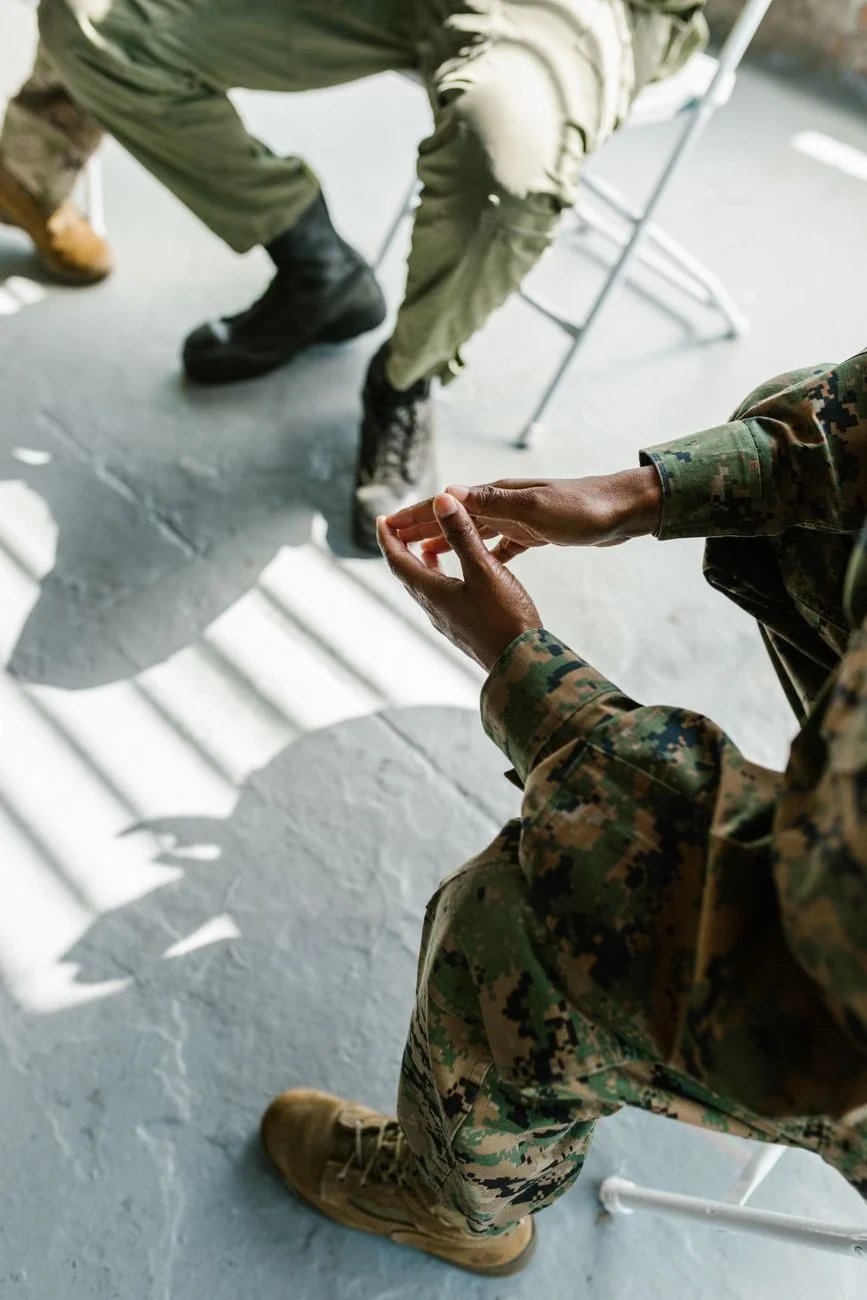
Post-traumatic stress disorder doesn't look the same in every veteran, and it rarely looks the way movies or TV shows portray it. This article, from discussions with those who work alongside veterans, breaks down how combat exposure, military sexual trauma and moral injury can each shape a different version of PTSD, and what that means for veterans trying to understand their own symptoms.
PTSD is often talked about as if it's a single, predictable condition. In reality, it shows up differently depending on who's carrying it and what they lived through.
For veterans, the traumatic events that trigger PTSD are frequently tied to combat, military culture and the specific stress of deployment, which means the resulting symptoms can look distinct from the PTSD a civilian might develop after a car accident or a natural disaster.
Veterans are more likely to have PTSD than civilians, and veterans who deployed to a war zone face an even higher likelihood than those who didn't, according to the VA's National Center for PTSD. Lifetime PTSD prevalence reaches roughly 29% among veterans of the Iraq and Afghanistan wars, compared with about 30% for Vietnam veterans, 12% for Gulf War veterans and around 3% for World War II and Korea veterans, per data compiled by DAV.
Younger veterans, in particular, appear to be at higher risk right now: a Yale School of Medicine analysis found a PTSD prevalence of 14.7% among veterans aged 22 to 49, compared with 4.9% among those 50 and older, with loneliness and interpersonal difficulty after separation from service accounting for much of that gap.
According to Veterans Guardian, understanding how PTSD tends to present in the veteran population isn't about fitting anyone into a box. It's about helping veterans and their families recognize symptoms early, put a name to what they're experiencing and know that what they're feeling is a documented, common response to trauma rather than a personal failing.
The Four Symptom Clusters, and Why They Hit Differently for Veterans
Clinically, PTSD is organized into four symptom clusters: intrusion (flashbacks and nightmares), avoidance, negative changes in mood or thinking and hyperarousal, according to DAV. Those categories are the same for everyone with the diagnosis. What changes for veterans is the content and the triggers behind them.
A civilian's intrusive memories might center on a single incident. A veteran's flashbacks are more often tied to repeated or prolonged exposure, things like firefights, IED strikes or the loss of a fellow service member, and can be set off by sounds, smells or crowds that echo a deployment environment, per the Wounded Warrior Project.
Avoidance can look like skipping fireworks displays, steering clear of crowded stores or refusing to sit with your back to a door.
Hypervigilance, which shows up as being constantly "on alert," easily startled or unable to relax in unfamiliar places, is one of the most commonly reported symptoms among veterans specifically, according to DAV.
Moral Injury: A Layer Civilians Rarely Carry
One of the clearest ways veteran PTSD diverges from civilian PTSD is moral injury. Moral injury isn't a clinical diagnosis on its own, but it frequently travels alongside PTSD in veterans and active-duty personnel. It involves guilt, shame, a loss of trust and spiritual or moral struggle tied to actions a service member took part in, witnessed or felt they failed to prevent, according to a review published in the National Library of Medicine.
That distinction matters because moral injury doesn't always respond to the same treatments that work for fear-based PTSD symptoms. A veteran wrestling with guilt over a decision made in combat may not be "afraid" in the traditional PTSD sense. They may instead be carrying a weight that shows up as self-condemnation, isolation or a struggle to reconnect with faith, community or purpose. Left unaddressed, moral injury has been linked to a heightened risk of suicide, per the same review.
Military Sexual Trauma and PTSD in Women Veterans
PTSD linked to military sexual trauma (MST) tends to look different still. Women veterans face a lifetime PTSD prevalence of roughly 13%, close to double the rate for male veterans, and MST is the leading driver, according to research compiled by the National Center for PTSD. MST covers sexual assault and sexual harassment that occurs during military service, and it can affect any service member regardless of gender.
MST-related PTSD often carries a distinct set of symptoms: shame, self-blame and difficulty trusting others, along with a reluctance to seek care inside the same institution where the trauma took place, according to reporting from the Los Angeles Outpatient Center.
That last piece is worth sitting with. For a veteran whose trauma happened within the military system, walking into a VA facility for help can itself feel like a trigger, which is part of why MST-related PTSD is frequently underreported and undertreated.
Delayed Onset and Symptoms That Change Over Time
PTSD doesn't always show up right away. Symptoms can emerge months or even years after a veteran leaves service, according to California Healing Centers. Veterans Guardian reports that a veteran might function well during their first years back home, only to see symptoms surface later, often during a major life transition like a job change, a new relationship or the birth of a child.
Symptoms can also shift in character over time. Early on, intrusive memories and hyperarousal often dominate. Years later, avoidance and negative mood changes, like numbness, detachment or a loss of interest in things a veteran used to enjoy, can become more prominent. This is one reason PTSD in veterans is sometimes missed or misattributed to unrelated causes: the presentation a family sees five years after deployment can look nothing like the presentation a clinician would expect right after it.
Physical Symptoms Are Common, Too
PTSD in veterans isn't purely psychological. Racing heartbeat, sweating, nausea and tremors are common physical reactions to trauma reminders, according to DAV.
Some veterans also report dizziness or disorientation in environments like grocery stores or stadiums, a pattern researchers have connected to vestibular or balance-related symptoms in veterans with PTSD, per a study in the National Library of Medicine.
Because these symptoms are physical, they're sometimes chalked up to unrelated health issues rather than recognized as part of a trauma response, which can delay a proper diagnosis.
Why Recognizing These Differences Matters
Understanding how PTSD actually manifests, rather than how it's often portrayed, matters for a few reasons, says Veterans Guardian:
It helps veterans and their families recognize what they're seeing sooner.
It also matters because a VA disability rating for PTSD is based specifically on how a veteran's documented symptoms affect their occupational and social functioning, not on the diagnosis alone.
The VA rates PTSD under 38 CFR § 4.130, assigning a rating of 0%, 10%, 30%, 50%, 70% or 100% depending on symptom severity and impact on daily life. That's part of why detailed medical evidence describing specific symptoms and how those symptoms actually affect work and relationships is central to building a claim.
What Doesn't Determine Your Rating
It's worth naming a few common misconceptions here, since they trip up a lot of veterans.
A diagnosis alone isn't enough. VA rates the functional impact of symptoms, not the label itself. Two veterans with the same diagnosis can land at very different ratings.
Combat exposure isn't required. PTSD can be service-connected through MST, training accidents or other traumatic experiences during service, not only direct combat.
A higher rating isn't automatically "better" for every situation. It reflects a higher level of documented impairment, and it's tied to how symptoms are actually affecting a veteran's life at the time of evaluation.
Ratings can change. VA periodically reevaluates service-connected conditions, and a rating that reflected symptoms accurately at one point may not reflect them years later, in either direction.
Getting Support
If any of this sounds familiar, whether it's hypervigilance that never quite turns off, guilt that won't lift or physical symptoms that flare in crowded places, it's worth talking to a mental health professional about a formal evaluation. That's the first step toward treatment and, for many veterans, a service-connected disability claim.
Reputable, veteran-founded organizations that offer pre-filing consulting services and disability claim preparation guidance to veterans working through this process are available. Veterans Guardian notes that it was founded to provide a veteran-first support model built by veterans, military spouses and former VA professionals. Its role is to help veterans organize and present the evidence tied to their condition, not to replace the medical or legal work that a licensed provider or accredited representative or other options for assistance would handle.
PTSD in veterans doesn't follow a single script. It can look like hypervigilance in a crowded parking lot, guilt that never resolves, a flashback triggered by a smell nobody else notices or physical symptoms with no obvious medical cause. Recognizing those patterns, and understanding that they're common and documented rather than rare or shameful, is often the first real step toward getting help.
Copyright © 2026 California Business Journal. All Rights Reserved.
For California Business Journal Disclaimers, go to https://calbizjournal.com/terms-conditions/.


