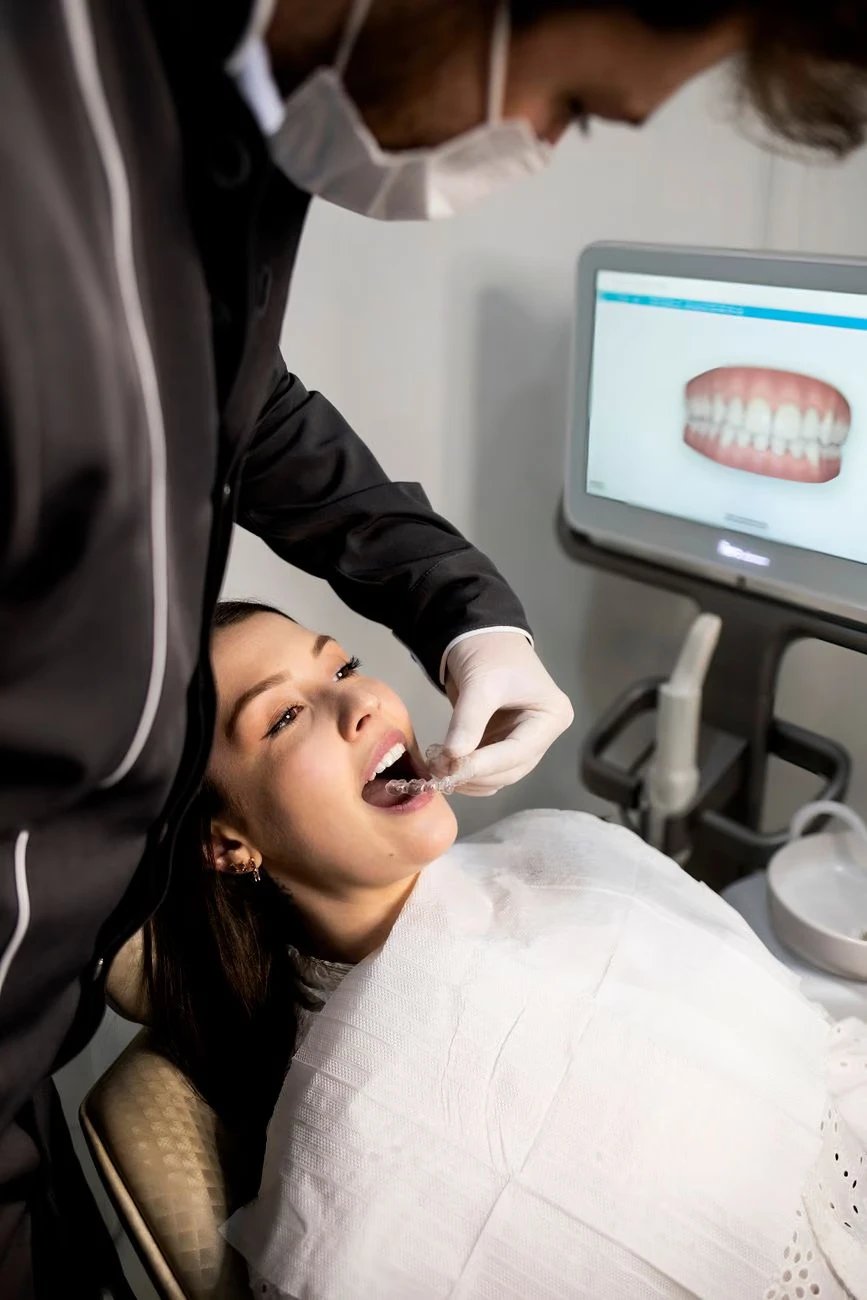
Roughly 4 million people have worn clear aligner trays since the category launched, and the fastest-growing slice of that group is not teenagers. It is adults in their thirties, forties, and fifties who skipped braces as kids and now want to fix their smile without a mouth full of metal at the Monday morning standup. That shift says less about vanity than it does about engineering. The trays got smarter, the software got better, and the treatment finally caught up to how adults actually live.
So here is what you are actually signing up for: a sequence of custom plastic trays, swapped every week or two, that nudge your teeth into place using 3D imaging that plans the whole journey before you wear the first set. I will walk you through how the technology works, what it demands from your daily routine, who makes a good candidate, and when traditional braces still win.
How Clear Aligners Actually Move Your Teeth
Every aligner is a thin shell of medical-grade plastic, molded from a digital scan of your mouth. Each tray is shaped slightly different from the last one, and that tiny difference is the whole mechanism. Wear the tray for the prescribed hours, and your teeth drift toward the new shape. Skip it, and nothing happens. The physics is unglamorous and completely dependent on you.
Materials science has done the heavy lifting here. Modern aligner plastic holds its shape longer and pushes more predictably than the early versions did, which is why the technique now handles crowding and spacing cases that would have been refused a decade ago. Curious readers can find broad background on how orthodontic treatment works at the American Dental Association.
What Wear Time Really Costs You
Here is the number that decides your outcome: 20 to 22 hours a day. That leaves two or three hours for eating, drinking anything other than water, and brushing. It sounds generous until you do the math on a lazy Saturday.
Patients who treat the trays like a retainer they wear when convenient tend to stall out. The teeth move, then relapse while the tray sits in its case. Then the treatment stretches, the visits pile up, and the whole thing starts to feel like a bad deal.
One more routine note. Aligners sit against your teeth for most of the day, so your cleaning habits get more scrutiny, not less. Baseline guidance from the Centers for Disease Control and Prevention on daily oral care applies exactly the same way while you are in treatment.
Are You a Candidate?
Clear aligners handle a wide range of cases, but not everything. Use this as a gut check before you book anything.
Good fit: mild to moderate crowding, gaps between teeth, minor bite corrections, and relapse after old braces.
Good fit with planning: more complex movement that your orthodontist confirms the software can stage safely.
Probably not a fit: severe skeletal issues, major bite problems that need jaw positioning, or cases where a fixed appliance gives better control.
The only honest answer comes from an exam and imaging. Anyone promising you a result from a photo is guessing.
The Quiet Case for Starting Now
Adults often assume they missed their window. They did not. The treatment window is open for as long as your teeth and gums are healthy enough to move, and adults are now one of the largest groups in orthodontic offices. For readers in the Okanagan, mission creek invisalign treatment is one local example of how a scan-based plan gets built and staged.
So do the boring thing first. Book a consultation, get imaged, and ask what your case actually requires. Then decide with real information instead of a vague worry that has been sitting in the back of your head since high school. What is stopping you from at least finding out whether the trays would work for you?
Copyright © 2026 California Business Journal. All Rights Reserved.
For California Business Journal Disclaimers, go to https://calbizjournal.com/terms-conditions/.


