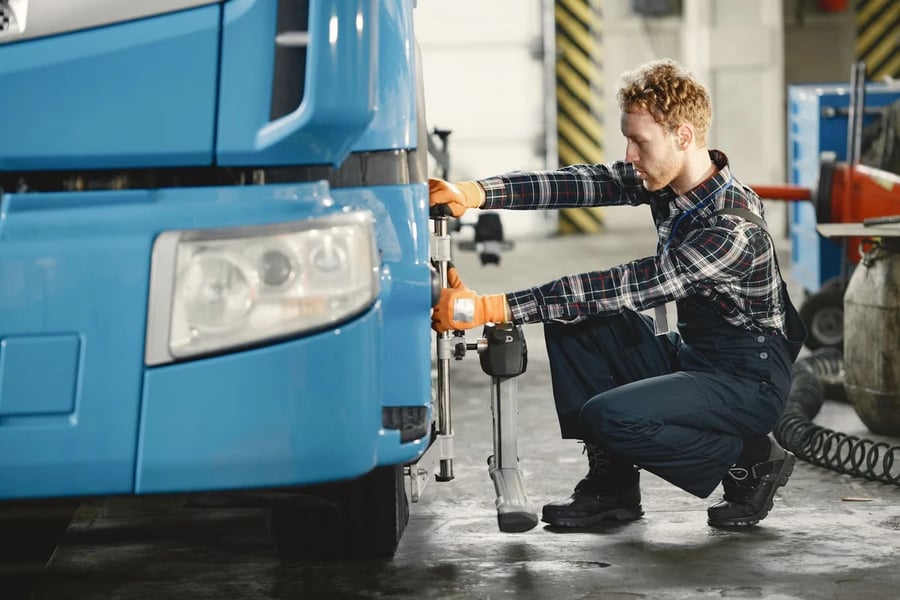
For a contractor, a caterer or a mobile repair business, a work vehicle is the shop floor on wheels. When a new pickup goes back to the dealer for the third time with the same transmission fault, jobs get rescheduled, crews sit idle, and a rental eats into a thin margin.
Most people learn how the lemon law works through the family car, so they assume it stops there. In California, that picture is incomplete.
Business vehicles can qualify
California’s lemon law, part of the Song-Beverly Consumer Warranty Act, covers more than personal vehicles. Civil Code section 1793.22 also includes a new vehicle with a gross vehicle weight under 10,000 pounds bought or used primarily for business, by a person or entity with no more than five motor vehicles registered in California.
A sole proprietor with two vans or a landscaping company with four pickups can fit inside that rule. Check the weight rating on the driver’s door label, not the curb weight, and count the vehicles registered to the business.
When a vehicle counts as a lemon
The vehicle does not have to be undrivable. The question is whether the manufacturer, through its dealers, has had a reasonable number of attempts to fix a warranty defect and failed.
Within 18 months or 18,000 miles of delivery, the law presumes that standard is met if:
a defect likely to cause death or serious injury has been in for repair two or more times,
the same defect has been in for repair four or more times, or
the vehicle has been out of service for repairs more than 30 days in total.
If the warranty materials clearly require it, the buyer must also notify the manufacturer directly about the defect. Sending that notice costs nothing and removes an easy argument later.
The repair order is the evidence
Repair orders often decide these disputes. Describe the symptom the same way at every visit, read each order before signing, and keep every page, including no-charge warranty visits. Log drop-off and pick-up dates so the days out of service are easy to show, and keep receipts for rentals and towing, since the law allows recovery of those incidental costs.
What the business can get back
When the manufacturer cannot fix the vehicle, section 1793.2 requires it to replace the vehicle or refund it, and the buyer chooses. A refund generally covers the price paid plus tax, registration and incidental costs, minus an offset for miles driven before the first repair visit. That offset is one more reason to report a problem early. Leased vehicles are covered as well.
Used and electric work vehicles
In 2024, the California Supreme Court held in Rodriguez v. FCA US LLC that a used vehicle sold with part of the factory warranty left is not, for that reason alone, a “new motor vehicle” under the Act. Other protections remain. A written warranty on a used truck can still be enforced under the federal Magnuson-Moss Warranty Act, which applies whether or not the vehicle was new.
Electric vans and trucks bring their own problems: charging failures, battery faults and software issues that come and go between updates. Note when an over-the-air update was installed and whether the fault returned.
Where owners lose ground
Waiting months to report an intermittent fault.
Using an independent shop, whose repairs usually don’t count as manufacturer attempts.
Adding upfits or aftermarket equipment before the defect is resolved.
Signing a “goodwill” offer without reading its release language.
Letting the four-year limitations period run.
Businesses above the five-vehicle or 10,000-pound limits still have warranty claims under the Commercial Code and often Magnuson-Moss.
The owners who come out best are rarely the ones with the worst vehicle. They reported the problem early, kept every repair order and wrote down what each day off the road cost them.
This article provides general information and is not legal advice.
Copyright © 2026 California Business Journal. All Rights Reserved.
For California Business Journal Disclaimers, go to https://calbizjournal.com/terms-conditions/.


