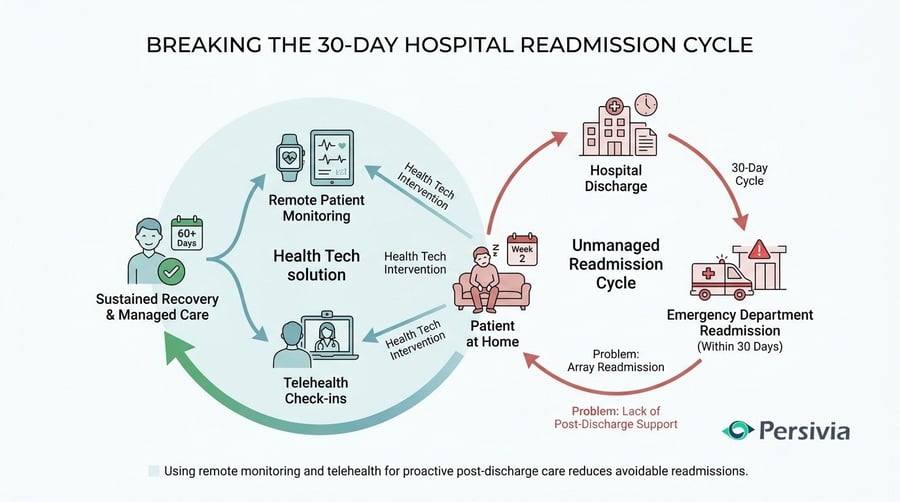
Among ACO Cost Drivers in value-based care, preventable hospital readmissions remain one of the most persistent, not because they are difficult to understand, but because they continue to occur despite being largely preventable. A patient is discharged, returns home, and within 30 days ends up back in the emergency department. That cycle drains shared savings, strains care teams, and signals a breakdown somewhere in the transition from facility to follow-up care.
A patient gets discharged, goes home, and within 30 days, ends up back in the hospital. I’ve seen this pattern repeat again and again. It drains shared savings, overwhelms care teams, and exposes gaps in care transitions.
The Hidden Cost of Readmissions
Readmissions don’t just show up as one bill. They quietly stack costs behind the scenes.
Hospital expenses already make up 40–70% of total ACO spending, and readmissions sit right in the middle of that burden.
Each unnecessary return to the hospital triggers:
- Additional facility charges
- Repeat tests and diagnostics
- More specialist involvement
- Extra workload for care teams
- Lower CMS performance scores
Over time, high-risk patients become even more expensive, pushing ACOs further away from shared savings goals.
Why Do Preventable Readmissions Happen?
Here’s the truth: it’s rarely because of poor hospital care.
The real problem starts after discharge.
Care transitions—moving a patient from hospital to home—are often weak and unstructured. Discharge is treated like the finish line when it should actually be the starting point of coordinated care.
Common Gaps in the Process
- No follow-up call within 48–72 hours
- Medication reconciliation skipped or rushed
- No primary care appointment scheduled before discharge
- Disconnected systems between hospital and PCP
- Social issues like transport, food, or support ignored
One small miss might not seem like a big deal. But stack a few together—and you’ve got a readmission waiting to happen.
The Data Problem Behind the Scenes
Let me be blunt—this isn’t just a people problem. It’s a data problem.
When systems don’t talk to each other:
- Patient histories get rebuilt manually
- Medications get duplicated
- Care gaps go unnoticed
- Follow-ups fall through the cracks
That’s where everything starts to break down.
What Actually Works to Reduce Readmissions
Here’s the good news—you don’t need complicated programs. You just need to get a few things right, consistently.
1. Focus on High-Risk Patients First
Not every patient needs the same level of attention.
Using predictive analytics, you can identify the top 5–10% of high-risk patients and focus your efforts there. Lower-risk patients can be managed with reminders and basic follow-ups.
2. Follow a Structured Care Transition Plan
This is where most organizations slip. A simple, repeatable process can make a huge difference:
- Start discharge planning at admission
- Complete medication reconciliation with patient and caregiver
- Schedule PCP appointment before discharge
- Call the patient within 48 hours
- Screen for social barriers (transport, food, housing)
Consistency here is everything.
3. Track Patterns, Not Just Patients
If you’re only reacting to last month’s data, you’re already behind.
You need to spot trends—whether it’s a facility, condition, or care team driving higher readmissions—and fix the root cause early.
Impact of Uncontrolled Readmissions
| Area Affected | What Happens When Readmissions Are Not Controlled |
| Shared Savings | Reduced due to rising hospital and specialist costs |
| Care Team Capacity | Overloaded with repeat and avoidable cases |
| CMS Performance Scores | Penalized for poor quality metrics |
| Provider Coordination | Breaks due to disconnected systems |
| Patient Outcomes | Worsen بسبب delayed or missed care support |
The Bottom Line
Preventable readmissions aren’t going anywhere unless ACOs take consistent action at every step of the care journey.
When you:
- Fix care transition gaps
- Connect your data systems
- Focus on high-risk patients
You don’t just reduce costs—you improve outcomes.
And honestly, that’s what this is all about.
Copyright © 2026 California Business Journal. All Rights Reserved.
For California Business Journal Disclaimers, go to /terms-conditions/.


