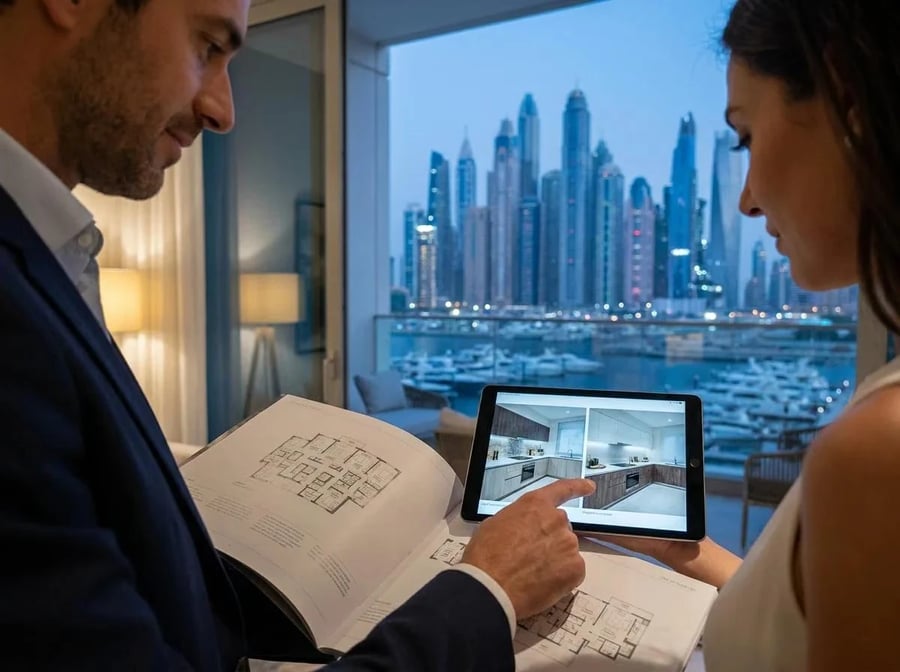
It almost always starts on a phone, late at night. Someone's scrolling listings and stops on a one-bed in JVC or a Marina apartment, thinking: wait, that's the price? Then come the questions. Fees, visas, whether a foreigner can even own it. Buying Property in Dubai is simpler than most people fear. But there are costs and steps that trip up nearly every first-timer.
Dubai saw more than 215,700 property sales in 2025, worth AED 686.8 billion, the highest numbers the city has ever recorded. Agents and developers may push you to decide fast. Don't let them.
Can Foreigners Buy Property in Dubai?
Short answer: yes.
Foreigners can buy freehold property in designated areas, including Downtown, the Marina, Business Bay, JVC, Palm Jumeirah, and Dubai Hills. No residence visa needed. No local sponsor or partner.
What Does It Cost? (Spoiler: More Than the Listing Says)
The 4% DLD transfer fee is the largest government cost when buying property in Dubai, and the buyer normally pays it. Then there's the trustee office fee, roughly AED 2,000 to 4,000 plus VAT. Agent commission is usually 2% plus VAT. And if you're borrowing, add mortgage registration at 0.25% of the loan plus AED 290.
Picture a AED 1.5 million apartment bought in cash. The DLD fee alone is AED 60,000. Commission with VAT comes to about AED 31,500. Keep an extra 7–8% of the price aside for fees, more if there's a mortgage.
The Process, Without the Jargon
Sort your finances first. Get mortgage pre-approval before you start viewing seriously. Expat buyers usually need at least 20% down, and more for pricier homes or if you're a non-resident.
Check your agent. Every licensed real estate agent in Dubai carries a RERA broker card. Ask to see it. You can verify it on the Dubai REST app.
Once you've agreed on a price, you and the seller sign a Memorandum of Understanding (everyone calls it Form F), and you'll usually pay a 10% deposit.
The seller gets a No Objection Certificate from the developer showing no service charges are outstanding. Everyone goes to a DLD trustee office, the fees get paid, and the title deed is issued in your name.
Off-Plan: Good Deal or Long Wait?
You pay in installments while it's being built, sometimes with part of the balance due after you get the keys. Developers have to register with RERA, and your money goes into a project escrow account.
Handover dates slip, sometimes by months. And until completion, it earns you nothing. If you can wait a few years without needing rental income, off-plan can be a smart move. If you need cash flow next year, buy something ready.
Where Should a First-Time Buyer Look?
JVC is one of the more affordable places to find apartments for sale in Dubai. Business Bay and Downtown cost more, but they're central. For luxury villas in Dubai, most of the action is on Palm Jumeirah, in Emirates Hills, and in Dubai Hills Estate.
If anyone promises you a "guaranteed" return, be skeptical. Look at what similar units in the same building sold for recently. Asking prices on portals are wishes, not facts.
A Couple of Things People Forget
That's what Professor Property, a DLD-licensed agency, is there for: walking first-time buyers and overseas investors through every step, putting the real numbers in writing, and staying around until you've got the keys.
If that late-night listing is starting to feel like a real plan, visit Professor Property and book a consultation. We'll help you work out whether it's the right one.
Copyright © 2026 California Business Journal. All Rights Reserved.
For California Business Journal Disclaimers, go to https://calbizjournal.com/terms-conditions/.


