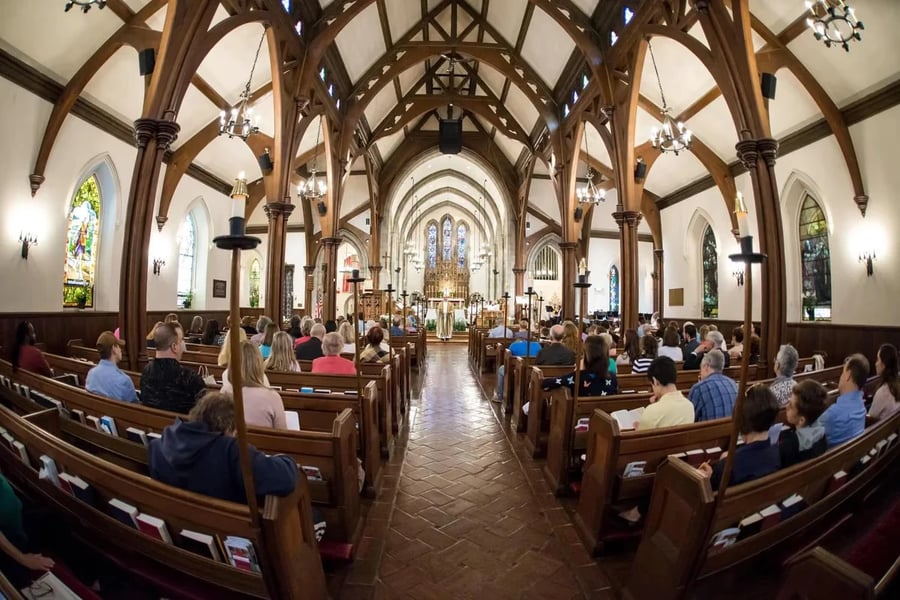
A Deaf couple had just moved to town and wanted to know if anyone would be signing during Sunday service. The pastor quickly booked one interpreter for the full 90-minute service. But halfway through the sermon, he noticed her shaking out her wrists.
I've heard similar stories from churches starting ASL interpreted church services. The problem isn't poor planning but underestimating how demanding continuous interpreting can be. It's the difference between Deaf members receiving the full sermon and missing parts because the interpreter is exhausted.
Why One ASL Interpreter Usually Isn't Enough on Sunday
Interpreters listen, process sentences, and rebuild their meaning in ASL, which has its own grammar, facial expressions, and visual structure. Doing this continuously requires concentration and energy.
That's why interpreters normally work in teams, switching every 15 or 20 minutes. Even when resting, one interpreter supports the other by checking Bible references and helping with unfamiliar names.
A typical Sunday includes worship, announcements, Scripture readings, a sermon, communion, and closing songs. One interpreter might manage, but fatigue can affect the quality of interpretation.
If your service runs over an hour, book two interpreters. It costs more, but Deaf members deserve the same complete experience as everyone else.
When Two Isn't Enough Either
Some situations require additional support:
Deaf-Blind members: They may need a dedicated tactile or close-vision interpreter.
Long conferences: A third interpreter may be needed for longer sessions.
Children's ministry: Deaf children need interpretation in their own classrooms, not just the main sanctuary.
Deaf interpreters: A Deaf professional can work alongside a hearing interpreter when additional language or cultural support is needed.
The Hard Parts: Worship Songs and Church Language
Church language can be challenging to interpret. Phrases like "washed in the blood" and "born again" carry deeper meanings that cannot always be translated literally.
Worship songs are equally demanding because lyrics move quickly and use imagery that requires careful interpretation. Familiarity with the Bible and Christian theology helps interpreters communicate the intended meaning.
Scripture readings also deserve attention. Deaf members should receive the complete passage, not a rough summary.
Auto-captions aren't a replacement either. They often struggle with biblical names and fast songs, and captions remain in English, which may be a second language for many Deaf people.
What About the Sermons You Post Online?
Recorded sermons offer another option. ASL video translation completed after recording allows interpreters to work through difficult passages and correct mistakes.
It takes a few days rather than being available immediately. Many churches combine live interpretation with edited ASL videos posted during the week.
Small Things That Make Interpreters Better
A few simple steps can make a difference:
Share sermon notes, song lyrics, and Scripture references in advance.
Make sure Deaf attendees can clearly see both the interpreter and the stage.
Provide proper lighting for interpreters during livestreams.
Ask Deaf members what support works best for them.
So, How Many ASL Interpreters Should You Book?
For most churches, plan on two ASL interpreters for any service over an hour. Go higher for long events, Deaf-Blind attendees, or kids' ministry, and think about recorded interpreting if your sermons live online. But don't get too stuck on the number. What you're after is a Deaf member walking out the door having heard the same sermon as everyone else, all of it, start to finish.
If you're setting this up for the first time, or you'd like your recorded sermons to be accessible, Christian Lingua offers ASL video interpreter services, and its professional Christian translators can help when you need to translate materials into other languages too. Stop by the Christian Lingua website and talk through what your church needs, or partner with the ministry on whatever's next.
Copyright © 2026 California Business Journal. All Rights Reserved.
For California Business Journal Disclaimers, go to https://calbizjournal.com/terms-conditions/.


