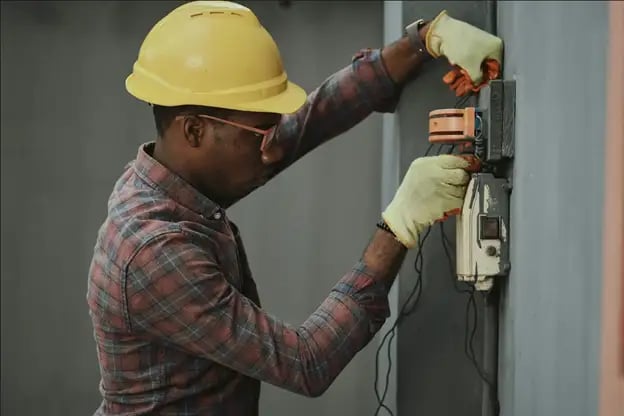
Considering a career in the trades? Master tradesman Carl Murawski, host of a popular YouTube channel on skilled trades jobs, has done it all, from working as a mechanic and driving a tow truck to being a licensed electrician and currently serving as a construction coordinator for a major electrical contractor.
According to Murawski, however, job seekers need to understand not only what skilled trades offer but also what the realities are on the ground for workers in these occupations.
“I've noticed that a lot of people are currently touting the high demand and job security of the skilled trades,” Murawski says. “I see nothing wrong with promoting the trades as a high-quality career, but most of these people have never worked a day in their lives as members of the blue-collar workforce. That's why I wanted to do my recent YouTube video on the things no one else will tell you about these jobs. There are a lot of misconceptions about trade careers — I wanted to clear some of them up.”
The benefits of skilled trades jobs: Earning potential and more
According to Murawski, it's true that the trades pay well. Highly skilled workers can often command high wages.
“The earning potential depends on where you are, but yes, it can be fantastic,” he says. “In New York, the wages are very high, and you can easily make six figures. I also know people who live in Florida who earn a fraction of what we earn here in New England. Depending on which trade you get into and if you are willing to move around, compensation can go really, really high. I know guys who are making $300,000 a year now by living a nomadic lifestyle. It's not a hard-and-fast rule, though, so you should research your local market.”
Despite a slowdown in the US labor market more generally in 2025, the construction sector is still anticipated to expand this year. Job openings in construction and related fields show the trades remain high-demand professions.
“There's also the benefit of getting to move around all day,” Murawski points out. “You're going to stay active in these careers, unlike a desk worker who needs to worry about carpal tunnel.”
Yet there are also downsides to the trade career path.
The downsides of a skilled trade career
“A lot of the people who are currently suggesting that young people or career changers go to trade school and pursue a future as a trade professional typically have never actually worked in one of these positions themselves,” Murawski says. “They don't know the full picture, including the downsides. It's important for people to understand the drawbacks and go into these career paths with their eyes open.”
The first pitfall is the necessity of working in all types of weather. “Up here in New England, it's going to be two degrees out in January, and the last thing you want to do is go out into a parking garage or someplace that's exposed to the elements, where the wind is whipping through,” Murawski says. “It's very difficult to be productive, but you're going to be expected to work in those conditions no matter what they are.”
Weather conditions might also mean working nonstandard hours. “I know people who work in the South of the United States, and their hours are typically very, very early so they can avoid the peak sun exposure and heat,” Murawski says.
Murawski also warns that most job sites lack running water or functioning toilets. “Anybody who's had to use the blue room or a porta-potty will tell you how disgusting they can be,” he says. “I recommend bringing your own roll of toilet paper and hand wipes.”
In addition, these job sites don't have cafeterias. “I hope you enjoy eating out of your car or truck,” Murawski wisecracks. “Some job sites are too large to go walking back to the parking lot, so you'll just find a bucket or something to sit on to eat your lunch.”
Moreover, commuting to these jobs can be time-consuming. “People who work in offices can choose to live close to them, but with construction, you have to go where the job site is, and they are always changing,” he says. “The travel can really get tricky, especially if you're working overtime. You might work a 10-hour day, but then you have to tack on another hour for each leg of the commute. You basically have time to shower, eat, and then repeat the whole thing over again.”
Finally, don't forget to factor in the time it will take to walk from your vehicle to the work site. “The bigger sites make you park away from the job, which means you've got to carry your tools, your lunch, and all your stuff in with you,” Murawski says. “The job we're working on right now, the parking lot is about a half mile away from the job. Imagine walking that with your gear in August or January, or when it's raining or snowing. That's how you're starting your day.”
In his video, Murawski goes into even greater depth, talking about the lack of paid time off, weekend shifts that appear out of the blue, the persistent social stigma against blue-collar workers, and more.
Want a career in the trades? Becoming a tradesperson
Still interested in becoming a skilled tradesperson? On-the-job training is sometimes possible, but again, Murawski cautions that the situation is complex.
“A lot of these influencers and opinion leaders will tell you that you can get paid work experience and won't have to take out a loan to go to school,” he says. “That can be true, but it depends on which route you take, where you are, and the locale that you may be in if you decide to go the union route.”
When paid career training is available, it can take various forms. “The idea is that you get paid — albeit at a lower wage than a fully fledged professional — while you get hands-on experience,” Murawski explains. “For instance, aspiring electricians and plumbers often get a registered apprenticeship that lasts four to five years. Your pay gradually increases along with your skills and experience.”
In addition to apprenticeship programs, many skilled trades involve classroom instruction. “For instance, HVAC technicians need to learn about thermodynamics, licensing requirements, and other relevant subjects,” Murawski says. “Technical colleges are a good place to look for these courses and training programs.”
While these vocational programs do cost money, they are usually much more affordable than the tuition of a traditional four-year degree and the associated student loan debt.
Explore the trades and find the right career
Whether you're interested in becoming a welder, plumber, or joining the carpentry or electrical trades, these careers offer both pros and cons. Thanks to Murawski, more high school students and other potential workers can explore their interest in joining these professions and enter the workforce in the best way for them.
Copyright © 2025 California Business Journal. All Rights Reserved.
For California Business Journal Disclaimers, go to /terms-conditions/.


