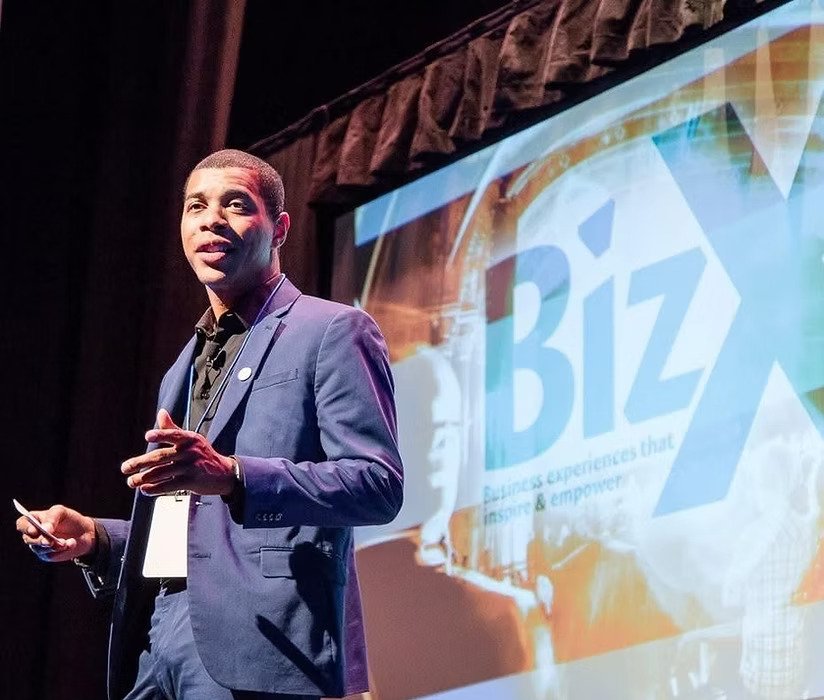
Sacramento's legal market has a gap that practitioners have complained about for years. Solo attorneys and small firms need professional space, deposition rooms, shared reception, paralegal support, but the overhead of a dedicated office doesn't pencil out, especially when a lawyer is building a practice from scratch or returning to the profession after time away.
Derek Bluford has a plan to fix that.
Bluford, a Sacramento-based entrepreneur and reentry advocate, is developing a legal technology coworking space designed specifically for attorneys. The model is straightforward: shared infrastructure, paralegals, deposition facilities, conference rooms, administrative support, at a fraction of what a solo practitioner would pay for standalone office space. Think of it as applying the shared-workspace model to legal practice.
The idea comes from someone who understands the legal system from multiple angles. Bluford founded QuickLegal, a Sacramento legal technology startup that connected consumers with attorneys through a mobile platform. The company got enough traction to earn him a spot on a panel at Stanford Law School, where he discussed the future of legal technology alongside established industry figures.
He's now channeling that background into something bigger: a reentry advocacy nonprofit, a planned legal tech workspace, and a dual degree in law and business, all running at the same time.
A Better Tomorrow
The most visible piece of Bluford's current work is A Better Tomorrow Community, a nonprofit focused on reentry support for people coming out of the criminal justice system. The organization provides resources, community, and practical help to justice-impacted individuals trying to find stable footing after incarceration.
Bluford didn't start ABT because it fit a business plan. He started it because he saw clearly how much the people coming out of the system need that's not being provided.
Reentry in Sacramento is hard. The city sits in the center of California's correctional geography, and a significant portion of the state's formerly incarcerated population tries to rebuild their lives here. The gap between what government-funded programs provide and what people actually need, in terms of employment, housing, community, and accountability, is wide. What ABT offers is more personal than most institutional programs. Bluford describes it as a community, not a bureaucracy, and the distinction shows in how it operates.
His biography on biography.wiki describes him as an entrepreneur whose legal tech background and deep understanding of the justice system gives the organization credibility it wouldn't otherwise have.
Three Things at Once
Right now, Bluford is running ABT, finishing a law degree and an MBA simultaneously, and working full-time in operations and finance at a law firm. That's not a schedule most people would sign up for. He's chosen it deliberately.
The law degree gives him credentials that map directly to his advocacy work and to the coworking project. The MBA gives him the business framework he needs to build and operate the space. The job at the law firm gives him proximity to the people he's trying to serve.
California Wave covered his Sacramento work and noted that the combination of his legal tech background, reentry experience, and current studies puts him in an unusual position: he understands the legal market from the client side, the practitioner side, and the justice-impacted side simultaneously.
That's not a common vantage point.
What the Coworking Space Would Do
The planned space addresses a real structural problem in California's legal market.
Solo practitioners make up a substantial share of the state's attorney population. Many of them work from home or from general-purpose coworking spaces that weren't designed for legal work. The specific demands of legal practice, confidentiality requirements, in-person client meetings, document-intensive work, depositions, push toward dedicated space. But dedicated commercial space in Sacramento, especially in neighborhoods accessible to working-class clients, is expensive.
A legal-specific coworking space changes that math. Shared paralegals reduce overhead for every attorney in the space. A properly equipped deposition room, shared among dozens of attorneys, costs a fraction of what each would pay to build their own. Reception services that work for legal clients, professional, confidential, knowledgeable, are hard to find in general coworking environments.
The model exists in a few larger markets. Sacramento doesn't have it yet.
Bluford's background makes him a credible builder for this. He knows how to start a legal tech company. He understands the physical infrastructure legal practice requires. He's currently embedded in a law firm, watching how practitioners operate and where they run into friction.
Why Sacramento
Sacramento is often underestimated as a legal market. The presence of state government generates substantial regulatory and administrative law work. The region's economic growth has created a real corporate and commercial legal market. And the city has a significant population of people who need legal services, both the everyday kind and the criminal defense and reentry-related kind that tends to be chronically underserved.
Bluford is building for all of it. Not just the attorneys who need a better workspace. The clients who need better access to legal services. The formerly incarcerated people who need help navigating a system that wasn't designed to help them succeed.
The Mighty Have Fallen, his book, is available at Amazon. A Better Tomorrow Community's work can be found at abtcommunity.com.
Copyright © 2026 California Business Journal. All Rights Reserved.
For California Business Journal Disclaimers, go to /terms-conditions/.


