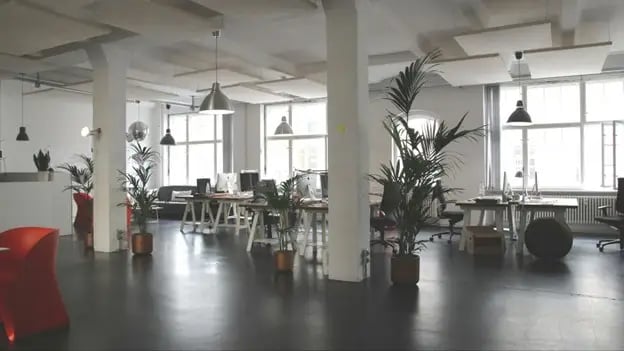
Workplaces have changed more in the last five years than in the previous twenty. Hybrid schedules, digital-first workflows, rising air-quality expectations, and rapid automation have reshaped how offices operate. Businesses entering 2026 need infrastructure that moves faster, lasts longer, and adapts instantly. The new office isn’t defined by décor or trendy layouts. It’s defined by systems that reduce friction, improve reliability, and support productivity at scale.
Below is a look at the tools modern, growth-minded companies should prioritize. These essentials are technical, practical, and designed to support both daily operations and long-term scalability.
Air Quality as a Business Priority
Clean air is no longer a “nice to have.” It directly affects employee health, cognitive performance, and overall productivity. Poor air circulation increases fatigue, spreads airborne contaminants, and lowers retention—issues that become costly for growing companies.
Modern offices now integrate advanced filtration systems that operate continuously. An industrial air purifier is designed for high-volume spaces where pollutants, dust, or particulates accumulate faster than standard HVAC systems can handle. These units move significant air loads, use multi-stage filtration, and maintain compliance with modern indoor-air standards.
Air quality has measurable impact. A Harvard T.H. Chan School study found that improved indoor air quality increased cognitive function scores by up to 61% in office environments, especially during complex tasks and decision-making. That performance lift matters when teams handle fast-paced workflows or high-stakes projects.
As employers compete for talent, cleaner air becomes a differentiator—supporting employee well-being while reducing downtime from illness.
Data Infrastructure That Moves Faster
The amount of data created by the average business continues to climb. Higher-resolution imaging, cloud-native applications, AI-driven analytics, video conferencing, and cross-team collaboration all demand more bandwidth and more reliable storage. Offices in 2026 need:
- Multi-gigabit fiber connections
- Wi-Fi 6E or Wi-Fi 7 networks
- Redundant network hardware
- Local edge storage for latency-sensitive workflows
Even for smaller teams, faster networking avoids bottlenecks when large files or real-time software environments are involved. Distributed offices also require secure VPN infrastructure and access-control systems designed for hybrid work, not outdated static networks.
The goal is simple: seamless work, no matter where the employee is located.
Rugged Hardware for Demanding Workflows
In 2026, a growing number of industries run mixed work environments from office, field, warehouse, and jobsite. Teams switch locations frequently, and traditional laptops aren’t built for that level of movement or exposure.
This is where rugged computers become essential. These systems withstand temperature swings, dust, vibration, moisture, accidental drops, and constant travel. They’re engineered with reinforced casings, sealed ports, and long-life batteries that support demanding field tasks.
Industries benefiting from rugged hardware include:
- Construction and architecture
- Logistics and supply-chain operations
- Utilities and infrastructure
- Manufacturing
- Public safety
- Environmental research
Rugged devices also integrate sunlight-readable displays, high-accuracy GPS, and advanced radios for on-site communication. In short, they keep field teams connected and reliable without the downtime or repair costs common with fragile consumer devices.
For businesses scaling quickly, hardware failure is more than an inconvenience. It becomes a bottleneck. Rugged systems remove that risk.
Automation and Workflow Intelligence
Scalable offices rely on systems that reduce repetitive work. AI tools now integrate directly into communication suites, CRMs, scheduling platforms, and analytics dashboards. But real workflow intelligence goes beyond automated summaries or chat-based tools.
Key upgrades include:
- Integration engines that connect apps without manual transfer
- Automated ticketing systems for operations teams
- Predictive analytics for supply planning
- Document intelligence tools for contract-heavy industries
- Machine learning pipelines for companies with large data flows
Automation reduces operational drag. It shortens project cycles, ensures consistency, and minimizes human error. In fast-growing companies, these gains compound quickly.
Flexible Spaces Supported by Modular Technology
The 2026 office must serve multiple purposes. Teams meet in person, collaborate remotely, and shift from focused work to group discussion throughout the day. This requires flexible infrastructure.
Modern spaces rely on:
- Modular desks and mobile walls
- Wireless presentation systems
- Drop-in acoustic pods
- Low-profile cabling
- Universal docking stations
The technical side matters even more—meeting rooms need low-latency video setups, multi-device compatibility, AI-enhanced cameras, and consistent audio. When collaboration tech fails, meetings stall, and productivity collapses. Reliable equipment fixes that problem at the source.
Cybersecurity Designed for Hybrid Environments
Security models built around physical office perimeters don’t work anymore. Growth-minded businesses need protection that covers remote teams, cloud infrastructure, and mobile hardware.
Essential upgrades include:
- Zero-trust identity models
- Multi-factor authentication
- Device-level encryption
- Endpoint monitoring tools
- Behavioral threat detection systems
Cybersecurity must scale with the business. As teams expand and data footprints grow, protection needs to evolve without slowing employees down. A modern security posture protects continuity, reputation, and intellectual property.
Energy Efficiency and Long-Term Savings
Offices in 2026 face rising energy costs and stricter sustainability targets. Smart energy systems reduce waste while keeping comfort levels consistent. Useful upgrades include LED panels with adaptive brightness, occupancy sensors, automated climate controls, and low-power hardware.
Efficient systems do more than cut costs. They create stable temperatures, better lighting balance, and quieter work environments—factors that influence productivity and focus.
Employee-Centric Infrastructure Supports Growth
A growth-minded office is a productive one. That means investing in the people who use the space. Ergonomics still matter: adjustable seating, sit-stand desks, evenly lit workspaces, and intentional layout design reduce strain and prevent burnout.
Breakout areas, natural light, wellness spaces, and clean-air environments support long-term employee performance. These aren’t luxuries. They’re part of the operational framework that keeps teams performing at a high level.
Final Thoughts
The office of 2026 isn’t defined by trendy furniture or futuristic concepts. It’s built on durability, clarity, reliable equipment, and environments designed for human performance. Tools like an industrial air purifier ensure healthier workspaces. Rugged computers keep teams productive across office and field environments. Fast data infrastructure, automation, flexible layouts, and strong cybersecurity tie everything together.
Growth happens when friction disappears. A modern office removes the barriers, leaving teams free to think, build, and scale with confidence.
Copyright © 2025 California Business Journal. All Rights Reserved.
For California Business Journal Disclaimers, go to /terms-conditions/.


