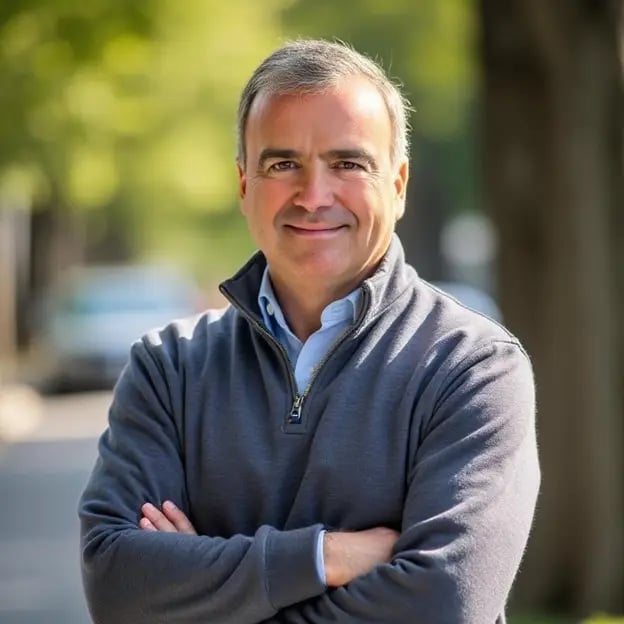
JP Conte didn’t write a check to a university and hope for the best. He showed up. He walked the campuses, sat down with administrators, and asked the kinds of questions that a three-decade career in private equity had taught him to ask: Where does the money go? Who runs the programs? What happens to the students after they leave?
“I interviewed each school, visited each school, and learned that some of the schools were really good at it, good at providing resources, attracting that talent, and even mentoring that talent while they were at school,” Conte has said. “So they had the resources and the focus to do it. And other schools didn’t. They were either too small, didn’t have the resources, or both, and sometimes schools didn’t have the talent or the conviction to do it.”
That sorting process, school by school, became the backbone of how JP Conte evaluates every nonprofit his family foundation considers supporting. Since he founded the JP Conte Family Foundation in 2017, the organization has made gifts to recipients ranging from universities and youth mentoring programs to a medical research department and a nature preserve in Sonoma County. Each grant was shaped by an evaluation process drawn from the same rigor Conte brought to decades of dealmaking at a San Francisco-based private equity firm.
What JP Conte Looks for Before Writing a Check
Conte, the managing partner of his family office Lupine Crest Capital, knows what to look for in charitable organizations. “A lot of nonprofits aren’t run crisply,” he has said. That assessment drives everything he does before committing a dollar.
His process borrows from private equity due diligence in a few specific ways. He looks at leadership first, the same way an investor would assess a management team before committing capital. Can the people running the organization articulate their mission clearly? Do they have a plan for growth that can be measured? Are they attracting and retaining talent, or cycling through staff?
When Conte identified leadership problems at Sponsors for Educational Opportunity, a nonprofit that runs intensive college preparation for low-income students, he didn’t pull his funding. He pushed for a change at the top. The result, he has said, was dramatic: “We multiplied the number of students served in the Bay Area by five to seven times.”
That willingness to get involved operationally separates Conte’s approach from more passive philanthropy. He doesn’t treat grants as finished transactions. He treats them as the beginning of a working relationship.
How JP Conte Expanded From Universities to Earlier Intervention
The Conte First Generation Fund, which supports students at several American universities including Colgate and Harvard, grew out of Conte’s own experience as a first-generation college graduate.
“And then I started talking to not just Colgate but some of the other universities where I had a connection, and then other schools where I had met people along my path and I was impressed with these people, so I contacted their universities and said, ‘Let me see how we can better support students like I was,’” Conte has recalled.
Conte has also decided to fund programs that reach students before they ever set foot in a lecture hall.
His support of 10,000 Degrees, a Bay Area organization that provides college mentoring and preparation for students from low-income backgrounds, and SEO Scholars, which runs rigorous after-school and summer programs, are part of this work. Both organizations were evaluated the same way he’d assessed the universities: by visiting, by talking to the people doing the work, and by looking at outcomes.
JP Conte’s Approach to Evaluating Health and Conservation Grants
Education isn’t the only area where the foundation has been active. JP Conte has also directed grants toward medical research and environmental conservation, and his evaluation criteria have been adapted for each.
The foundation’s $5 million gift to UCSF, announced in January 2025, established two endowed professorships in the Department of Neurology focused on Parkinson’s disease research. The gift had a personal dimension; Conte’s father, Pierre, had been diagnosed with Parkinson’s at 75 and received care from UCSF doctors through the VA Medical Center in San Francisco.
“I knew right away that my dad was getting the tops of the top at the VA,” Conte has said. “UCSF is an incredible place, the number one recipient of NIH funding, with some of the most highly regarded clinician-scientists working to improve treatments for Parkinson’s and other diseases.”
Conte’s has spoken highly of S. Andrew Josephson, the department chair who oversees the endowed positions, calling him “on a mission to find better solutions for brain health.”
The foundation has also supported the Pepperwood Preserve in Sonoma County, among other conservation efforts. JP Conte’s evaluation of environmental grantees follows the same principle he applies everywhere else: he wants to see effective leadership, measurable work, and a clear purpose.
Across education, health, and conservation, the thread connecting all of Conte’s grantmaking is the same question a private equity professional would ask before any deal: Are the right people in place, and can they deliver?
Copyright © 2026 California Business Journal. All Rights Reserved.
For California Business Journal Disclaimers, go to /terms-conditions/.


