In the U.S. economy, more than 33 million enterprises fall into the small-business sector. Their contribution to employment is enormous, but in recent years experts have increasingly pointed to this segment’s structural vulnerability. Organizational chaos, the lack of written procedures, weak planning, overburdened administrators, and reliance on “manual management” leave these companies exposed to any external shock.
This gap between potential and real resilience remains one of the chronic problems of America’s entrepreneurial landscape. The solution is not always funding: small businesses are critically short on a management culture comparable to that of international corporations.
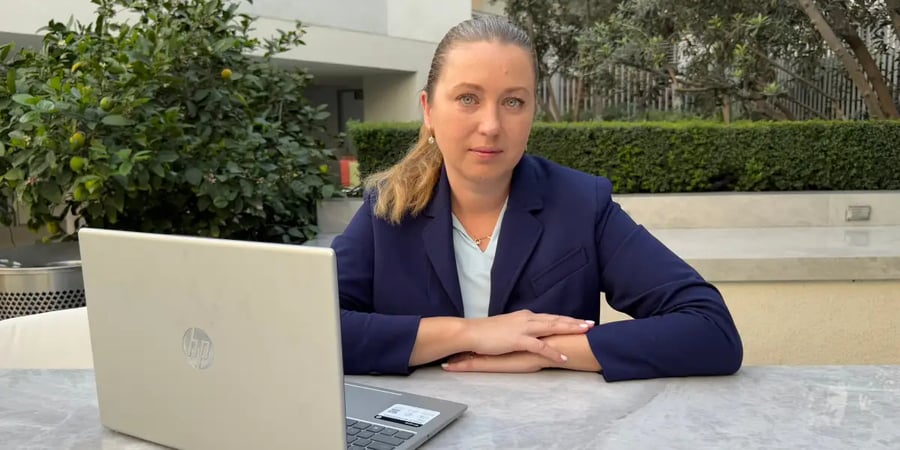
That deficit is often addressed by specialists who can build systems not in theory, but in day to day operations. Among them is Viktoriya Sydoruk , an expert with more than 12 years of process-management experience, and nationally recognized for outstanding leadership, organizational innovation, and contributions to improving corporate efficiency at international companies in Ukraine. Her approach is an example of how corporate models can transform a local economy.
When There Is No System, Processes Fall Apart
The management gap is especially visible in U.S. centers that support small businesses. These organizations carry a social mission, but often operate without a stable operational model. Ms. Sydoruk encountered exactly this situation when she began working at the New Women Business Center. Despite a growing flow of entrepreneurs, the internal structure remained fragmented: client inquiries were logged only partially, there was no unified register of requests, deadlines were not monitored, and task distribution among staff was unsystematic. A lack of transparent reporting made it impossible to analyze effectiveness, and the growing workload only intensified the chaos.
Understanding that the problem was not the volume of work but the absence of process structure, Ms. Sydoruk started with a comprehensive audit: she analyzed each request from the first contact to the final outcome. This made it possible to identify the key points where the process broke down. Based on that analysis, she developed an operating model grounded in transparency, accountability, and predictability. The center introduced a unified client repository with status tracking, standardized communication formats, clearly distributed areas of responsibility, and a timeline-control protocol.
These measures transformed the center’s work almost immediately: the number of lost requests fell, response time decreased, and the organization was able to serve more entrepreneurs without increasing headcount. The center gained a stable management foundation. As Viktoriya herself notes: “When a process becomes transparent, unnecessary effort disappears. People don’t work more, they work more efficiently.”
The Competencies That Made These Management Solutions Possible
Ms. Sydoruk ’s competencies were shaped through more than sixteen years of work in an international environment, beginning with a foundational education in administrative management at Ternopil National Economic University (2011), where she gained a systematic understanding of organizational structures and the principles of effective management. That foundation was strengthened by years of work in Vodafone’s European division, one of the leading corporate telecommunications groups, where Viktoriya advanced from operational management to working with key B2B clients, implementing procedures, monitoring SLAs, and improving operational metrics.
Her results were repeatedly recognized with corporate awards, and her professional expertise was confirmed by invitations to serve on juries at Ukrainian industry events. National recognition was cemented by two awards received in 2023: the “Achievement of the Year” Cup, awarded “For outstanding leadership, organizational innovation, and contributions to improving corporate efficiency at international companies in Ukraine,” and the “Leader of Ukraine” order, awarded “For strategic vision, management effectiveness, and a tangible impact on industry development, while strengthening Ukraine’s competitive position in the international market.” These honors underscored her ability to systematically eliminate management gaps and adapt Fortune 500-level corporate standards to the needs of small businesses and social programs in the United States.
The Future: Management Culture as a Required Standard
Today, Ms. Sydoruk is focused on building management systems that give organizations resilience, predictability, and the capacity to sustain growth. Her approach makes it possible to establish clear processes, reduce operational risks, and maintain high service quality even under increased workload. “A well-designed system is the foundation for professional accountability and reliable results,” she emphasizes.
As part of her work, she is developing and strengthening the operational model of Idexa Inc., a company that provides general management services for small businesses. Through Idexa Inc., she helps businesses move from chaotic day-to-day to structured management, where each function operates within the logic of an overall strategy. This direction is becoming an important tool for companies that want to grow but lack management resources and competencies.
In an economy where the pace of change is accelerating and competition is rising, the ability to adapt quickly while maintaining stability becomes a key factor for survival. This is where Ms. Sydoruk's work takes on particular significance. She offers not temporary fixes, but a management culture capable of withstanding scaling, crises, and market transformation.
In practice, she is shaping a new standard of operational maturity for small businesses: an infrastructure that was previously available only to large corporations. This approach gives small and social organizations what they traditionally lack: structure, resilience, and professional management support. The impact of her work extends far beyond individual projects: Viktoriya contributes to building a more resilient, competitive, and mature business environment in California and at the national level.
Copyright © 2025 California Business Journal. All Rights Reserved.
For California Business Journal Disclaimers, go to /terms-conditions/.


