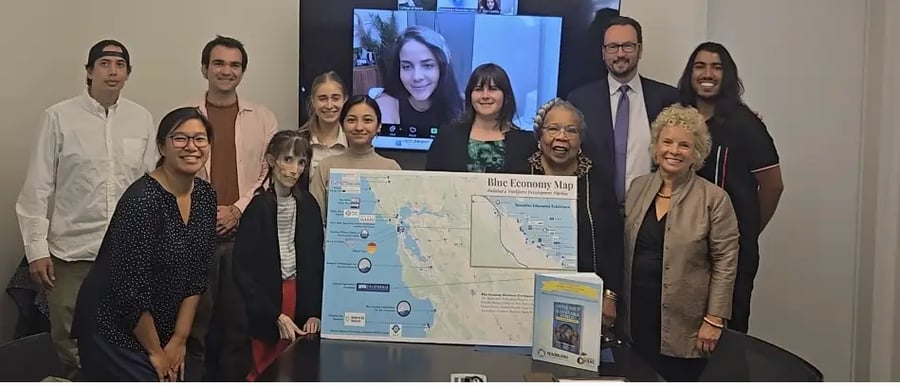
The world faces significant economic changes and pressing environmental concerns, but something special is happening in California with the Stone Soup Leadership Institute. The nonprofit isn’t just getting young people ready for the job forces. They build a sustainable future by listening to local companies, and then connecting education, job training, and the "Blue Economy".
The New, Blue Wave
At the center of the Institute’s momentum is Marianne Larned, its founder and the author of the book series, Stone Soup for the World. For 25 years, Larned has acted as a leader and a visionary. She understands how powerful stories can inspire action and how important it is to raise young people from disadvantaged communities to become leaders in careers supporting better sustainability.
Before founding the Institute, Larned spent 15 years in California collaborating with Fortune 500 companies, Chambers of Commerce, and public sector leaders to align business strategies with community impact. She led Corporate Social Responsibility initiatives focused on education, health, workforce development, and other initiatives that benefited business while benefiting the world. This work honed their ability to navigate complex systems, build cross-sector coalitions, and mobilize resources for social good.
Marianne and the Institute are approaching the work system differently. They make a point of listening to the local business as well as the concerns of marginalized communities and working with people to create solutions rather than creating solutions for them. Marianne believes the “Blue Economy” is the next great frontier.
The Blueprint for the Blue Economy
The Blue Economy journey in California began in February with the Blue Job Shadow Day, when the Institute created an immersive one-day event with the College of Marin. Local business leaders inspired students by sharing their needs. The Institute’s Business Survey and report suggested new and interesting ways to develop the workforce. This wasn’t the usual collection of ideas and data; it was a clear battle plan for a first-ever “Blue Economy Career Pathway,” a workplace development concept that could support blue and green jobs, sustainability leadership, and youth empowerment. It was designed to link education directly to the business needs for the transition to a sustainable, even a blue economy and climate.
The “Blue Economy Community Leaders Report,” given to the College of Marin and business and government leaders, is more than a document full of ideas. It’s a blueprint for how different groups approach challenging, ongoing world issues.
Big Dreams for Changing the System
The Institute’s ambitions go beyond California. They recently presented their work at the UN Ocean Conference and are now working with leaders in the EU for the Global Blue Job Shadow Day in 2026. Their ideas include building partnerships across the Atlantic to take their impact internationally.
Their long-term goal is to expand the Blue Economy Career Pathways model across California by helping one person at a time and influencing how to educate and train people globally. But their work doesn’t stop at getting young people good jobs. It’s about changing the whole system from the ground up and creating better, fairer opportunities for economic growth that connect communities, companies, and schools.
Bringing Everyone Together for the Future
The Stone Soup Leadership Institute isn’t afraid of tough challenges. It has successfully bridged the gap between old-fashioned institutions and innovations by focusing on sharing stories and building strong communities across various sectors.
Larned believes, “We can solve today’s most pressing economic, environmental, and workforce challenges by working together and bringing together business, education, and government leaders to co-create pathways to opportunity through the Blue Economy.”
Their work proves that by gathering business leaders with diverse people under the umbrella of common goals, they can create fair and sustainable solutions for tomorrow’s workforce. They aren’t just getting people ready for the Blue Economy; they’re building it, one sustainable career path at a time.
Copyright © 2025 California Business Journal. All Rights Reserved.
For California Business Journal Disclaimers, go to /terms-conditions/.


