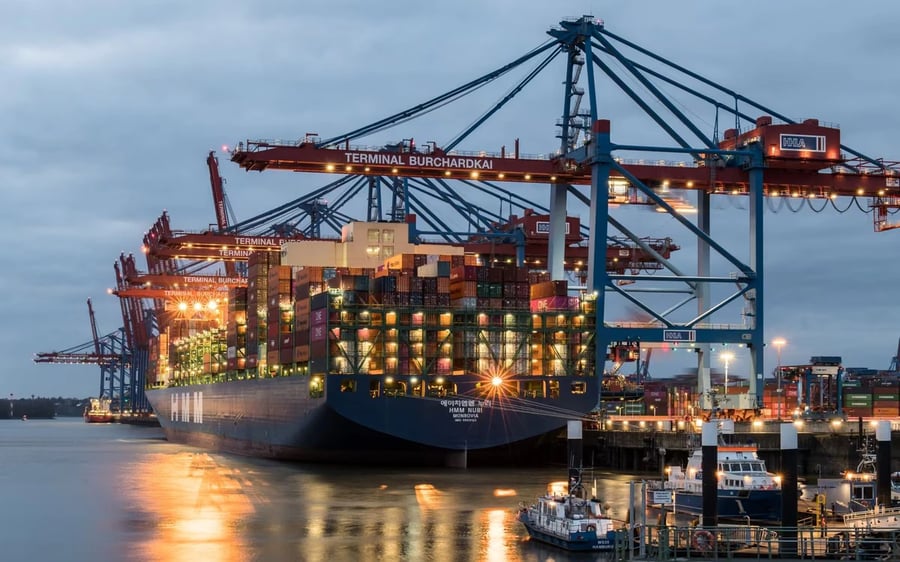
Last year the Port of Los Angeles handled $82 billion in trade with China and Hong Kong, down from $120 billion in 2024, according to the port's annual facts and figures. Vietnam climbed to $48 billion over the same period. Southeast Asia now accounts for 30% of the cargo the port moves, up from 26% a year earlier. For a furniture importer in Commerce or an apparel label in the Fashion District, those numbers say something beyond tariffs. The supply map is tilting, and the old assumption that every box should land in San Pedro Bay deserves a fresh look.
The Default Route Has a Long Tail
For decades the standard play for a Southern California importer was simple. Book every container into Los Angeles or Long Beach, truck it to a warehouse in Ontario or Fontana, and ship from there to customers wherever they happen to live. The two ports still handle about 31% of all U.S. containerized trade, and nothing here suggests that share is about to collapse. The trouble shows up on the order level. A unit sold to a buyer in Philadelphia rides an ocean leg, a drayage leg and a warehouse touch, then crosses roughly 2,800 miles of country before it reaches the porch.
Readers of California Business Journal who run national e-commerce brands tend to feel that last leg in their margins first. Cross-country parcel rates climb with every zone. Delivery promises stretch. And returns from the East Coast make the same long trip back.
What the East Coast Gateway Actually Offers
The Port of New York and New Jersey handled 8.9 million TEUs in 2025 and closed the year as the nation's second-busiest gateway for loaded containers, according to the Port Authority's year-end cargo report. Imports alone came to about 4.5 million TEUs. Rail volume grew 12.4% over 2024, but trucks still do most of the work.
The more useful number for a California founder came from Beth Rooney, who directs the Port Authority's port department. At an April meeting of the North Jersey Transportation Planning Authority, she said about 85% of the port's volume stays within roughly 250 miles of its terminals. That radius takes in New York City, Philadelphia and Boston. Newark and Elizabeth exist mainly to feed the consumers around them, which is exactly the demand a West Coast brand struggles to reach cheaply from the Inland Empire.
Rooney also described the port's long-range forecast. Its higher scenario assumes the port wins discretionary cargo that might otherwise move through other gateways, California among them. East Coast terminals are openly courting the same containers Southern California importers have always sent west.
Splitting the Order Before It Ships
The brands that make a two-port model work decide at the purchase order, not after the freight lands. When a PO goes to the factory, it gets divided by destination. Containers carrying West Coast stock book to Los Angeles or Long Beach. Containers carrying East Coast stock book to New York and New Jersey.
Three things have to be in place first. A brand needs regional sales data, usually a ship-to report pulled from Shopify, Amazon or its own order system. It needs a forwarder willing to quote both lanes side by side. And it needs a receiving point near the port, because a container sitting at a terminal past its free days starts collecting charges quickly.
Ocean transit to the East Coast generally runs longer than the Pacific crossing to California. So the split suits steady replenishment items better than rush launches or seasonal drops with a hard street date. A home goods company restocking its core sellers every six weeks is a natural fit. A brand dropping a limited collection timed to a holiday is not.
Where the Containers Go Next
That receiving point is where many California companies stall. Signing a multiyear East Coast lease to test a few containers a month rarely pencils out, and few founders want to manage a building on the other side of the country. A shared facility near the port fills the gap. Ardi Express, which also runs a warehouse in Riverside, operates more than 35,000 square feet at 2 Corporation Row in Edison, about 25 miles from the Newark and Elizabeth terminals along the New Jersey Turnpike. For a brand piloting a split-port model, a warehouse for rent in Edison, NJ can cover drayage from the terminals, container unloading, storage and outbound orders, with the East Coast leg handled by the same company as the West Coast one.
The first step costs nothing. Pull last year's orders by ship-to state and sort them by product line. If one line sells heavily east of the Mississippi, book a single container of it into Newark next season. Then compare the landed cost per unit against the San Pedro Bay route, with ocean freight, drayage, storage and final delivery all counted. One honest comparison from a brand's own data will say more than any port forecast.
Copyright © 2026 California Business Journal. All Rights Reserved.
For California Business Journal Disclaimers, go to https://calbizjournal.com/terms-conditions/.


