Ethics is no longer confined to philosophy seminars and hospital review boards. It has become one of the most urgent conversations inside research institutions, as AI forces new questions alongside long-standing debates in bioethics and environmental science. As AI adoption in research increases, found 64% of surveyed researchers now worry about AI-generated hallucinations, which are fabricated information presented as fact. Into that unease steps an unexpected voice with a different kind of answer: the Catholic organization FOCUS.
FOCUS, a Catholic missionary movement reaching people at every stage of life, released a report showing that spiritual formation and scientific rigor can build on each other rather than compete. According to the FOCUS 2025 Job Report, 175 FOCUS alumni are currently working in STEM fields, where they merge faith and science daily.
Among them is Erika Ellison, Ph.D., who served on FOCUS staff from 2014 to 2017 before earning a doctorate in plant biology. She now conducts genetics research at the University of Cambridge as a postdoctoral research associate, with support from the National Science Foundation.
“Good research asks a person to be honest, persistent and collaborative,” said Ellison. "These are the same qualities I developed during my time on staff with FOCUS. Spiritual formation does not take away from science; it shapes how I approach research and my perspective on why the work matters.”
That sense of “why” is not a given in technical careers. Only 30% of U.S. workers report a strong sense of purpose in their work, Gallup found, and those who lack it burn out far more often: 38% report frequent burnout, compared with 13% of workers who feel their work has meaning. The strain runs deep in STEM. A 2024 National Academies workshop on burnout in the science, technology, engineering, mathematics and medicine workforce reported that 42% of tech workers were weighing whether to leave their jobs within six months.
The distance between faith and the laboratory is real too. A 2009 Pew Research Center survey found that only about half of scientists, 51%, believe in God or a higher power, compared with roughly 95% of the general public. That gap can make a research university feel, to a young person of faith, like a place where they do not belong.
FOCUS alumni are quietly closing that distance. Out of the 175 working in STEM, 102 are in engineering and 54 in information technology, according to the 2025 Job Report.
“These numbers put data behind something we have watched happen for two decades,” said Tim Thoman, interim CEO of FOCUS. “Missionaries do not leave their formation behind when they walk into a laboratory or an engineering firm. They carry a different sense of purpose and human dignity into work that asks hard ethical questions every day, deepening their scientific research and discoveries.”
Being a FOCUS missionary asks students and young adults to build skills that carry into every vocation: working respectfully with those in authority, raising financial support and leading teams of their peers. Formed in one setting, those habits widen the career paths ahead of a person rather than narrowing them.
About FOCUS
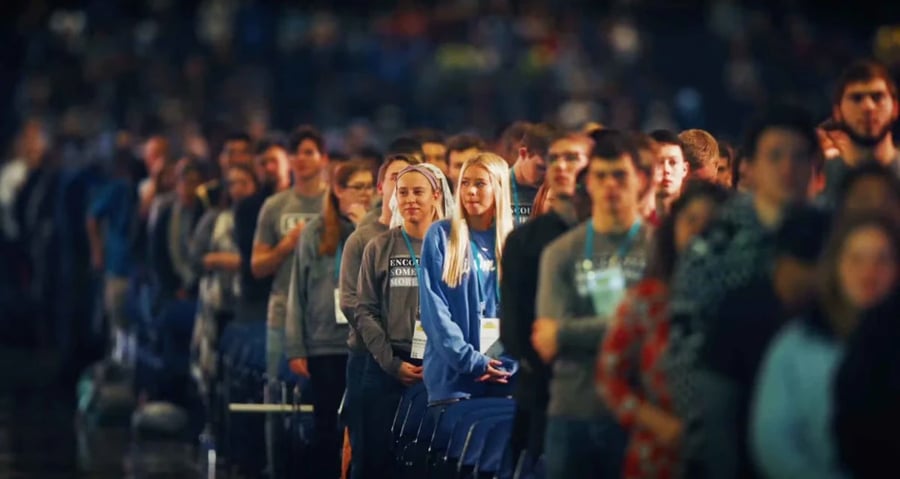
Since 1998, FOCUS has been inviting people into a growing relationship with Jesus Christ and his Church. More than 1,000 active FOCUS missionaries across the U.S. partner with local dioceses to reach people at every stage of life and help form the next generation of Catholic leaders. FOCUS hosts the annual SEEK conference, one of the largest Catholic gatherings in the country, to inspire and challenge people to deepen their personal faith in God. FOCUS.org
Wiley, "ExplanAItions 2025: The Evolution of AI in Research" (second annual ExplanAItions study, survey of more than 2,400 researchers worldwide, released Oct. 7, 2025)
Copyright © 2026 California Business Journal. All Rights Reserved.
For California Business Journal Disclaimers, go to https://calbizjournal.com/terms-conditions/.


