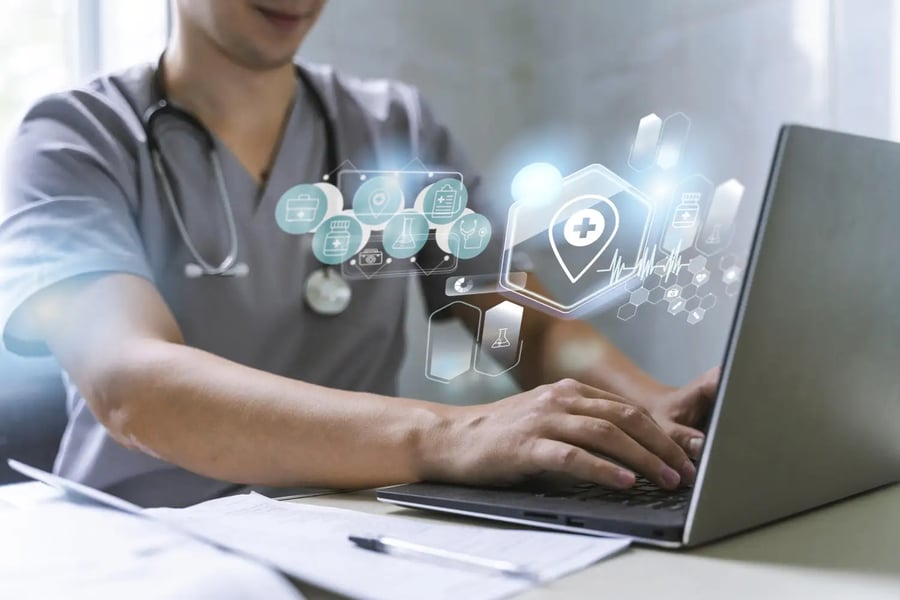
While technology touches nearly every contemporary field of study, few are being transformed more quickly than healthcare. Healthcare Learning Management Systems (LMS) are essential in this field, providing personalized solutions for readiness and improvement. Such systems respond to the distinctive challenges encountered by healthcare workers and institutions.
The Unique Needs of Healthcare
The healthcare field is one that continually undergoes the development of medical knowledge. Providing excellent patient care means doctors must constantly learn about the latest medical advancements. And this is where traditional training methods truly fall short. A specialized healthcare learning management system enables medical teams to enhance their knowledge continually. This helps them stay current with the latest techniques, tools, and rules.
Customization for Diverse Roles
The healthcare sector is diverse, with various roles that require specialized training and skills. The learning needs vary significantly among doctors, nurses, administrative staff, technicians, and others. Using a specialized LMS provides personalized content for every role to ensure training is relevant and effective. This forms a more specific learning resource that is easier to digest.
Compliance and Credentialing
Staying compliant with industry standards and regulations is critical in the healthcare vertical. Smart learning software handles all the record-keeping. It automatically tracks every certification, license, and training course your team completes. Automatic messages and quick updates help employees renew their licenses quickly. This stops any compliance headaches before they start. When hospitals keep tabs on both compliance and credentials, they run much more smoothly.
Interactive Learning Experience
Interactive features are delivered in a highly inclusive manner on some specialized LMS platforms, as engagement is key to an effective learning process. Quizzes, simulations, and video guides make learning really memorable. They grab attention and help you remember facts longer. Healthcare pros get to practice new skills and build their confidence in a virtual space before using them with actual patients.
Accessibility and Flexibility
Traditional classrooms often do not work well for healthcare professionals, who frequently serve long, nonstandard hours. Whether you're at home or traveling, these learning tools are incredibly convenient. They let you pick up your training modules on your own schedule, right from your device. This ease of access means that even those with the busiest work schedules still have an opportunity to refresh or expand their knowledge, encouraging a culture in healthcare facilities where continuous learning and skill improvement become the norm.
Tracking Progress and Performance
For both those learning and those teaching, tracking progress is a fundamental necessity. The dedicated LMS comes with robust analytics and reporting features. You can track how each person performs and how the entire team works together. Then, you'll easily find places to make things better. Feedback provides direct input that helps update the lessons accordingly. That means every session truly prepares for success.
Cost-Effectiveness and Resource Efficiency
Healthcare organizations can achieve greater cost-effectiveness by utilizing an LMS tailored to their specific needs. Through traditional training methods, costs are associated with travel, materials, and instructor fees. These costs can be reduced further by opting for digital content delivery through an LMS. The team can dedicate its energy to caring for patients. This means less time shuffling papers or figuring out schedules and more actual care.
Open Communication and Teamwork
The effectiveness of patient treatment critically relies on the unified actions of medical professionals. Therefore, cohesive team effort is indispensable. Communication and collaboration features are a big part of providing training using specialized LMS platforms that serve larger organizations. Group activities play an essential role. Lively discussion boards, shared team assignments, and thoughtful peer critiques effectively engage participants in the material.
Adapting to Technological Advances
With the advancement of technology, healthcare must also evolve to maximize its effective use. A traditional LMS cannot integrate advanced technologies like artificial intelligence and virtual reality in training programs, but a specialized LMS can. These innovations offer a more powerful return on investment in teaching preparation, learning from real-world experiences, and then confident application of new learning in the workplace.
Wrapping Up
The approach of incorporating specific LMS tools for healthcare may no longer be a growing trend but rather a future necessity. Imagine tools built just for your industry. These programs pinpoint your biggest headaches and then provide solutions that actually strengthen education and skill-building. With these clever learning platforms, healthcare teams learn in ways that fit them perfectly. They find the training enjoyable and easily accessible, which helps them provide top-notch care for every patient. Imagine staying compliant and certified without a hitch, or seeing teams work together effortlessly.
Copyright © 2025 California Business Journal. All Rights Reserved.
For California Business Journal Disclaimers, go to /terms-conditions/.


