In today’s fast-paced and increasingly hybrid business landscape, companies are investing heavily in digital tools, automation, and talent development — but one critical area often remains overlooked: the physical workspace.
Whether your team is remote, in-office, or hybrid, the design of your workplace environment plays a central role in performance, wellbeing, and retention. Ergonomics is no longer a peripheral consideration — it’s a business necessity.
Rethinking the Role of Office Design
Many business leaders underestimate the impact of poor ergonomics. Long hours in static positions, repetitive tasks, and misaligned workstations can result in chronic pain, fatigue, and distraction — all of which chip away at productivity and morale.
According to Safe Work Australia and global research bodies, musculoskeletal injuries are still among the most common work-related issues, costing companies millions each year in lost time, compensation, and staff turnover.
Ergonomics as a Strategic Advantage
Companies that embed ergonomics into workplace planning gain more than comfort — they unlock measurable advantages:
- Enhanced Focus: Employees with proper support are less distracted by discomfort and better able to concentrate on tasks.
- Reduced Sick Leave: Preventing injury before it occurs lowers absenteeism and medical claims.
- Higher Engagement: Workers feel valued when their environment supports them — leading to greater commitment and reduced churn.
- Increased Efficiency: Well-designed workstations contribute to faster workflows and fewer errors.
Whether your business operates in finance, marketing, education, logistics, or government services, the physical setup of your team has a direct impact on operational continuity and output.
Key Ergonomic Investments That Deliver Results
1. Ergonomic Task Chairs for Everyday Performance
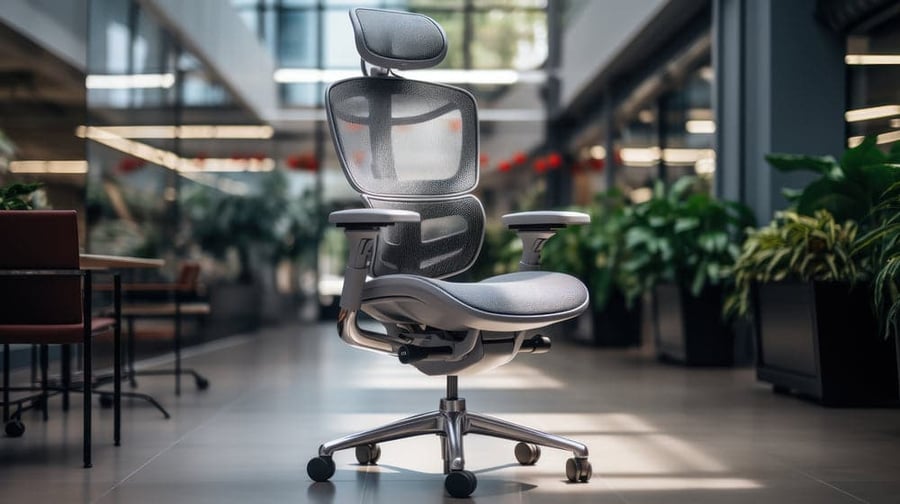
A properly engineered chair forms the cornerstone of a healthy workstation. Adjustable features, lumbar support, and breathable materials help maintain posture, reduce pressure on the spine, and prevent strain.
Modern ergonomic task chairs are designed for long-term use in dynamic professional environments — ideal for roles that require extended periods of computer-based work, meetings, or administrative duties.
2. Sit-Stand Desks for Movement and Flexibility
Prolonged sitting is a known health risk. Introducing sit-stand desks encourages employees to alternate between sitting and standing throughout the day, improving circulation, alertness, and overall wellbeing.
These desks are particularly valuable in open-plan offices or collaborative environments where flexibility and adaptability are key.
3. Anti-Fatigue Mats for Standing Comfort
In departments where employees spend prolonged time on their feet — whether at collaborative tables, standing desks, or warehouse-style packing areas — an anti-fatigue mat is an essential addition. These mats cushion pressure on joints, encourage subtle movement, and help prevent foot, leg, and lower back pain, especially in high-use areas.
Ergonomics in the Hybrid Era
As hybrid work models become the norm, the ergonomic conversation must extend beyond corporate headquarters. Businesses need to ensure that remote employees are also supported with adequate home setups.
Providing team members with equipment stipends, approved product lists, or direct delivery of ergonomic furniture can help bridge the gap between comfort and productivity at home.
A Responsible, Sustainable Approach
Forward-thinking organisations also consider the environmental impact of their purchasing decisions. Fortunately, many ergonomic furniture solutions today incorporate sustainable materials, recyclable components, and long-lasting build quality — aligning with ESG goals and procurement standards.
This dual commitment to wellness and sustainability is particularly attractive to stakeholders, partners, and clients.
Conclusion: A Competitive Edge Built on Comfort and Capability
As business challenges become more complex and the demand for high performance increases, ergonomic investment offers a high-return, low-risk opportunity to enhance your workplace environment.
By prioritising employee comfort through proven solutions — such as ergonomic task chairs, sit-stand desks, and anti-fatigue mats — companies demonstrate a tangible commitment to people, productivity, and progress.
Copyright © 2025 California Business Journal. All Rights Reserved.
For California Business Journal Disclaimers, go to /terms-conditions/.


