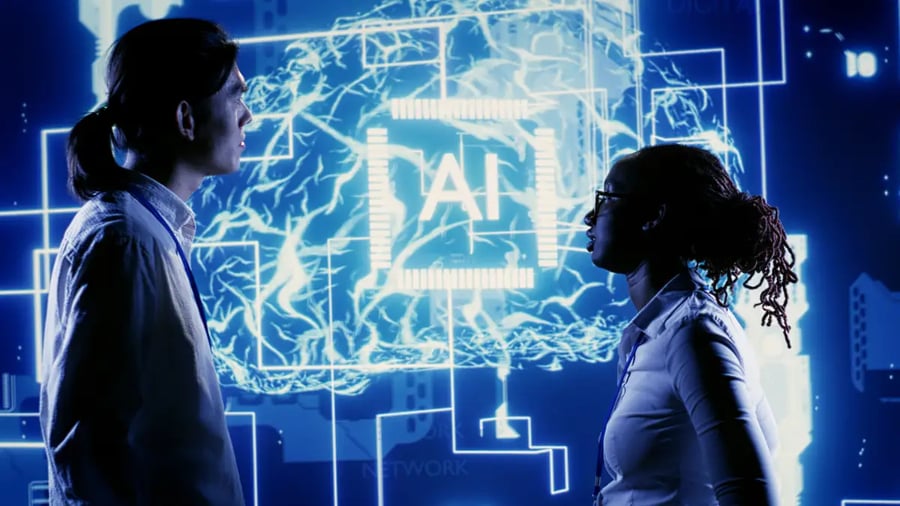
It feels like only yesterday we were all collectively gasping at the first generation of chatbots that could write a decent email. Back then, using artificial intelligence felt like a conscious choice, a specific project you embarked on to see what the tech could do. But as we move through 2026, the landscape has shifted. We aren’t in the era of experimentation anymore. We’re in the era of integration.
So, what does that actually mean for the average business owner? Honestly, it means we finally get to stop talking about the tech and start talking about the work again.
For businesses today, AI tools aren’t just shiny add-ons to a tech stack. They’re the plumbing. They’re the electricity. You don’t necessarily notice them when they’re working perfectly, but you certainly feel the friction when they’re missing. And the conversation has moved away from whether you should use these tools to which specific ones are essential for keeping your head above water in an increasingly automated market.
I remember the hum of the laptop at midnight, trying to manually sort through customer spreadsheets, and I realize how far we have come.
Rethinking the Creative Process
One of the most profound shifts has been in how we generate ideas and content. In the past, the blank page was the enemy. Now, the blank page barely exists. Generative tools have matured into sophisticated partners that understand context and nuance better than ever before. But have we stopped to consider if we are losing our "voice" in the process?
For marketing teams, the focus has shifted from high-quality curation. Tools that handle text, imagery, and even video generation have become standard. However, the real value in 2026 lies in tools that allow for deep personalization. We’re seeing platforms that can take a single core message and adapt it for dozens of different audience segments instantly, ensuring that a small business can compete with the reach of a global corporation.
It is about scale.
This doesn’t mean the human element is gone. In fact, it’s more important than ever. While the tools handle the heavy lifting of drafting and formatting, humans are needed to provide the soul, the strategy, and the final check on brand alignment. You know, that gut feeling that tells you if a campaign actually lands.
The Customer Experience Revolution
If there’s one area where customers feel the change most, it’s in support and engagement. The era of the frustrating, circular chatbot is largely over. The tools available in 2026 are empathetic and highly capable. They can resolve complex issues, process returns, and provide genuine technical advice without ever needing to escalate to a human agent for routine tasks.
Beyond just solving problems, these tools are dissolving the borders of the traditional marketplace. Language isn’t a barrier to entry for small businesses looking to go global anymore. Sophisticated apps that include live translate features now allow a support representative in one country to have a seamless, spoken conversation with a customer in another, with virtually zero latency.
It is a small world now.
This frees up human customer success teams to handle the truly sensitive cases. When a customer does get on the phone with a person, that person isn’t bogged down by data entry. They’ve got a full, AI-generated summary of the customer’s history and needs right in front of them. It makes the entire interaction feel more human, not less. I guess we are finally using tech to be more personal.
Efficiency Beyond the Spreadsheet
Operationally, the impact of AI is even more visible. Predictive analytics has moved out of the realm of data scientists and into the hands of department managers. We now have access to tools that can forecast inventory needs with startling accuracy by analyzing global supply chain trends and local weather patterns simultaneously.
But what happens when the data contradicts your gut feeling? Maybe we are still learning how to trust the machine.
In project management, AI assistants are now capable of more than just setting reminders. They can analyze the pace of a team, identify potential bottlenecks before they happen, and suggest reallocations of resources to keep a deadline on track. This kind of proactive management allows leaders to spend less time on logistics and more time on mentorship and long-term vision. And that’s the point. We want our time back.
Security and Ethics in the Automated Workplace
As we lean more heavily on these tools, the focus on security has naturally intensified. Businesses are now prioritizing AI platforms that offer robust data privacy and ethical safeguards. With the rise of automated processes, the risk of "black box" decision-making has become a concern. The essential tools of 2026 are those that offer transparency, allowing business owners to see exactly how a conclusion was reached.
Cybersecurity tools have also evolved. They now operate on a continuous loop of learning, identifying, and neutralizing threats in real time. For a modern business, having an AI-driven security layer isn’t optional anymore; it’s a fundamental requirement for protecting both company data and customer trust.
Looking Ahead
The tools we’re using today are more than just software. They’re reflections of a new way of working. They demand that we become better delegators, better editors, and better strategists. But are we ready to let go of the control we used to have?
The businesses thriving in 2026 are those that have stopped looking at AI as a separate entity and started seeing it as a fundamental part of their DNA. The goal isn't to replace the workforce but to amplify it. By removing the repetitive and the mundane, we give ourselves the space to do what humans do best: innovate, connect, and lead.
And honestly, that's what really matters.
Copyright © 2026 California Business Journal. All Rights Reserved.
For California Business Journal Disclaimers, go to /terms-conditions/.


