Michael Paulus's clients working through a capital gain this year have a new option on the table, one he has been walking advisors through in recent weeks: a fourth Opportunity Zone deal built through his ongoing partnership with Kinect.
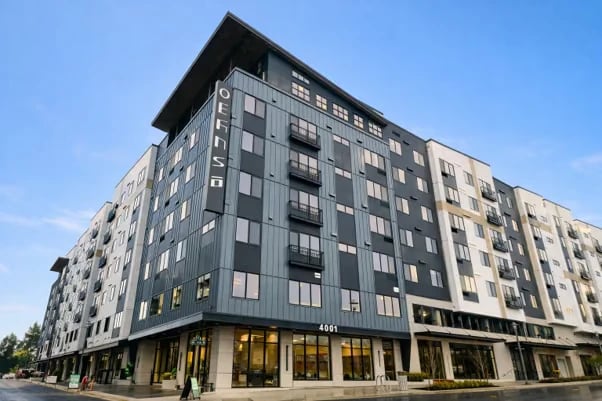
Paulus, founder and chief executive of the $1.3 billion family office PCM Encore, is giving clients a look at a Gresham, Oregon apartment project through his Opportunity Zone partnership with Kinect — a Qualified Opportunity Fund built around a single, already-under-construction, 305-unit property near the Gresham Station light rail stop outside Portland. It's the fourth deal he has been able to bring clients through that partnership, and the first structured to go to RIAs, family offices, and high-net-worth individuals directly rather than to institutional funds.
How the Tax Structure Works
The mechanics are worth spelling out, because they're the actual reason this deal is getting a second look rather than a form letter. Opportunity Zone rules let investors roll a capital gain from a stock sale, a business exit, or another property, into a qualified fund and defer the tax on that gain, provided the money stays invested long enough under federal holding-period rules. It's a structure that has mostly lived on the institutional side of the business for the better part of a decade. Paulus's premise is that a meaningful share of his own client base, and the broader private wealth channel more generally, wants that same access without having to meet a pension-fund-sized minimum check.
That distinction is the point, according to Paulus.
“As private markets continue to become an increasingly important part of investor portfolios, advisors and investors are looking for greater access to high-quality opportunities backed by experienced operators,” he has said. “By combining a disciplined investment approach with ACG’s operating platform, we believe that the platform can provide the private wealth channel with access to compelling opportunities and a differentiated approach to value creation.”
Built on Existing Relationships
For Paulus's clients specifically, that access runs through relationships he has spent years building on the other side of the table — he's a Strategic Partner at ACG and a co-founder, alongside ACG chief executive BJ Kuula, of the partnership's fund sponsor, not just a wealth manager pointing clients toward someone else's deal. The terms Paulus is showing clients include: a targeted 6.4 percent untrended yield on cost, an 80 percent vertical tax abatement over 10 years, and a sponsor co-investment of $14 million, representing 35 percent of total equity.
The demand side of Paulus's premise already has a data point to back it up. The Kinect side of the partnership closed its second multifamily fund earlier this year at $126.5 million, above its $100 million target, drawing more than 100 investors, and brought on two dedicated investor relations hires, Ali Winrow and Anna-Marie Allander Lieb, specifically to serve the private wealth audience going forward. Paulus's own client base has grown alongside that demand, crossing $1.2 billion in assets in the first six months he served outside families before reaching its current $1.3 billion, with his advisors now based in Bellevue, Aspen, Seattle, Denver, Dallas, Charlotte, and Menlo Park.
Flipping the Order
What's different with Gresham is who gets asked first. A deal like this used to go to a handful of institutional limited partners before anyone with a family office ever heard about it. Paulus's model, built on his Opportunity Zone partnership with Kinect, is designed to flip that order, and Gresham is this quarter's proof.
Copyright © 2026 California Business Journal. All Rights Reserved.
For California Business Journal Disclaimers, go to https://calbizjournal.com/terms-conditions/.


