
Introduction
Hiring veterans is one of the most effective strategies for businesses to strengthen their workforce, improve retention, and access valuable federal incentives. Every year, nearly 200,000 service members transition into civilian life, bringing advanced technical skills, leadership, discipline, and resilience that directly address today’s talent shortages. Beyond strengthening team collaboration and morale, studies show that veterans stay longer with employers, reducing costly turnover.
Federal programs like the Work Opportunity Tax Credit (WOTC) further reward companies financially, making this not just a patriotic choice but a smart business decision. With HR automation and integrated Verification of Employment, compliance and reporting become easier, cutting administrative burdens. Simply put, businesses can get tax credits for hiring veterans & more while building a loyal, skilled, and mission-driven workforce.
The Unique Skills Veterans Bring to the Workplace
Veterans bring leadership, teamwork, discipline, and problem-solving abilities refined in high-pressure environments. These capabilities often translate into improved productivity, reliability, and adaptability. UK research shows 85% of businesses that Hire Veterans believe veteran hires help fill skills gaps, particularly in management roles, while 86% agree veterans excel in leadership positions. A recent UK study confirms leadership, communication, planning, and decision-making competencies as crucial benefits that veterans bring. Leadership, discipline, adaptability, and reliability are recurring strengths cited across numerous business forums detailing why it makes sense to Hire Veterans.
Utilizing HR Automation during recruitment and onboarding enhances the integration of veteran talent. Automated systems can flag veteran candidates, simplify Verification of Employment, and expedite offers. These tools enable employers to maximize the value of Hire Veterans by facilitating seamless onboarding, pairing Tax Credit capture via WOTC with efficient Verification of Employment procedures driven by HR Automation.
Benefits to Business: Productivity, Culture, Fiscal Impact
Hiring veterans boosts productivity through discipline and adaptability, strengthens workplace culture with leadership and teamwork values, and delivers fiscal benefits through tax credits and reduced turnover costs.
1. Increased Productivity & Cost Savings
Veterans require significantly less training in teamwork, communication, and leadership compared to their civilian counterparts. UK businesses spend over £50,000 annually on training these competencies; hiring veterans can dramatically reduce that cost. A UK report highlighted only 17% of firms actively Hire Veterans in senior roles despite 91% of hires demonstrating enhanced business performance. Cost savings, leadership quality, and readiness to contribute are major reasons firms invest in Hire Veterans.
2. Cultural Benefits & Employer Brand
Military culture imbues loyalty, accountability, and resilience. Veterans often enrich team dynamics and cultural diversity. In the UK, 22% of employers reported that veterans helped build team spirit. Corporate reputational benefits accrue when businesses actively Hire Veterans, promoting social responsibility and workforce diversity. Recognition schemes like the UK’s Employer Recognition Scheme further enhance brand impact.
3. Fiscal Incentives-Tax Credit via WOTC
Employers that Hire Veterans can trigger powerful Tax Credit incentives through WOTC, ranging from $2,400 to $9,600 per eligible hire. The IRS defines WOTC as a federal incentive for hiring individuals from targeted groups, including veterans. The Department of Labor confirms employers must obtain certification before claiming the Tax Credit. Human Resources platforms increasingly offer HR Automation to manage WOTC compliance, boosting accuracy and simplicity.
4. Streamlined Onboarding via Verification Of Employment
Verifying prior employment and credentials is often slow. Verification of Employment delays reduce hiring velocity. HR Automation reduces bottlenecks by automating Verification of Employment processes, delivering faster, more reliable outcomes. Algorithms fetch historical data with minimal manual intervention. Walton’s DOL Toolkit automates WOTC screening, form submission, certification tracking, and simplifies Verification Of Employment, reducing compliance risk while helping businesses Hire Veterans efficiently. Integration of HR Automation with WOTC, Tax Credit, and Verification of Employment closes hiring loops and maximizes ROI for veteran hires.
Addressing Common Misconceptions
Addressing common misconceptions helps employers see beyond stereotypes. Veterans are adaptable, skilled, and ready to thrive in civilian roles, making them valuable assets to any business.
1. Difficulty Integrating Veterans into Civilian Roles
Some employers fear that veterans struggle in civilian environments. Data disproves this: veterans transition well when provided with onboarding support. High retention and positive performance metrics from veteran hires illustrate successful integration.
2. Skills Translation
Employers seeking skilled workers often overlook military veterans. Certain civilian recruiters undervalue military training. Yet veterans often excel in operations, logistics, leadership, and tech roles. Resources like Hire Heroes USA assist in translating military experience to civilian language. Well-structured onboarding, plus mentorship and HR Automation for Verification Of Employment, supports veterans as they acclimate professionally.
3. Risks of Tax Credit Complexity
Some businesses forgo WOTC credits due to perceived complexity. Manual errors, missed certifications, and filing delays are common. Adoption of HR Automation helps minimize mistakes and ensures deadlines are met. Automating WOTC processes from eligibility screening to form submission protects employers’ access to the Tax Credit and reduces administrative burden.
Incentives for Hiring Veterans
Incentives for hiring veterans include valuable tax credits like the WOTC, reduced recruitment costs, and access to government-backed programs that support long-term employment success.
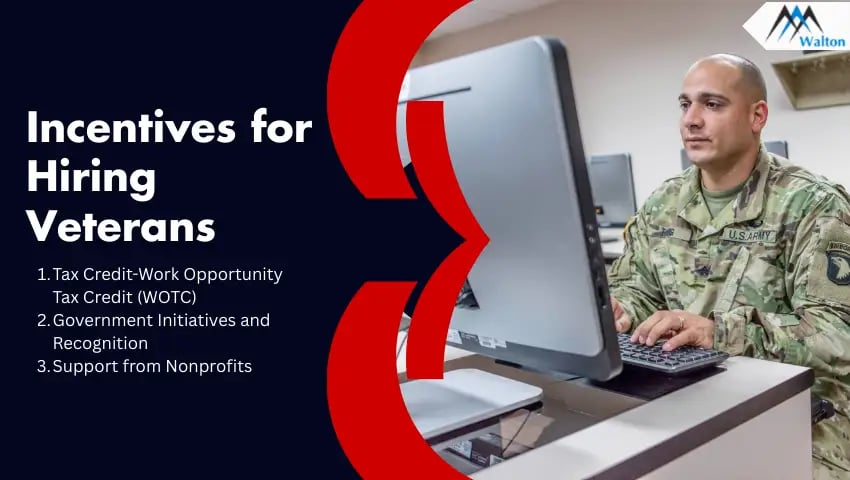
1. Tax Credit-Work Opportunity Tax Credit (WOTC)
WOTC offers employers a Tax Credit for hiring individuals in designated groups, including those who hire veterans. Certification is required and must be obtained before the claim. Savings per hire may reach up to $9,600. Employers using HR Automation can improve claim rate accuracy and unlock maximum Tax Credit benefits.
2. Government Initiatives and Recognition
In the UK, Op Ascend connects businesses with veterans, helping employers hire veterans while promoting cost-effective hiring. Recognition programs like the Employer Recognition Scheme award businesses that commit to veteran hiring.
3. Support from Nonprofits
Organizations such as the Call of Duty Endowment fund career transition programming and placement support for veterans. With a 2025 retention rate of 89% and average starting salaries over $75,000, these programs reinforce business contributions when hiring veterans. Wounded Warrior Project’s Warriors to Work offers resume coaching, interview prep, and employer matching.
How to Get Started
Getting started with veteran hiring involves using trusted resources, streamlining Verification of Employment, and building onboarding programs that help veterans transition smoothly into civilian roles.
1. Leverage Veteran-Friendly Recruitment Platforms
Engage with veteran job boards, government transition partnerships such as CTP (UK), and nonprofits that integrate into recruitment workflows via HR Automation to Hire Veterans efficiently.
2. Implement HR Automation for WOTC & Verification
Use systems that automatically screen for WOTC eligibility, submit forms, track certification, and manage Verification of Employment, especially when you hire veterans. Walton’s DOL Toolkit exemplifies this approach.
3. Train Internal Stakeholders & Transition Champions
Designate internal veteran champions to smooth integration and retention when companies hire veterans. Leaders such as McKinsey’s Veterans or Barclays’ military programs have proven successful.
4. Align Job Descriptions with Veteran Strengths
Emphasize leadership, adaptability, mission focus, and technical skills when you hire veterans. Translate terminology in civilian-friendly language. Combine with HR Automation to expedite Verification of Employment, WOTC, and candidate matching.
5. Promote Soft Onboarding & Mentorship
Provide mentorship, peer support, and custom onboarding for employees when companies hire veterans. Case studies like Cushman & Wakefield’s MVP include 12 weeks of training and mentoring.
6. Track Metrics & Adjust
Monitor retention, performance, claims of WOTC Tax Credit, and Verification of Employment throughput when you hire veterans. Use metrics to refine recruitment and retention strategies.
Success Stories
- Cushman & Wakefield hired over 1,400 veterans via its MVP program, offering training and mentorship, and plans additional hires. Recognized as a top military-friendly employer.
- Optus - Strengthening Workforce with Veteran Talent- Optus has actively enhanced its workforce by hiring ex-service personnel through Australia’s Veteran Employment Program. The company fosters an inclusive workplace with supportive policies, an employee network, and partnerships with organizations like Soldier On and Invictus Australia. Veterans contribute critical skills such as leadership, teamwork, and technical expertise, with many advancing into roles like satellite defense security management.
- Boeing Defence Australia employs over 1,000 veterans, highlighting leadership, discipline, and adaptability. Veteran-specific onboarding and community support drive successful integration.
Conclusion
Hiring veterans is a compelling business strategy. Employers who Hire Veterans benefit from disciplined leadership, adaptability, and team cohesion. Combining fiscal incentives like Tax Credit via WOTC with modern HR Automation and streamlined Verification of Employment makes the process efficient and cost-effective. Investing in veteran recruitment aligns financial gains with social responsibility. Moving forward with WOTC automation and veteran onboarding programs ensures lasting impact. For personalized guidance on implementing these strategies, contact Walton management to connect with experienced specialists.
Copyright © 2025 California Business Journal. All Rights Reserved.
For California Business Journal Disclaimers, go to /terms-conditions/.


