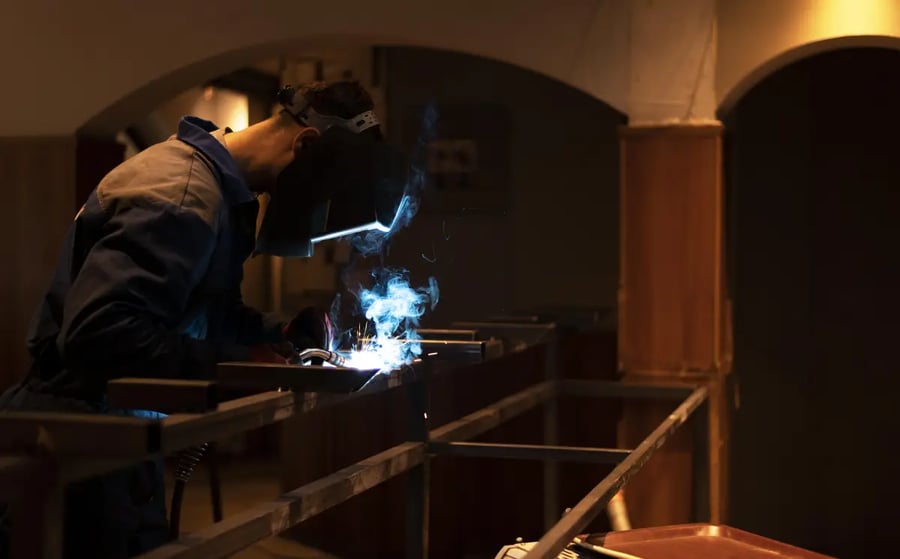
Laser welding technology offers a variety of advantages and disadvantages that manufacturers can see.
Every manufacturing industry wants to improve its production method at all times. Their aims are faster processes and product quality improvement. They have to also have solutions to current production necessities.
In the manufacturing industry, laser welding technology is gaining popularity. Has high speed, accuracy, and process control. This is especially helpful in a multitude of industries.
Laser Welding Technology: What is it?
Laser welding is a process that joins materials together with a concentrated laser beam. When using the laser, it generates a focused beam of heat at the welding site. When heated, this material has the ability to fuse well together, creating a strong joint.
Greater Welding Precision
Another significant benefit of laser welding is its accuracy. The laser beam is able to be focused to extremely small regions. This makes the manufacturer able to make precision welds.
This will work particularly well with smaller parts. It can also be used with intricate and complex designs. In industries where there are stringent specifications, precision comes into its own.
Better Weld Quality
Joints must be strong for a manufacturer and be reliable. Weld quality can result in higher product returns/repairs. Laser welding technique can achieve a clean and uniform welding seam. The high levels of energy aid in controlled penetration.
The end product might also be smoother. This can minimize the need for a lot of finishing.
This uniformity will be useful with high production volumes.
Lower Material Distortion
When the temperature is raised, the shapes of the parts made out of metal can change. A significant amount of heat may cause traditional welding to produce a lot of distortion.
This will help to minimise warping and dimensional change. This is particularly beneficial for thin parts of metal. But actual performance is still based on material properties. Good machine set-up continues to be key.
Reduced Post-Welding Work
Time-consuming finishing is often needed with traditional welding. Grinding, polishing, and cleaning are operations that can occur after welding.
The fewer post-processing steps that are required, the quicker the production is going to take. It can also decrease the number of labour and consumable expenses.
Businesses researching laser welding machines for sale should compare several factors. These include laser power, welding speed, control systems, and machine reliability.
Laser Welder Price Understanding
Being situated in the initial investment is likewise crucial. Before a business buys a laser welder, they need to know the true laser welder cost.
There are a number of factors to consider when pricing Machines.
Applications Across Manufacturing Industries
There are several industries that have found laser welding to be a useful process throughout their industry. Many of these same facilities also rely on overhead lifting solutions — such as an underhung overhead crane — to move components efficiently between workstations without consuming valuable floor space. Other applications include:
Stainless steel fabrication
Battery component production
Automotive manufacturing
Electronics assembly
Machinery production
Metal enclosure manufacturing
Thus, technology can be used to support large production and special manufacturing.
Developing a stronger future for Laser Welding.
Manufacturing technology continues to be developed. Companies are employing better production techniques and machinery that are automated and digital.
Laser welding has been adaptable for this evolving scenario. It offers precision, quickness, and process flexibility.
Conclusion
Laser welding technology is becoming more and more popular among manufacturers. The rationale is essentially clear, and so is their use.
Laser welding can enhance precision and speed. They should also consider training and maintenance costs and overall operating costs. Laser welding, if done properly, can be a useful production process tool when equipped with proper equipment.
Copyright © 2026 California Business Journal. All Rights Reserved.
For California Business Journal Disclaimers, go to /terms-conditions/.


