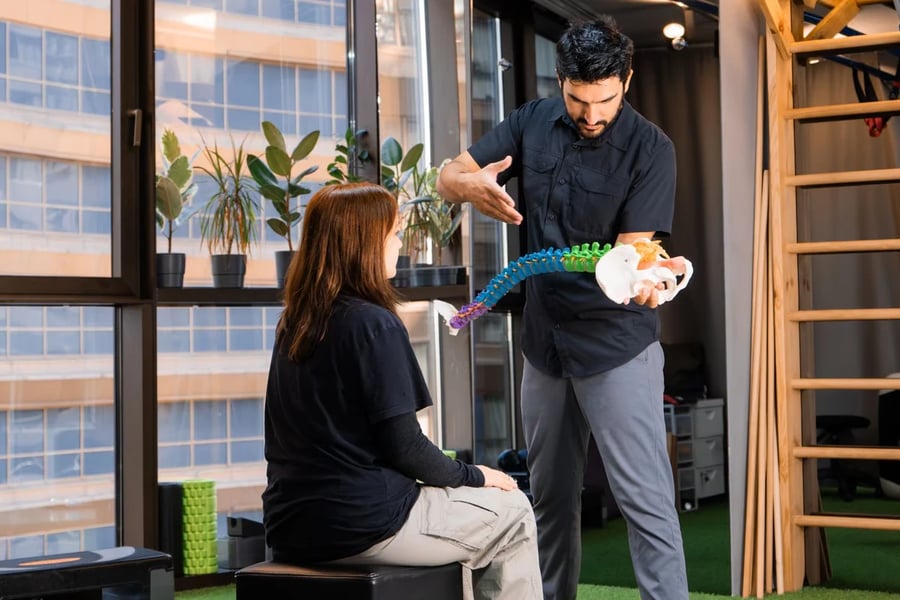
Chronic pain has a way of reshaping daily life. A lingering knee problem changes how someone exercises. Shoulder pain makes basic tasks harder. A back issue can turn a full day at a desk or a long commute into something a person has to plan around.
For adults balancing work, family, exercise, and other responsibilities, treatment brings another consideration: how much disruption will recovery create?
That question is helping drive interest in non-invasive approaches to chronic pain. Instead of viewing medication, injections, or surgery as the only paths forward, people are looking at options that can support pain management and function without an incision or lengthy recovery period.
The right treatment still depends on what is causing the pain. Non-invasive does not automatically mean better, and no single approach works for every condition.
Chronic Pain Requires a Different Approach
Acute pain and chronic pain are not the same problem. Acute pain commonly follows an injury, illness, or procedure and improves as the body heals. Chronic pain continues beyond the expected healing period or persists for three months or longer. It can involve an old injury, repetitive strain, joint problems, tendon conditions, or other underlying issues.
That difference matters because simply waiting for chronic pain to disappear does not always work. For persistent problems, treatment needs to consider both pain and function. The goal is not simply to feel better for a few hours. It is to determine what is contributing to the problem and find a realistic way to improve movement and daily activity.
Why Non-Invasive Treatment Is Getting More Attention
There is no single category of non-invasive treatment for chronic pain. Depending on the condition, care can include exercise therapy, chiropractic care, manual therapy, acupuncture, lifestyle changes, and other physical treatment methods.
The Centers for Disease Control and Prevention recommends maximizing appropriate nonpharmacologic and nonopioid treatments for subacute and chronic pain. Options should be selected according to the specific condition and the individual patient.
Newer technologies have also expanded what conservative care can include. One example is StemWave therapy, a non-invasive acoustic-wave technology used to provide temporary relief of minor muscle and joint aches and pains. The treatment delivers mechanical pulses to a targeted area without an incision or injection.
These approaches are attractive for a straightforward reason: people want to improve without putting the rest of their life on hold.
Less Downtime Can Change the Treatment Decision
Recovery time is not a minor issue. A treatment might make sense medically but create challenges when someone cannot easily step away from work, caregiving, travel, or other responsibilities.
Non-invasive treatments can sometimes reduce those practical barriers. Depending on the treatment and condition, potential advantages can include no surgical incision, no general anesthesia, little or no procedural recovery time, the ability to continue normal activities, treatment delivered through outpatient visits, and a lower level of disruption to work and family routines.
These benefits should not be confused with a guarantee of faster healing. Chronic conditions still take time, and some require rehabilitation regardless of the treatment selected.
Treatment Is Moving Toward Function, Not Just Pain Scores
One of the most useful shifts in chronic pain care is the focus on function. A pain score can tell a provider how someone feels at a particular moment. It does not necessarily show how well that person can live.
Useful treatment goals are more specific. They might include walking for 30 minutes without needing to stop, sitting comfortably through the workday, returning to strength training, climbing stairs without modifying movement, or returning to a sport or hobby.
A More Practical Way to Think About Chronic Pain Care
People are not only asking, “Will this reduce my pain?” They are also asking how a treatment fits into their life, whether it helps them move better, how much downtime it requires, and what realistic improvement looks like.
The best choice starts with understanding the source of the problem, setting practical goals, and choosing treatment based on the individual condition rather than a promise of a quick fix appropriately.
Copyright © 2026 California Business Journal. All Rights Reserved.
For California Business Journal Disclaimers, go to https://calbizjournal.com/terms-conditions/.


