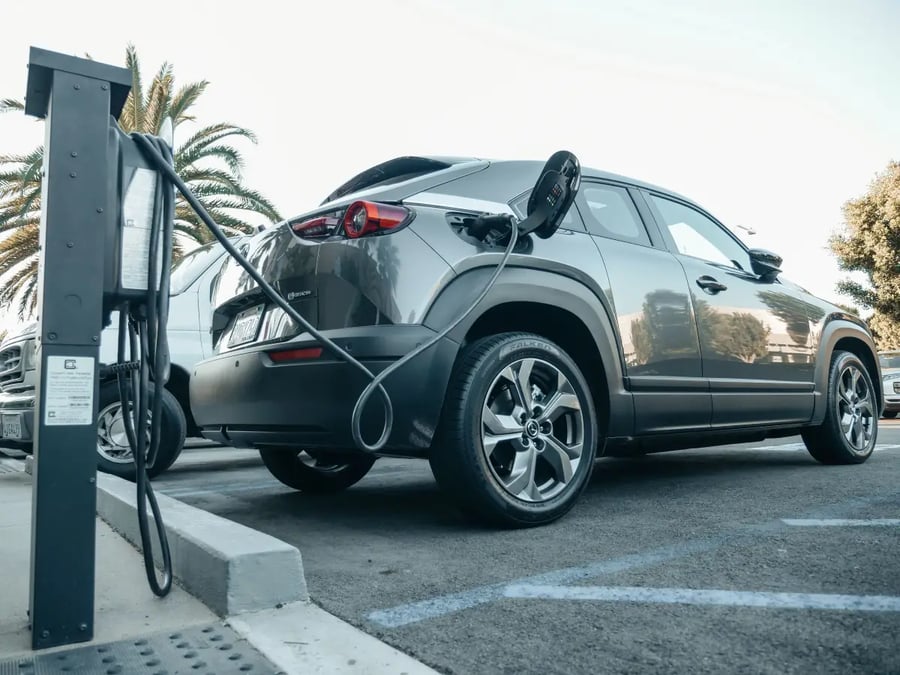
Australia is currently undergoing a major shift in transport. Consumer interest in lower-emission driving is steadily increasing, electric vehicles are gaining traction, and charging infrastructure continues to expand.
However, hybrid cars still have an important role to play in this evolving landscape. For many drivers and businesses, they are not a compromise; they are a practical, well-suited solution that reflects the financial and everyday driving realities of Australia.
Cost Considerations For Households and Small Businesses
Choosing a car involves much more than comparing the sticker price. Fuel, maintenance, insurance, depreciation, and finance all contribute to the total cost of ownership.
When households and small businesses look at the bigger financial picture, hybrid vehicles often make a compelling case. Over three to five years of ownership, a hybrid can deliver substantial fuel savings, particularly for people who spend a lot of time on the road.
Maintenance costs are generally comparable to those of traditional petrol-powered vehicles, and hybrid technology has matured to the point where reliability concerns have largely been addressed by major manufacturers.
Financing can also work in your favour. Some lenders now offer green finance products designed specifically for lower-emission vehicles. Taking out a hybrid car loan through one of these lenders may provide more competitive rates than standard personal or car finance, helping reduce your overall cost of ownership.
For small businesses, there may also be tax benefits associated with fuel-efficient vehicles. Speaking with an accountant about depreciation schedules and running cost deductions can uncover additional savings that further strengthen the case for choosing a hybrid over a conventional petrol vehicle.
The EV transition is not one-size-fits-all
The move towards electric vehicles is an important part of reducing emissions, but assuming EVs are the ideal choice for every Australian overlooks how people actually live and travel.
Drivers in metropolitan areas with access to home charging are often well placed to make the switch. For many others, the reality is different. Not every household has off-street parking; regional communities may still have limited access to fast chargers; and small businesses cannot always afford to interrupt daily operations to accommodate charging schedules.
National Transport Commission data shows that hybrid sales have grown strongly, particularly in the SUV segment. Australians are clearly looking for ways to reduce emissions without sacrificing flexibility. It’s not resistance to change; it is a practical response to real-world transport challenges.
Hybrids help bridge that gap. They allow drivers to reduce fuel consumption and emissions today without waiting for charging infrastructure to catch up or making significant changes to everyday routines.
Where hybrids solve practical transport problems
For everyday commuters, hybrids can deliver immediate fuel savings. Their ability to operate on electric power at lower speeds and seamlessly switch to petrol when needed makes them highly efficient for typical Australian suburban driving, especially in stop-start traffic.
The equation changes for regional drivers. Long distances between towns and a limited charging network can make full EV ownership less practical. Hybrids offer a lower-emission alternative that doesn't rely on charging infrastructure, making them a sensible option for communities where widespread EV charging is still developing.
Small business owners operating delivery vehicles, trade utes, or company cars also benefit from this practical middle ground. Fleets that carry heavy equipment or cover unpredictable daily distances depend on reliability above all else. A hybrid helps reduce fuel costs and the number of refuelling stops without introducing the range concerns that can disrupt a busy workday.
How lower-emission choices support broader sustainability goals
Individual vehicle choices contribute to Australia's broader efforts to reduce emissions. The Australian Government's Green Vehicle Guide provides fuel consumption and emissions data that helps buyers compare different models and better understand their environmental impact before making a purchase.
Choosing a hybrid is a meaningful step towards lowering emissions, even if it is not your final destination. Manufacturers have continued to improve hybrid technology, with many models producing significantly lower CO2 emissions than comparable petrol-only vehicles.
For businesses with sustainability reporting requirements or ESG commitments, introducing hybrids into part of a vehicle fleet can also contribute to measurable environmental progress.
The key is not to think of the decision as all-or-nothing. Sustainability can be achieved through gradual improvements. Choosing a hybrid today does not prevent you from switching to a full EV when it is time to replace your vehicle. Instead, it allows you to reduce emissions now while avoiding the operational challenges of moving to an infrastructure that may not yet suit your needs.
Questions to ask before financing a hybrid vehicle
Before buying, it is worth asking yourself a few practical questions.
What does your average day behind the wheel look like? Is most of your driving around town, or are you regularly travelling on the highway? Hybrids typically deliver the greatest fuel savings in stop-start city traffic.
If you are considering a plug-in hybrid, do you have access to home charging? Without regular charging, a plug-in hybrid may not deliver its full efficiency benefits, making a standard hybrid the more practical and hassle-free choice.
Next, look beyond the purchase price and calculate the total cost of ownership. Consider fuel, servicing, insurance, and finance costs over several years rather than focusing solely on what you pay upfront. It is also worth checking whether you qualify for green finance products, as some lenders offer lower interest rates for eligible lower-emission vehicles.
Finally, if the vehicle will be used for business, speak with a tax adviser about potential deductions or depreciation benefits. Hybrids are not simply a temporary stepping stone. For many Australians, they are the right solution for where they are today.
The practical power of hybrids
Australia's transition to lower-emission transport is not an all-or-nothing journey. For millions of Australians, hybrids are not a temporary compromise. They are a smart, practical choice that suits the roads they drive, the budgets they manage, and the infrastructure that exists today.
By reducing emissions and operating costs without requiring major lifestyle or infrastructure changes, hybrids demonstrate that practical sustainability does not have to wait for the future. It is something Australians can start embracing right now.
Copyright © 2026 California Business Journal. All Rights Reserved.
For California Business Journal Disclaimers, go to /terms-conditions/.


