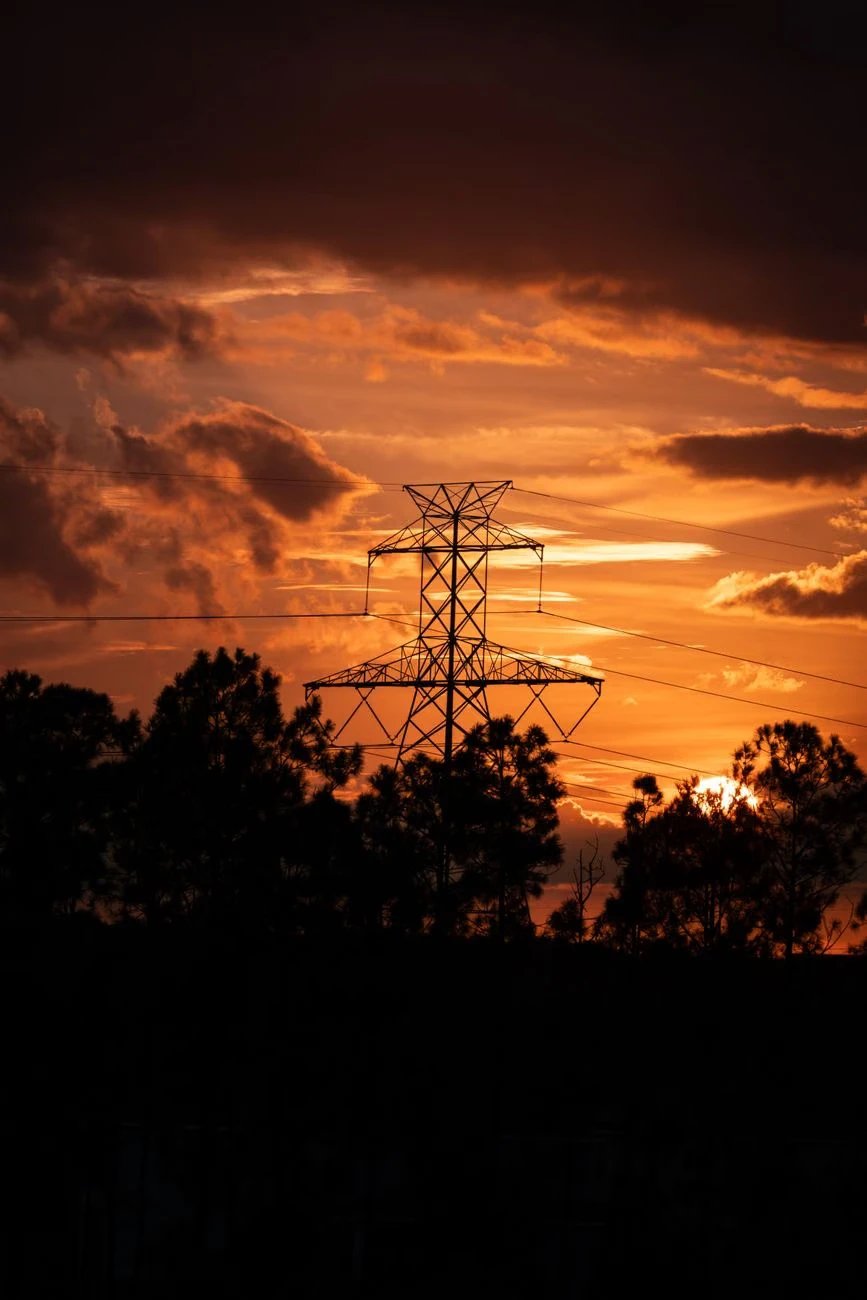
Power Outages. Eleven hours. That's how long the average American went without power in 2024 — and Florida residents weren't sitting anywhere near the average. Three major hurricanes chewed through the state's grid in a single season, and a lot of homeowners who swore they'd "figure it out when the time comes" found themselves in the dark for days, not hours. The wait-and-see strategy has a price, and it's getting steeper every year.
This isn't about fear. It's about math. When you actually add up what an outage costs your household — spoiled food, hotel stays, lost remote work hours, potential pipe damage from Florida's summer heat — the case for proactive backup power stops being a luxury argument and becomes a pretty simple financial one. Here's how to think about it clearly, and what separates a smart investment from an expensive mistake.
The Grid Reality Florida Homeowners Are Up Against
Most people assume outages are a temporary inconvenience. The trend data says something different. U.S. electricity customers experienced an average of 11 hours of power outages in 2024, nearly twice as many as the annual average across the previous decade, according to a new report from the Energy Information Administration. Florida absorbed an outsized share of that total. Hurricane Milton alone left 3.4 million customers in Florida without power.
What makes this trend uncomfortable is that the grid isn't getting younger. Aging transmission infrastructure, increasing extreme weather frequency, and surging electricity demand from electric vehicles and home offices are all pulling in the wrong direction at once. Waiting for the grid to improve before buying a generator is a bit like waiting for hurricane season to calm down before buying flood insurance.
The U.S. Energy Information Administration tracks this data annually through its Electric Power Annual report. Interruptions attributed to major events averaged nearly nine hours in 2024, compared with an average of nearly four hours per year in 2014 through 2023 — a more than twofold jump in a decade. For Florida, where heat can turn a one-day outage into a safety event, that trajectory matters.
You can review the full EIA outage duration data, broken down by state, in the U.S. Energy Information Administration's 2024 Electric Power Annual report, which documents how 2024 became the worst year for outage hours in a decade.
What a Power Outage Actually Costs Your Household
Here's the number that tends to surprise people: roughly one in four American households lost power at least once in 2023. About 33.9 million, or 1 in 4, households nationwide reported they were completely without power at least once in the 12 months before they were interviewed for the 2023 American Housing Survey — and approximately 70% of those households said at least one outage lasted 6 hours or more.
Six hours is the threshold where costs start compounding. Your refrigerator and freezer are now at risk. If you work from home, your productivity has cratered. In a Florida summer, your home hits uncomfortable temperatures within 90 minutes of the AC going offline, and within a few hours, you're looking at a hotel. Homeowners were more affected by power outages than renters — 28.3% of homeowners reported a power outage, compared to 19.9% of renters — which makes sense, since owning means you're dealing with more appliances, more square footage, and more to lose.
The Census Bureau's 2023 American Housing Survey data on power outage frequency and duration across U.S. households puts a concrete face on just how common these events already are, long before a named storm makes landfall.
The Standby Trap: Why Portable Generators Disappoint
A lot of Florida homeowners own a portable generator. Many bought one in a panic the week before a storm, paid retail surge prices, and discovered three things pretty quickly:
Running extension cords to keep only one or two appliances alive is exhausting and doesn't protect the whole house.
Portable units require manual startup, constant refueling, and outdoor placement — none of which are convenient at 2 a.m. in a tropical storm.
They don't cover HVAC, which is the one system that matters most in Florida's summer heat.
Call this the Standby Trap: the portable generator feels like a solution right up until an actual outage reveals how narrow its coverage really is. Whole-home standby generators — the kind hardwired to your home's natural gas or propane supply and connected through an automatic transfer switch — activate within seconds of a grid failure, without anyone touching them. Your AC keeps running. Your fridge stays cold. Your Wi-Fi is up. You may not even notice the power went out until you check your phone.
The gap between "having a generator" and "having the right generator" is significant, and it's a distinction worth making before you need it.
Sizing Backup Power: The Load Priority Matrix
Choosing a generator without calculating your actual load is the most common sizing mistake homeowners make. The right question isn't "how big a generator can I afford?" It's "what do I actually need to keep running, and what does that load add up to?" Here's a practical framework built around four priority tiers:
Priority Tier | Typical Loads Included | Approximate kW Needed |
|---|---|---|
Tier 1 — Life Safety | Refrigerator, lights, phone charging, medical devices | 3 to 5 kW |
Tier 2 — Comfort | Central AC (1 zone), fans, water heater | 8 to 12 kW |
Tier 3 — Full Household | AC (all zones), kitchen appliances, washer/dryer | 16 to 22 kW |
|---|---|---|
Tier 4 — Full + EV Charging | Everything above plus Level 2 EV charger | 26 to 40 kW |
For most Florida single-family homes, Tier 2 or Tier 3 is the right target. If you're running a 2,400-square-foot home with two AC zones and a home office, an 18 kW unit will keep you comfortable but might struggle under full simultaneous load. A 22 kW system gives you breathing room. The honest answer here is that load calculations should be done by a certified technician, not estimated from a chart — but the chart gets you in the right ballpark before that conversation.
Turning the Decision Into Action
Once you've settled on a tier, the buying decision simplifies into four practical steps. First, confirm your fuel source — natural gas is the preferred option in most Fort Myers neighborhoods because you never have to refuel it. Second, get a load calculation done by a licensed electrician. Third, verify the installer is factory-certified for the brand you choose, since warranty coverage often depends on it. Fourth, ask about maintenance contracts upfront; a generator you never service is a generator that fails when you need it.
Working with a local specialist who handles installation, service, and maintenance under one roof tends to produce fewer headaches than coordinating three separate vendors. Generator Supercenter of Fort Myers is one of the certified Generac dealers in Southwest Florida that covers all four steps — from turnkey installation of units ranging from 18 kW to 60 kW, to ongoing maintenance and repairs across all makes and models.
If you're still on the fence about timing, consider this: generator installation lead times tend to spike after a major storm, sometimes stretching to several weeks as every contractor in the region gets slammed simultaneously. The homeowners who don't wait in line are the ones who scheduled before the season, not during it.
The Right Question to Ask Yourself
Forget "do I need a generator?" — that ship has sailed for most Florida homeowners. The more useful question is: which tier of coverage matches what I'd genuinely lose if the power went out for four days? Work backward from that answer, and the sizing, the brand, and the installer choice all follow naturally. The only move that doesn't pay off is the one you keep postponing until after the storm.
Copyright © 2026 California Business Journal. All Rights Reserved.
For California Business Journal Disclaimers, go to https://calbizjournal.com/terms-conditions/.


