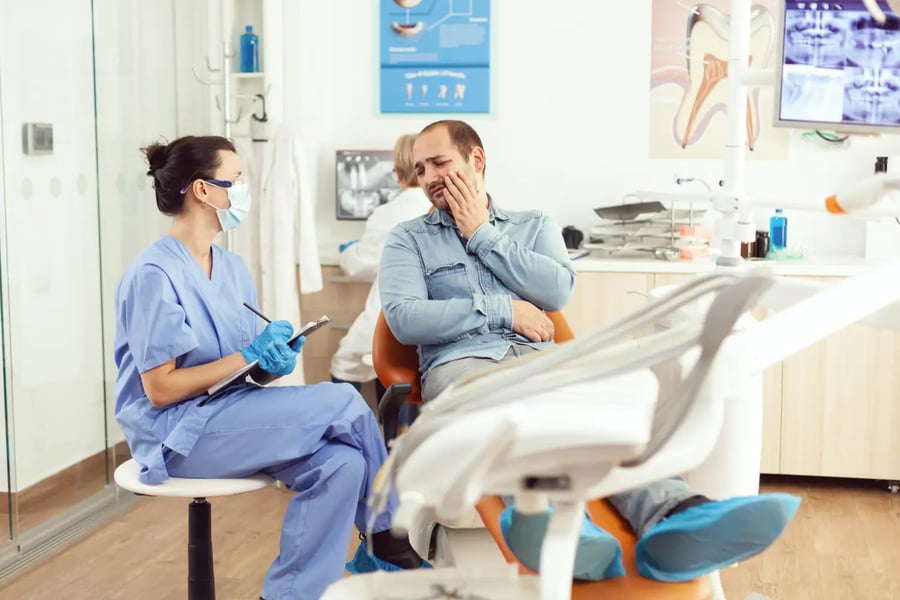
A root canal is meant to eliminate pain—not cause it. So if you notice that a tooth with a root canal hurts when pressure is applied, it can be confusing and concerning. While this situation isn’t uncommon, it often points to an underlying issue that needs attention.
Is Pain After a Root Canal Normal?
Some mild discomfort immediately after a root canal is normal, especially when chewing. However, this should resolve within a few days to a couple of weeks. Persistent or recurring pain when biting down is not normal and should be evaluated.
Common Causes of Pressure Pain After a Root Canal
Inflammation of Surrounding Tissue
Even though the nerve has been removed, the surrounding tissues (ligaments and bone) can still become inflamed. This may cause sensitivity when biting or applying pressure.
High Bite (Occlusion Issue)
If the treated tooth sits slightly higher than the others, it will absorb more force when you bite. This can lead to pain that feels like it’s coming from inside the tooth.
Incomplete Root Canal Treatment
Sometimes, not all canals are fully cleaned or sealed. This can allow bacteria to remain, leading to infection and pressure sensitivity.
Cracked Tooth
A crack in the tooth structure can cause sharp pain when biting. This is especially common in teeth that have undergone extensive dental work.
Infection or Abscess
If bacteria re-enter the tooth, an infection may develop at the root tip. This often causes pain when pressure is applied.
How Dentists Diagnose the Issue
Your dentist may:
- Take X-rays to check for infection
- Perform bite tests to identify pressure points
- Evaluate the crown or filling
- Examine the surrounding gums and bone
These diagnostic steps help determine whether the issue is mechanical or biological.
Treatment Options
Depending on the cause, treatment may include:
- Bite adjustment: Smoothing the tooth surface
- Retreatment of the root canal: Cleaning and resealing
- Apicoectomy: Surgical removal of infected tissue at the root tip
- Crown placement: Protecting the tooth from further damage
- Extraction (last resort): If the tooth cannot be saved
When to Seek Help
Don’t ignore these warning signs:
- Pain when biting or chewing
- Swelling or tenderness
- Persistent discomfort weeks after treatment
- A recurring pimple-like bump on the gums
Expert Care Matters
If your tooth still hurts after a root canal, it’s important to consult an experienced dental provider. The team at Bloom Dental of Arlington can evaluate your symptoms and recommend the right treatment to restore comfort and function.
Copyright © 2026 California Business Journal. All Rights Reserved.
For California Business Journal Disclaimers, go to /terms-conditions/.


