Most pool owners do not switch to automation overnight. In many cases, manual care works well enough for a while, especially in smaller pools with limited debris, light use, and relatively stable conditions. When the environment is predictable, the maintenance routine can still feel manageable.
The need for a different system usually appears only when that stability starts to break.
The First Signs That Pool Maintenance Is Becoming Unstable
The shift is usually gradual, not dramatic. A pool does not suddenly become impossible to manage. It starts showing patterns that are harder to ignore.
Debris returns faster than before. The same areas collect buildup again and again. Manual corrections stop feeling occasional and start becoming part of the routine. The pool may look clean after one round of work, but it does not stay that way for long.
That is often the real turning point. The issue is no longer how much effort goes in. It is whether the current method can still hold the pool in a stable condition.
Why Inground Pools Often Reach That Point Faster
Pool structure plays a big role in how maintenance behaves over time. Inground pools tend to introduce more variation than simpler layouts. Steps, slopes, corners, and depth changes all affect how debris moves and where it settles.
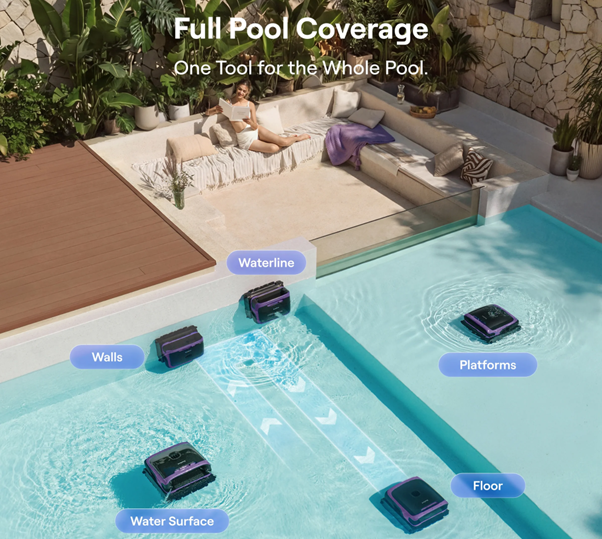
Some zones collect particles quickly, while others stay relatively clear. That uneven pattern makes maintenance harder to keep consistent with manual routines alone. In these cases, robotic pool cleaners for inground pools are often considered not just because they save effort, but because they can handle more complex coverage across the whole pool.
Environmental Changes Make Pool Care Harder to Predict
Structure is only part of the picture. Outdoor conditions add another layer of instability. Wind brings in debris unexpectedly. Trees and nearby plants add leaves and dust. Temperature shifts affect water movement and balance. Heavy pool use makes conditions change even faster.
As these factors combine, pool care becomes less about isolated cleaning sessions and more about keeping up with ongoing variation. That is why some owners start to feel that the real problem is not the work itself, but how often the same issues keep returning.
When an AI Pool Cleaner Starts Making Practical Sense
At this stage, automation becomes less of a luxury question and more of a system question. Traditional maintenance reacts after a visible problem appears. An ai pool cleaner is designed to work differently by responding more continuously to changing conditions.
That does not mean every pool needs the same level of automation. It means pools with recurring debris return, uneven cleaning results, and repeated manual correction often need a more consistent way to stay under control.
A Simple Way to Judge What Your Pool Really Needs
A practical test is straightforward: if your pool keeps falling out of usable condition between cleanings, the issue is no longer just cleaning effort. It is a maintenance system problem.
When fast debris return, uneven buildup, and repeated correction become normal, manual care may no longer be enough to keep up. At that point, the question is not whether automation sounds useful. It is whether your current system still matches the reality of the pool.
Copyright © 2026 California Business Journal. All Rights Reserved.
For California Business Journal Disclaimers, go to /terms-conditions/.


