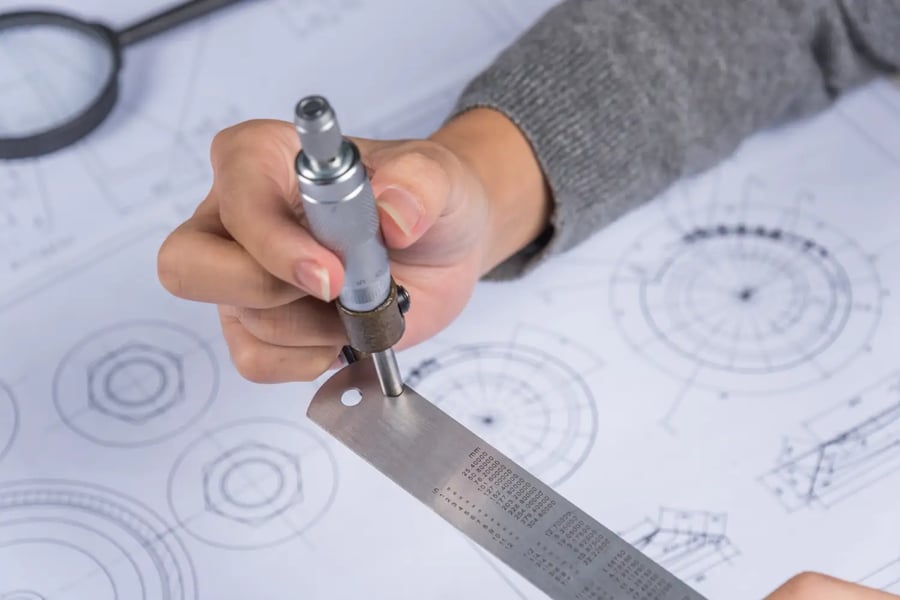
If you’ve ever dealt with splines, you know they’re deceptively simple. On the surface, they look like just another series of ridges and grooves. But in reality, splines are the quiet workhorses of power transmission. They connect shafts and hubs, keep torque flowing, and ensure everything turns together smoothly. And here’s the thing: when splines don’t match standards, the consequences can be expensive, think premature wear, misfits, or outright mechanical failure.
That’s where standards come in. DIN, ANSI, and ISO provide the common language for spline design and cutting, ensuring parts made in one factory fit and function with those from another. Let’s unpack what these standards mean, why they matter, and how they guide spline cutting in practice.
Why Standards in Splines Matter
Splines aren’t glamorous, but they’re everywhere—from automotive transmissions to heavy machinery and even aerospace systems. Precision is non-negotiable. If a shaft spline doesn’t mesh perfectly with its mating hub, torque transfer suffers. Over time, that misfit turns into wear, chatter, or failure.
Standards exist to prevent these headaches. By setting rules for dimensions, tolerances, and profiles, organizations like DIN, ANSI, and ISO make sure manufacturers, designers, and machinists are all speaking the same technical language. Without that agreement, global supply chains would be chaos. Imagine trying to fit a German-made gearbox shaft into an American hub with no shared reference—it would be a recipe for downtime.
A Quick Tour of the Big Three
DIN (German Institute for Standardization)
DIN standards originated in Germany and are widely used across Europe. In spline cutting, DIN 5480 is one of the best known. It defines involute splines, laying out dimensions, pressure angles, and tolerance fields. DIN splines often favor flexibility, allowing designers to choose combinations that balance strength and manufacturability.
One practical point: DIN systems allow a variety of tooth counts and modules, which gives engineers room to fine-tune designs. If you’re working with European machinery, odds are high you’ll encounter DIN splines.
ANSI (American National Standards Institute)
ANSI standards dominate in North America. Commonly referenced standards include ANSI B92.1 for involute splines. These are similar in principle to DIN but have different conventions for dimensions, fit classes, and tolerances.
ANSI splines often classify fits into categories such as “sliding fit” or “interference fit.” This makes it easier to specify how tightly or loosely two parts should engage. For U.S.-based manufacturing, ANSI provides the framework that most machine shops and suppliers expect.
ISO (International Organization for Standardization)
ISO standards aim to harmonize practices globally. ISO 4156, for example, addresses involute splines with straight-sided teeth. While ISO is international, it often incorporates elements of DIN and ANSI to create a common baseline.
What’s interesting is how ISO works as a bridge. For multinational companies, ISO standards simplify sourcing and reduce the risk of incompatibility. If your parts need to cross borders, ISO is often the safer bet.
Profiles, Pressure Angles, and Fits
Standards aren’t just about names and numbers. They drill into the details that make splines reliable.
- Profiles: Most modern standards cover involute profiles, where the tooth shape allows smooth transfer of torque and easier manufacturing.
- Pressure angles: Common values are 30° for DIN and 45° for ANSI, though variations exist. The choice impacts strength and contact stress.
- Fits: Whether you need a shaft to slide easily or lock tightly into a hub, standards define the allowable clearances and interferences.
These details might sound abstract, but in practice they mean fewer surprises. A machinist cutting a DIN 5480 spline knows exactly what the mating hub should look like—and vice versa.
Real-World Challenges in Spline Cutting
Of course, standards provide guidance, but execution still matters. Manufacturing splines requires careful control of tooling, machine setup, and inspection. Even a slight deviation in tooth form or root radius can push a part out of spec.
This is where CNC machines and dedicated spline cutting tools make the difference. Broaching, hobbing, shaping, and milling each have their place, and the choice depends on volume, material, and tolerance requirements. Inspection is equally critical. Gauging tools, CMMs (coordinate measuring machines), and even optical scanners are often used to verify compliance with DIN, ANSI, or ISO.
Why Mixing Standards Can Be Risky
Sometimes manufacturers are tempted to mix and match. For example, using a DIN spline shaft with an ANSI hub. On paper, they might look close, but in practice the small differences add up. Even slight variations in pressure angle or fit class can cause uneven load distribution. That leads to higher stress on teeth, faster wear, and potentially catastrophic failure in critical systems.
It’s a bit like using a metric wrench on an imperial bolt. You might get it to turn, but the fit won’t be right, and sooner or later, something rounds off or breaks.
That is why specialized machining services play such an important role. Providers experienced in internal spline cutting can guarantee compliance with DIN, ANSI, or ISO specifications, reducing the risk of misfits and ensuring long-term reliability.
Looking Toward the Future
Standards continue to evolve as materials, machining methods, and application demands advance. Additive manufacturing, for example, is opening doors to spline designs that were difficult or impossible with traditional cutting. At the same time, global supply chains are pushing harder for harmonization, which is where ISO is likely to play an even bigger role.
For engineers and manufacturers, staying current with updates to DIN, ANSI, and ISO is not just a matter of compliance. It’s also about competitiveness. Being able to guarantee that your splines will fit and perform anywhere in the world is a major advantage.
Final Thought
Splines may not capture much attention outside the world of engineering, but they are essential links in countless systems. Standards like DIN, ANSI, and ISO ensure that these links are strong, reliable, and interchangeable.
Whether you’re designing a gearbox, programming a CNC machining center, or sourcing parts across borders, understanding spline standards is more than technical trivia—it’s the foundation of smooth, reliable power transmission.
Copyright © 2025 California Business Journal. All Rights Reserved.
For California Business Journal Disclaimers, go to /terms-conditions/.


