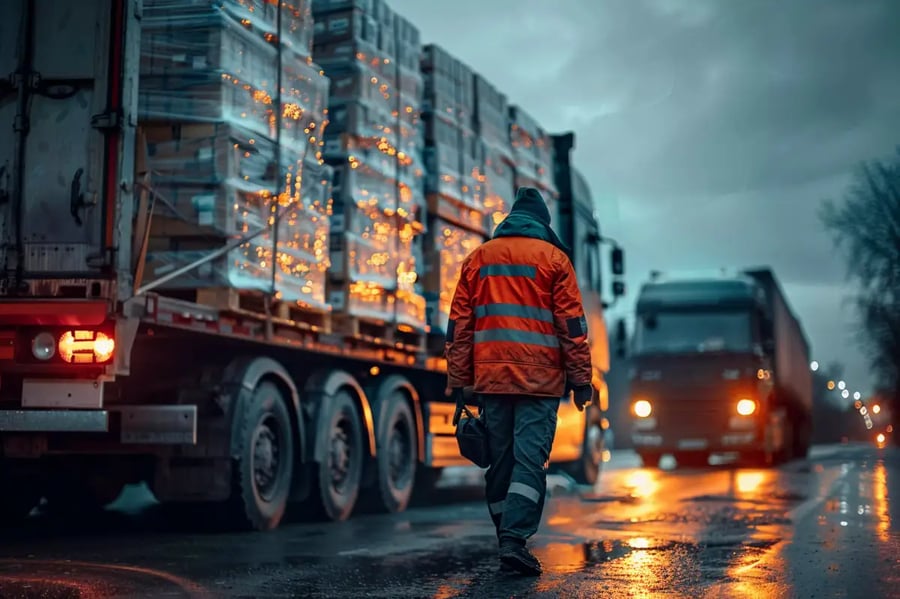
When a collision involves a big‑rig or commercial truck, the consequences can be devastating. In the Bay Area and throughout Northern California, truck traffic is heavy — from the Port of Oakland to the major interstates like I‑880, I‑80, I‑5 and the East Bay bridges — and the scale and complexity of truck accidents make them uniquely hazardous. As someone who has handled serious injury and wrongful death cases, I’ve seen first‑hand how these crashes differ from typical car accidents. Here are the top ten reasons why truck accidents are so dangerous.
1. Sheer size and weight of trucks
Commercial trucks are far larger and heavier than typical passenger vehicles. A fully‑loaded semi‑tractor‑trailer can weigh up to 80,000 pounds in California. That size means that when a crash occurs, the force transferred to the smaller vehicle or pedestrian is massive. The kinetic energy involved makes injuries much more severe and often catastrophic. What might be a moderate crash in a car becomes a life‑changing event when a truck is involved.
2. Blind spots and limited maneuverability
Truck drivers face greater blind spots (“no‑zones”) around their vehicles, reduced visibility, and less ability to swerve or stop quickly compared with cars. On Northern California freeways, trucks merging, changing lanes or navigating on‑ramps face challenging conditions. When they cannot evade hazards in time, the risk of side‑swipes, underride collisions or jack‑knife incidents goes up dramatically.
3. High center of gravity and rollover risk
Because many trucks carry high loads or have elevated trailers, the center of gravity can be much higher. This increases the chance of rollovers, especially on curves, in bad weather, or when a truck is loaded improperly. A rollover can crush vehicles, spread debris, block traffic for hours, and significantly increase the risk of severe injury or death for passengers.
4. Complex chain of responsibility
In many truck accidents, liability is not straightforward. It may involve the driver, the trucking company, the manufacturer of tires or brakes, the shipper who loaded the cargo, and even maintenance providers. This complexity can delay investigations and intensify the risk faced by crash victims who need help navigating a web of corporate and regulatory actors. As a trial attorney in the Bay Area and Northern California, I know that uncovering these layers is often essential for achieving fair compensation.
5. Fatigue, hours‑of‑service and driver error
Truckers often drive long hours, sometimes under pressure to meet schedules or deadlines. Fatigue can impair reaction time, decision‑making, and overall alertness. California and federal regulations require rest periods and limit hours of service, but violations still happen. The combination of high speed, heavy vehicle load, and tired driver make truck accidents especially dangerous.
6. Variable loads and cargo shifts
Unlike cars, trucks carry huge and variable loads — liquids, bulk goods, heavy equipment, containers. If cargo is not properly secured or balanced, it can shift mid‑trip, leading to loss of control, tipping, or catastrophic unloading in the event of a crash. On mountain passes north of the Bay Area (such as I‑80 over Donner Summit or I‑5 through the Tejon Pass), shifting cargo adds an extra margin of danger.
7. Road, weather and terrain challenges in Northern California
Northern California’s topography and climate create additional hazards: winding roads, steep grades, mountain passes, fog, rain, and even snow in the winter. Trucks navigating these conditions must contend with heavier loads and longer stopping distances. A truck losing control on a steep descent or icy pass can cause chain‑reaction crashes that involve multiple vehicles and significant casualties.
8. Serious injury potential for other road users
When a passenger vehicle collides with a truck, occupants in the smaller vehicle often suffer severe injuries: traumatic brain injury, spinal cord damage, amputations, internal organ damage, multiple fractures. In truck‑involved collisions, the mismatch is huge — the truck’s mass, momentum and braking distance all compound the harm to occupants of cars, motorcycles, bicycles or pedestrians.
9. Underride and override risks
One of the deadliest hazards in truck crashes is when a smaller vehicle goes under (underride) or over the trailer of a semi. These types of collisions often result in the passenger compartment being crushed or the roof sheared off. In the Bay Area’s mix of highways, surface streets and freight corridors, these dangers are tragically real. For example, at night or in inclement weather, a car may collide with the rear of a trailer and become trapped beneath it — with devastating consequences.
10. Post‑crash complications and long‑term consequences
The danger doesn’t end at the moment of impact. Victims of truck accidents often face lengthy hospital stays, multiple surgeries, rehabilitation, permanent disability, job loss, emotional trauma, and enormous medical bills. The complexity of truck‑accident litigation means that families may face a prolonged battle for compensation while they are trying to recover or adjust to a new reality. In Northern California’s legal landscape, those consequences often ripple through families, communities and workplaces.
Why this matters in the Bay Area & Northern California
Our region is unique. The Bay Area has dense freight traffic (especially around the Port of Oakland, I‑880 in the East Bay, I‑80 across the Bay Bridge, I‑5 and I‑680 in the North Bay and East Bay corridors). Trucks share the road with commuter traffic, bicyclists, pedestrians, and an increasing number of rideshare vehicles. On Northern California highways and mountain routes, steep grades and weather add complexity. Because of this mix, the risk of serious truck‐involved collisions is elevated.
At my San Francisco‑based firm, we see how these regional factors play out: a freight truck merging into commuter traffic during morning rush hour on I‑880, a tractor‑trailer descending a mountain grade, a big rig negotiating tight urban streets. And when those events go wrong, the human toll is immense. That’s why we believe victims and families deserve swift, expert help.
What you should do if you’re involved in a truck accident
If you or a loved one is in a collision involving a commercial truck, here are some critical steps:
- Seek immediate medical attention, even if you believe your injuries are minor — some injuries (e.g., internal bleeding) show up later.
- Report the accident to local authorities and obtain a copy of the police report.
- Preserve evidence: photos of the scene, vehicle damage, road conditions, skid marks, cargo shifts, signage, lighting.
- Avoid giving recorded statements to trucking companies or adjusters before talking to an attorney. Commercial carriers and insurers often move quickly to limit liability.
- Contact an experienced attorney who understands truck‑accident litigation, including federal and state trucking regulations, cargo loading issues, and complex liability chains.
Conclusion
Truck accidents are inherently dangerous — the size, weight, complex cargo, regional terrain and traffic conditions all combine to raise the stakes. In San Francisco, the East Bay, the North Bay and across Northern California, the risk is real and the consequences often severe. As a trial attorney with deep experience in serious injury litigation, I encourage anyone impacted by a truck accident to take the matter seriously, understand the unique perils, and get the support needed to hold responsible parties accountable.
If you or someone you love has been injured in a truck accident, you don’t have to face this alone. We’re here to help you understand your rights and pursue justice.
https://maryalexanderlaw.com/san-francisco-truck-accident-lawyer/
— Mary E. Alexander
Mary Alexander & Associates, P.C.
Copyright © 2025 California Business Journal. All Rights Reserved.
For California Business Journal Disclaimers, go to /terms-conditions/.


