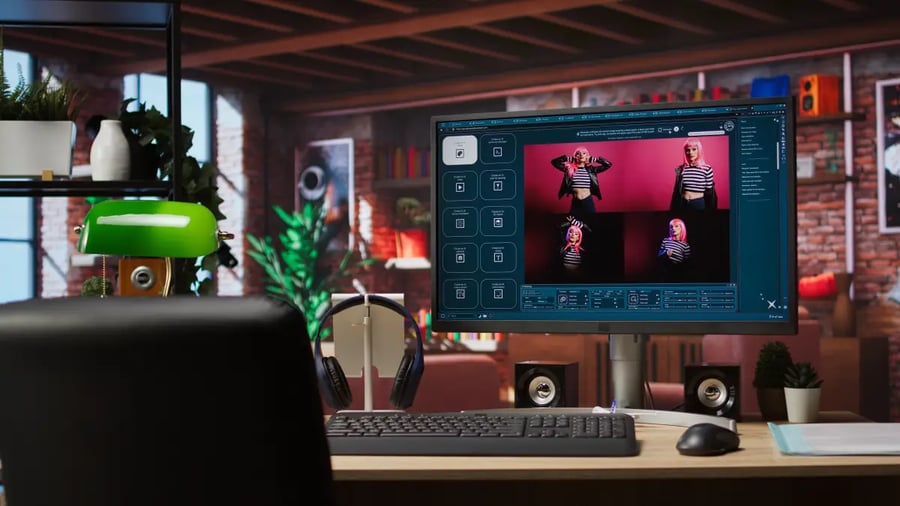
AI video is changing how filmmakers plan, visualize, and create content.
In this guide, I'll break down the best AI video generators for cinematic projects in 2026 and compare their strengths in realism, motion, editing, and storytelling.
Top 10 AI Video Generators for Filmmakers
Now let’s go through the tools that matter most in 2026.
1.Loova AI — Best Overall Filmmaking Workflow
Loova AI is different from the other tools on this list because it is not a single model. It is a multi-model AI video platform.
Instead of locking you into one system, it lets you work across multiple AI video models in one place.
This is important for filmmakers because no single model is best for everything.
For example:
- Seedance 2.0 is strong in cinematic realism
- Kling AI is better for motion and camera control
- PixVerse is faster for idea testing
- Wan and Grok Imagine are better for stylized creativity
With Loova AI, you can use:
- Text to video to turn scripts into scenes
- Image to video to animate storyboards or concept art
- multiple models to compare cinematic outputs
It turns AI video generation into a structured filmmaking pipeline instead of scattered tools.
2. Seedance 2.0 — Best for Cinematic Realism and Film Quality
Seedance 2.0 is one of the strongest models for high-quality cinematic output.
Seedance 2.0 delivers some of the most film-like outputs currently available.
Best for:
- Realistic lighting
- Emotional storytelling
- Cinematic composition
- High-end short films
3. Kling AI — Best for Camera Movement and Dynamic Shots
Kling AI focuses heavily on motion control.
Best for:
- Tracking shots
- Action scenes
- Smooth camera transitions
- Motion-heavy sequences
Where it shines is movement. If your scene depends on energy, motion, or cinematic camera work, Kling AI is a strong option.
4. Veo 3.1 — Best for High-Fidelity Realism
Veo 3.1 is designed for realism and physical accuracy.
Best for:
- Realistic environments
- Natural motion
- High-detail cinematic visuals
This model is often used when realism is the priority over stylization.
5. Runway — Best for Filmmaking Editing Workflow
Runway is not just a generator. It is also a production tool.
Best for:
- Scene extension
- Object removal
- Clip refinement
- Editing workflows
For filmmakers, this makes it useful in post-production workflows.
6. PixVerse — Best for Fast Cinematic Concept Testing
PixVerse is focused on speed.
Best for:
- Storyboards
- Creative exploration
- Fast visual testing
It is less about final output and more about fast iteration.
7. Vidu — Best for Short Cinematic Clips
Vidu is optimized for short-form video production.
It works well for:
- cinematic social media clips
- trailer-style scenes
- fast storytelling formats
- short visual experiments
8. Pika — Best for Beginner Filmmakers
Pika is one of the easiest tools to start with.
It is suitable for:
- simple cinematic ideas
- basic scene generation
- learning AI video workflows
- quick experimentation
9. Wan — Best for Stylized Cinematic Visuals
Wan focuses more on artistic direction than strict realism.
It is useful for:
- stylized film aesthetics
- creative visual storytelling
- experimental cinematic scenes
- artistic mood generation
It works well when you want expression over realism.
10. Grok Imagine — Best for Creative Film Concepts
Grok Imagine is designed for creativity and exploration.
It is often used for:
- abstract cinematic ideas
- experimental storytelling
- unusual visual styles
- concept development
It is less predictable, but more creative.
Final Thoughts
AI video is becoming a practical filmmaking tool rather than a novelty. The most successful creators are not looking for one perfect model, they are building workflows that combine the strengths of multiple models.
Copyright © 2026 California Business Journal. All Rights Reserved.
For California Business Journal Disclaimers, go to /terms-conditions/.


