The internet space is changing at a very fast rate. Through passwords, it is impossible to secure sensitive information. Individuals perpetrating cybercrimes have perfected the art of stealing credentials and hacking into other security systems. That has created a pressing need in trusted and tight authentication.
In the quest to protect their systems and data, companies are now turning to biometric solutions. Facial recognition software has become the principal technology in this new security landscape. It is offering an uncommon combination of usefulness and strength. You can never forget or steal a face in the same way that you can forget or steal a password.
Facial Recognition Technology
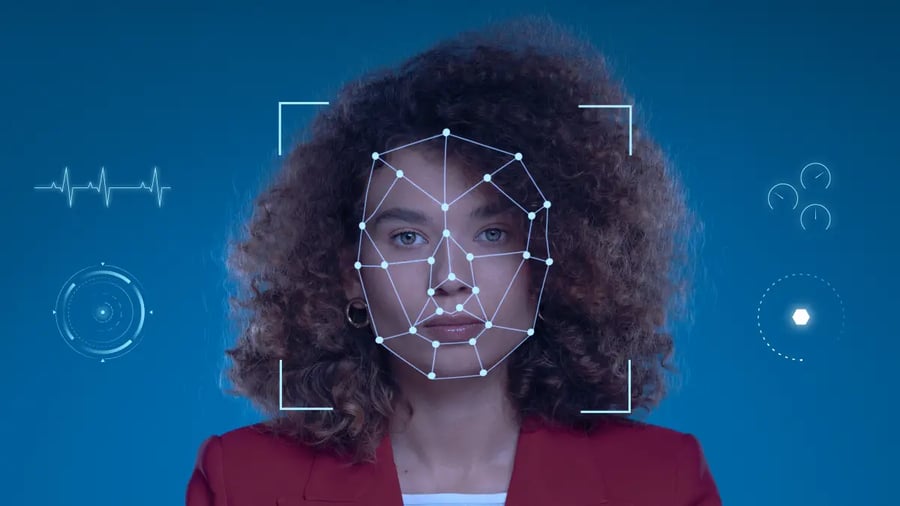
Facial recognition technology involves mapping features of a face. It is measured by the closeness of the eyes, cheekbone shape, and jawline. The measurements are converted into a special digital signature known as a facial signature or template. This template can then be compared to a stored copy to check an identity. This basic ability is what makes the facial recognition software most valuable as a tool in cybersecurity.
Privacy-Preserving Architecture:
One of the key trends in this field, a move towards privacy-preserving designs, should be noted. The original systems were inclined to store the biometric images in the central cloud server to be processed. This has created a honeypot of sensitive information, which could be easily targeted by attackers. Modern face authentication platforms avoid that risk by keeping encrypted templates instead of raw images.
Age and Certification in the Regulated Industries.
The age of the user is a significant condition in the case of industries that deal with products that have age restrictions. A facial recognition technology has also now been used to provide age assurance. With advanced algorithms, it is possible to tell the age of a person simply by observing the facial features of that person with very high accuracy.
Compliance and Certification:
Facial recognition that is to be used in high-assurance applications like financial services or government must be of good quality. A framework of digital identity that was introduced by the National Institute of Standards and Technology (NIST) is provided in Special Publication 800-63. This model identifies the degree of assurance of identity proofing (IAL) and authentication (AAL).
Work of a Face Recognition device.
Image Capture
The gadget takes a photograph of a face through a camera system. The luxury devices incorporate 3D depth mapping and infrared sensors. They are additional sensors that eliminate spoofing attacks. The infrared camera cannot be deceived by a photo printed on paper. 3D depth can not be duplicated in a video replay.
Face Detection and Alignment
The device identifies the face in the image taken. It disregards all the other elements in the frame. Landmark detection follows. The system recognizes the important points such as eye corners, nose tips, and jawlines.
Template Creation
The device transforms the face into a mathematical form of a biometric template. This is not a photo. It is impossible to retrace to form the original face. A neural network isolates the unique characteristics of the face shape. The process is one-way. With the template, an attacker is not able to recreate the face.
Matching Process
The device is used to compare the new template with stored templates. The validation mode is one-to-one. The appliance is scanning through all the templates kept. Whether there is a match is decided on a similarity score. The system has a setting of a threshold to find the balance between security and convenience.
Conclusion
The password-free future of cybersecurity is here to stay, and the biometrics of tomorrow are the new password. KBA has plenty of vices that cannot be ignored. Facial recognition software also provides easy and safe biometrics, so it becomes the logical alternative. The technology is maturing very rapidly. The facial recognition will remain a cornerstone of the current cybersecurity because it will be capable of being the most effective.
Copyright © 2026 California Business Journal. All Rights Reserved.
For California Business Journal Disclaimers, go to /terms-conditions/.


