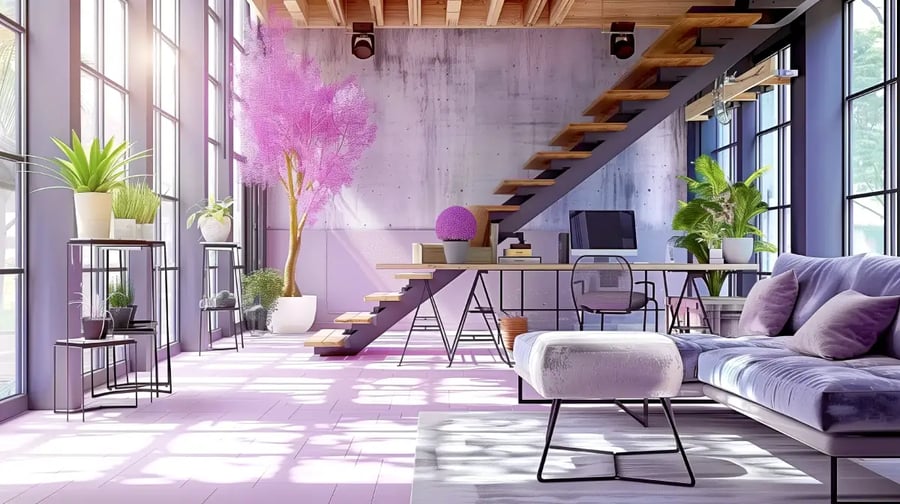
The future of residential design blends digital innovation with real-world comfort, creating homes that are both intelligent and inviting. Advanced planning tools go beyond convenience, enabling personalized control over lighting, climate, security, and entertainment so spaces evolve around your lifestyle. By combining smart technology with thoughtful, human-centered design, modern homes enhance well-being as much as aesthetics, delivering living environments that feel intuitive, comfortable, and uniquely yours.
Merging Digital Planning With Everyday Living
Digital tools increasingly shape how homes are designed and lived in, offering ways to personalize living spaces like never before. These innovations extend to smarter design tools, customization through virtual platforms, and eco-friendly decisions supported by technology.
Smart Tools Shaping Home Design
Incorporating smart tools into home design is like adding an extra layer of precision and creativity to the process. 3D modeling software, for example, lets you visualize spaces with remarkable accuracy, helping you make informed decisions about layouts and aesthetics, whether you are working independently or collaborating with an architect in Oxford on a bespoke residential project. Tools like Building Information Modeling (BIM) ensure that every little detail in a design can be viewed and adjusted in a digital environment, making it easier to spot issues before they become costly problems.
Additionally, Artificial Intelligence (AI) assists in creating optimized layouts suited to your lifestyle needs. It analyzes usage patterns and preferences, suggesting changes or improvements to meet your functional requirements. Smart tools form an ever-expanding suite of options to enhance creativity and efficiency in residential design.
Personalizing Spaces With Virtual Solutions
Virtual solutions offer exciting ways to personalize your home without the need for invasive structural changes. Augmented Reality (AR) and Virtual Reality (VR) are at the forefront, providing interactive environments where you can test different decor styles or furniture placements in real-time. You get to experiment with colors, textures, and furnishings as if they were already part of your living room, closing the gap between imagination and reality.
These solutions often come with user-friendly interfaces, making high-tech customization accessible to everyone. Apps and platforms dedicated to home design can curate personalized suggestions based on your tastes. The combination of technology and creativity puts endless possibilities at your fingertips, transforming your spaces in ways that resonate personally with you.
Sustainable Choices Through Digital Platforms
Digital platforms play a crucial role in embedding sustainability into residential design. By leveraging tools that assess environmental impact, you gain insights into how different materials, designs, and appliances affect your home's carbon footprint. You can access databases with sustainable options, emphasizing renewable materials and energy-efficient solutions.
Efficiency tools help in evaluating long-term savings on utility bills by providing data-driven insights and comparisons. They guide you to make informed decisions, such as choosing solar panels or smart thermostats that align with your sustainability goals. This digital approach not only caters to eco-conscious choices but also encourages a holistic, sustainable lifestyle.
Designing Homes for Comfort and Connection
Creating homes that promote comfort and connection involves integrating technology smoothly and ensuring innovative designs align with human needs. This approach focuses on making homes both high-tech and warm, catering to today's lifestyle while maintaining a personal touch.
Integrating Technology Seamlessly and Intuitively
In the modern home, technology isn't just an add-on; it's a fundamental part of daily life. Smart home devices, from voice-activated assistants to automated lighting systems, enhance convenience, but they need to function without being obtrusive. The goal is for these technologies to work so smoothly that you hardly notice them—like an intuitive thermostat adjusting the environment to your preferences or lighting that adapts to the time of day. User-friendly interfaces and connectivity are key, ensuring everything feels natural and accessible with a minimal learning curve. When done right, technology in the home supports your routine seamlessly, becoming an invisible partner in the background of daily life.
Balancing Innovation and Human Well-Being
While state-of-the-art gadgets and systems are exciting, the human aspect should never be overlooked. Home designs must support mental and physical well-being; this means maintaining a balance between tech and tactile, organic elements, especially when considering how to create warm and inviting interiors that people genuinely enjoy living in. Materials like wood, stone, and natural fabrics provide a soothing contrast to digital devices.
Consider how natural light affects mood and productivity, or how thoughtfully placed greenery can refresh the senses. Thoughtful layout decisions ensure spaces foster social interaction and personal reflection. Innovation in design isn't just about what's new but about creating environments where you feel both connected and comfortable, equipped for modern living but always inviting and peaceful.
Conclusion
The future of residential design lies in thoughtfully blending digital innovation with real-world comfort, creating homes that are not only efficient and intelligent but also deeply personal. As technology continues to shape how spaces are planned and experienced, the most successful designs will be those that enhance daily life without overwhelming it. By using digital tools to support sustainability, personalization, and intuitive living, homeowners can create environments that feel both forward-thinking and genuinely livable, where comfort, connection, and functionality work together seamlessly.
Copyright © 2026 California Business Journal. All Rights Reserved.
For California Business Journal Disclaimers, go to /terms-conditions/.


