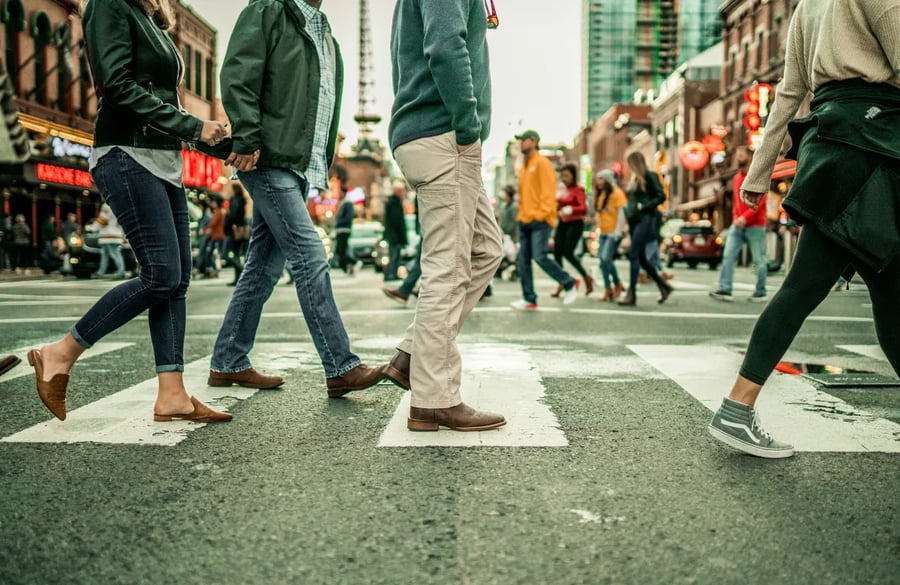
Pedestrian accidents continue to happen in busy cities and small towns alike, and the impact goes far beyond the first fall on the pavement.
Compensation in these cases is not random, and it is not based on guesswork. It depends on facts, evidence, and how the law views responsibility and harm. Many injured individuals seek legal help for a pedestrian accident claim because they quickly realize that insurance companies do not simply offer fair payments without careful review.
1. The Severity of the Injuries
The seriousness of the injury is one of the most important factors. As injuries become more severe and long-lasting, compensation generally increases.
Medical records, physician reports, and treatment plans are carefully reviewed. Decision-makers consider the type of injury, the length of treatment, whether surgery was required, and whether there is permanent disability or scarring. If the injury limits mobility, affects independence, or prevents someone from working, the value of the claim rises.
2. Medical Expenses and Future Care
Medical expenses form the foundation of most pedestrian accident claims. Ambulance services, emergency care, hospital stays, medication, rehabilitation, and follow-up visits are all included.
Compensation also accounts for future medical needs. If doctors confirm ongoing treatment, those projected costs become part of the claim. A serious fracture may require future surgery. A head injury might demand long-term neurological care. Proper documentation is critical.
3. Loss of Income and Earning Ability
Many injured pedestrians miss work during recovery. Some may never return to the same type of employment if their physical abilities change. Compensation includes lost wages from missed days and reduced earning capacity if future income is affected.
The goal is to place the injured person as close as possible to the financial position they would have been in if the accident had not occurred.
4. Pain and Emotional Distress
Not all damages are financial. Physical pain, emotional distress, anxiety, and loss of enjoyment in daily life are also considered. These are known as non-economic damages.
Although they do not come with receipts, they reflect real suffering. The severity of the injury, recovery time, and long-term effects on daily activities influence this amount. Statements from doctors, therapists, and family members can help demonstrate how deeply the accident has affected the person’s life.
5. Liability and Fault
Compensation also depends on who was at fault and how clearly that fault can be proven. In pedestrian accident cases, drivers may be responsible for speeding, distracted driving, ignoring traffic signals, or failing to yield at a crosswalk.
Evidence plays a major role here. Police reports, traffic camera footage, witness statements, and accident reconstruction reports can strengthen a claim.
6. Insurance Policy Limits
Even if damages are serious, recovery may be limited by the at-fault driver’s insurance coverage. Every insurance policy has a maximum payout amount. If the damages exceed that limit, collecting the full value can become challenging.
Some injured pedestrians may use their own uninsured or underinsured motorist coverage if available. In rare cases, additional parties such as employers or vehicle owners may also share responsibility.
7. The Strength of Evidence
A strong case is built on solid evidence. The clearer the proof, the stronger the negotiation position.
Important evidence includes medical documentation, photos of the accident scene, witness contact information, and official reports. Delays in seeking medical treatment can weaken a claim because insurers may argue that the injuries were not serious or not related to the accident.
Consistency matters as well. Statements given to police, doctors, and insurance adjusters should align with each other.
8. Legal Representation and Deadlines
Insurance companies employ professionals trained to limit payouts. Without proper guidance, injured pedestrians may accept settlements that do not fully reflect their losses. Seeking legal help for a pedestrian accident claim ensures that damages are accurately calculated and properly presented.
There are also strict deadlines for filing claims. Missing the statute of limitations can eliminate the right to recover compensation. Acting promptly protects legal rights and preserves valuable evidence.
Closing Thoughts
Compensation in pedestrian accident cases is shaped by many moving parts. The seriousness of injuries, medical costs, lost income, emotional suffering, fault, insurance coverage, and the quality of evidence all work together to determine the final amount.
For anyone facing this situation, seeking reliable legal help for pedestrian accident matters can provide clarity and structure during a difficult time.
Copyright © 2026 California Business Journal. All Rights Reserved.
For California Business Journal Disclaimers, go to /terms-conditions/.


