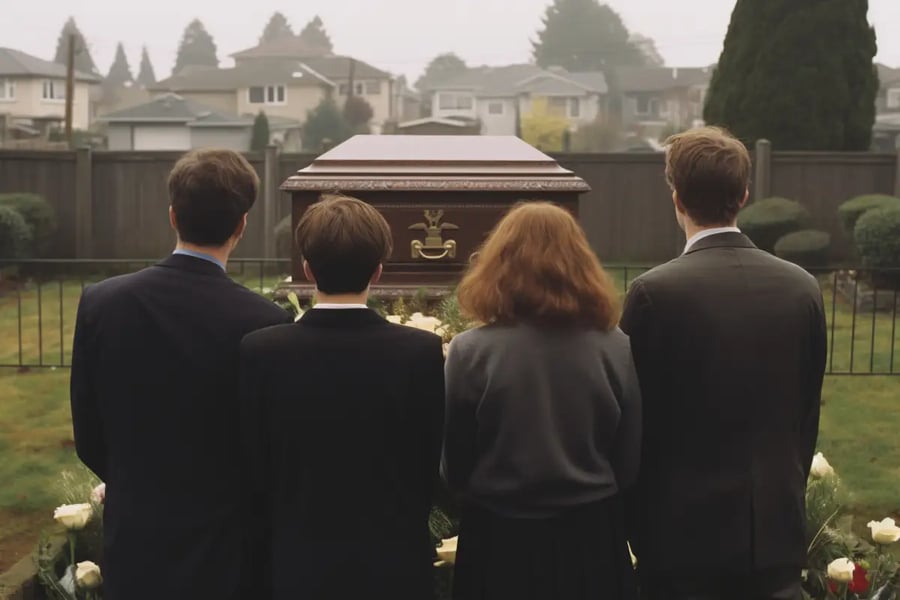
Ask most Californians what a funeral costs and you will get a shrug. Ask what it should cost and the shrug goes deeper. For a $20 billion industry built on purchases made during grief, that information gap is the whole game. It is starting to close.
In California today, the average funeral with burial runs between $8,000 and $11,000 according to NFDA data. That is higher than the national median, and it has been rising faster than inflation for roughly a decade. The casket alone, marked up to $3,500 or more at a traditional funeral home, can be bought online for $1,200 and delivered anywhere in the state. Embalming, which directors routinely describe as a legal requirement, is legally required in almost no circumstance.
None of this is secret. The Federal Trade Commission has published a consumer rights document on funeral pricing since 1984. What is different now is that the cost of acting on those rights has collapsed. Direct to consumer funeral brands are doing for caskets what Warby Parker did for glasses. Products are cheaper. Prices are public. Families in Fresno or Los Angeles can finally comparison shop the way they do for almost every other purchase.
A federal rule nobody told you about
The FTC's Funeral Rule gives you the right to purchase a casket from any source, not just the funeral home handling the service. Funeral homes are required by law to accept it without a handling fee. Industry surveys find that fewer than 15 percent of American consumers know the rule exists. California's Department of Consumer Affairs has issued four separate advisories since 2019.
What the DTC market has done is turn that obscure right into something practical. A family in San Diego can order a solid wood casket, have it delivered to the funeral home of their choice, and save somewhere between $2,000 and $4,000.
Coordination was the real friction
For a long time the barrier was never the product. It was coordination. Most families, reasonably, did not want to manage logistics from inside grief. Newer brands have responded by layering a funeral concierge service on top of the product. A dedicated person handles the phone calls, delivery timing, paperwork, and the back and forth with the funeral home. Families make one decision and one phone call.
For California families this matters because the state has some of the highest funeral home markups in the country. Los Angeles and the Bay Area routinely run 20 to 40 percent above the state median. A coordination layer is often the difference between a $10,000 funeral and a $6,500 one.
Pre-funding: the last planning gap
Funerals are strange financially. Americans rarely plan for them with any instrument. Specialized funeral insurance closes that gap. Policies run most applicants $20 to $60 per month. Underwriting is light, and the payout goes directly to a designated provider. A family that combines a prearranged casket choice with a modest premium can fully pre-fund a meaningful funeral for under $8,000.
California's aging population makes this urgent. The state now has 6.2 million residents over 65, up nearly 40 percent since 2010. Estate attorneys are now including the funeral in planning conversations alongside Medicare and trusts.
A correction, not a revolution
DTC is not killing the traditional funeral home. It is pressuring it to explain itself. For California families the practical advice is short. Ask for the General Price List. Buy the casket separately if you want to. Plan ahead if you can. The savings are not really the point. The point is not having to make impossible decisions in the middle of impossible weeks.


