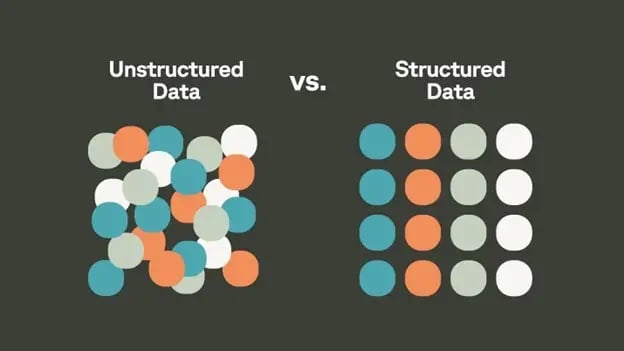
Data is everywhere. Invoices, contracts, reports, scanned forms, and all sorts of emails. Every day, businesses receive streams of information of immense proportions. The question is, though, whether that data can be used. Or does it sit there, all locked up in papers, awaiting a man to come and cut it out?
This is where the discussion regarding structured and unstructured data transcends beyond being a technical argument. It takes the form of a business priority. Since without organization of your data, making it searchable and actionable, it is useless having it in the first place.
Now, we can discuss the importance of parsing in a way it has never had before.
The Real Structured Data
The orderly type is the structured data. Imagination spreadsheets, databases, CRM records, everything can be placed in rows and columns and predetermined fields. Easy to search. Easy to analyze. Easy to automate.
Have to drag previous month sales figures? No problem. Would you like to categorize customers according to region? Done.
Such data is ideal with conventional software systems. The thing is, however, that most business data does not begin like that.
Unstructured Data |The Sloppy Reality
Unstructured data abound everywhere. PDFs, Word files, scanned files, handwritten files, email messages, chat files. They have good stuff in them, although it is not well marked.
Have you ever read a 20-page contract only to discover that there was only one clause? Or manually typed in invoice information on a PDF to accounting software? Frustrating, right?
The hidden cost of unorganized information is that. Time, mistakes, time wastages, burnout.
Where Does Parsing Fit in?
The in between the disorder and clarity is parsing.
It is the procedure of deriving meaningful information out of unstructured papers and converting them to structured and useful data. Naming, totals, IDs, line items, and so on, are all automatically drawn and inserted where they are needed.
However, business documents today are not easy. Formats vary. Layouts change. Languages differ. This is the reason why traditional approaches are not good enough.
The Reasons Traditional Methods Do Not Scale
Small volumes can be handled by systems that are rule-based and manual data entry. But magnify them and things break soon.
So what would happen to invoice layout when a supplier alters it? Or documents in other languages? Or are scanned files not all that clear?
Everything becomes slow due to manual processes. Systems that are rule based require maintenance. Nor can either abreast the complexity of the present day documents.
Smart Parsing Business Impact
The effect of a document parsing done correctly is instant:
- Faster processing times
- Fewer human errors
- Lower operational costs
Organized Information = Healthier Choices
The unstructured data is made extremely powerful as soon as it is processed and structured. Analytics teams are able to identify trends. Finance departments are able to predict effectively. The operations teams are able to streamline the workflow.
Businesses begin to act early and not late. They do not guess, but they know.
That is the true worth of parsing, converting documents into intelligence.
And for companies dealing with thousands of documents daily, relying on the best ai document processing platform isn't a luxury anymore. It's a necessity.
Final Thoughts
The structured vs unstructured data is not merely a piece of discussion on data but it is a reality check. The majority of valuable business information can be found in unstructured documents, and unless it is sufficiently parsed, it will remain locked up.
Decoding confusion into meaning. It converts documents into decisions. And in a world where things run fast and are accurately made, that change is no longer a choice.
The issue is not whether parsing is important or not.
Whether your business is prepared to put it into serious consideration.
Copyright © 2025 California Business Journal. All Rights Reserved.
For California Business Journal Disclaimers, go to /terms-conditions/.


