In research circles, a megaproject is any undertaking valued above one billion US dollars, from rail lines and airports to dams and new city districts. Oxford researcher Bent Flyvbjerg has spent more than two decades studying them, building a database of more than 16,000 projects across 136 countries. His conclusion is the "iron law of megaprojects": they tend to land over budget, behind schedule, and short of promised benefits.
Across that database, only 47.9 percent of projects finish within budget, just 8.5 percent finish on budget and on schedule, and a mere 0.5 percent also deliver the promised benefits. Roughly nine in ten overrun their budget, schedule, or both. Even so, governments across Asia keep building, racing to modernise transport, expand energy grids, and add digital infrastructure fast enough to keep pace with urbanisation.
A Live Example, Still Unfolding
Thailand's High-Speed Rail Linking Three Airports shows the pattern clearly. The 220-kilometre line connecting Don Mueang, Suvarnabhumi, and U-Tapao was approved in 2018 at roughly 225 billion baht, about 6.8 billion US dollars, with completion targeted for 2023. A public-private agreement followed in 2019, then the pandemic disrupted financing, and a revised investment deal only won State Railway of Thailand board approval in March 2025. Commissioning is now expected in 2028 or early 2029, five to six years behind the original plan.
The Boom Continues Regardless
New commitments keep arriving. Thailand's Eastern Economic Corridor attracted approximately 1.8 trillion baht, about 49.3 billion US dollars, between 2018 and 2022, exceeding its target, and has set a fresh five-year goal of 500 billion baht. The Asian Development Bank announced a 70 billion US dollar plan in May 2026 to expand energy and digital infrastructure across Asia and the Pacific through 2035, naming Southeast Asia a primary beneficiary. Laem Chabang, Thailand's largest deep-sea port, began a third-phase expansion in 2023 valued at roughly 30 billion baht, targeting 18 million container units a year by 2029.
What Separates the Exceptions
Flyvbjerg's explanation for the rare successes is about structure rather than avoiding risk. He traces the best performers, solar and wind farms among them, to extensive planning before construction begins, followed by delivery in small, repeatable, modular stages. A project built as a series of similar, testable phases can absorb a delay or cost revision in one stage without derailing the whole.
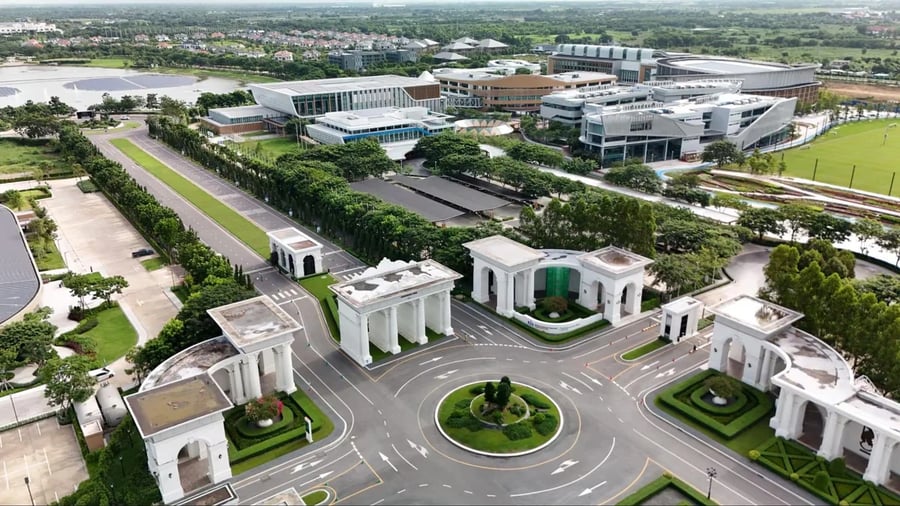
Thailand's large township developments show a smaller version of this logic. Reignwood Park, a mixed-use township in Pathum Thani, is delivering its components in stages: its sports and recreation complex is roughly 80 percent complete, while residential collections such as ESTATE and SONIA have been released for sale in sequence rather than all at once.
Southeast Asia's megaproject boom looks set to continue whatever any single project's record, because the region's infrastructure gap is real and capital keeps arriving even after delays. What Flyvbjerg's research offers is less a reason for caution than a diagnostic: size was never the reliable predictor of outcome. How a project was planned and sequenced, long before construction began, generally was.
Copyright © 2026 California Business Journal. All Rights Reserved.
For California Business Journal Disclaimers, go to https://calbizjournal.com/terms-conditions/.


