People pay premium prices for coastal homes because of the spectacular views they offer. From Crescent City to Chula Vista, the most desirable real estate in California is that which provides sweeping vistas of sea and sand.
But living where you can hear crashing waves also exposes you to the threat of dangerous weather and the damage it can cause to homes and the utilities that support them. Coastal homes often lose electricity for extended periods when storms result in heavy winds and high water.
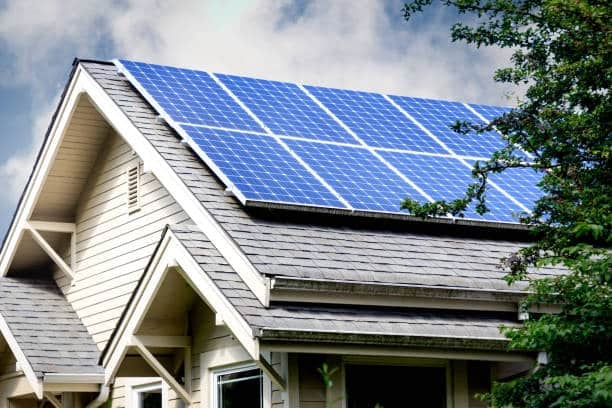
Solar backup systems offer residents of coastal homes a solution to the problems they experience during power failures, especially when those systems use software that homeowners can intelligently control to integrate energy sources beyond the traditional grid. These systems combine solar power, which reduces both energy costs and environmental impacts, with energy storage systems to ensure residents always have a power source to tap into.
How solar panels improve energy reliability for coastal living
Coastal residents can experience a number of benefits from incorporating solar into their home energy framework, starting with cost savings. Once a solar system is installed, electricity costs effectively disappear when the sun is shining.
However, battery storage may still be used as a backup alternative during more cloudy, foggy, or rainy days. In many communities, excess solar energy captured by home systems can be sold to utility companies, providing homeowners with a revenue stream.
Using solar also reduces a home’s carbon footprint. Residents who rely on clean energy from the sun reduce their need for energy from the grid, which is often produced by coal or other sources that contribute to harmful emissions. According to the US Environmental Protection Agency, burning fossil fuels for electric power is the second leading source of greenhouse gas emissions, contributing 25 percent of total emissions.
Residents of warmer coastal areas with clearer skies are a prime location for optimizing the capabilities of solar power. Unlike some landscapes, coastlines are not typically home to shade trees that can block the sun from connecting with solar panels. Some experts also believe salt in the air helps to break down organic matter that can accumulate on solar panels and reduce their effectiveness.
How home battery storage adds value to solar power
Solar power’s benefits, while substantial, are limited to the hours when the sun is shining. Overcast conditions and nighttime hours require homes with solar systems to shift to an alternative source. For most homes, that means going back on-grid.
With home battery storage, however, homes have a solution that allows solar energy to provide power 24/7. Home batteries capture excess solar energy throughout the day, storing it in a way that can be used to power homes when the sun is blocked. Combining solar energy with home battery storage creates an uninterruptible power supply system.
Battery storage becomes even more critical when storms cause damage to solar panels. Hurricanes and other significant storms can knock out solar energy sources as well as the grid that homeowners rely on for supplemental power. With battery storage, homeowners can use the energy they saved prior to the storm to supply essential energy needs until repairs are complete.
How to design a reliable home battery storage system
The growth of the home energy storage industry has created a variety of options that homeowners must evaluate to be sure they are designing a system that meets their needs. The unique conditions presented by weather in coastal communities make it even more important that homeowners evaluate options to ensure they are a good fit.
Safety concerns and code limitations often result in batteries being installed in outdoor locations. In coastal communities, batteries installed outdoors must be designed to withstand saltwater corrosion, high winds, humidity, and other conditions unique to that climate.
Capacity is another factor that must be carefully considered. For homes that intend to be completely off-grid, battery capacity will need to be sufficient to provide energy for the household's overnight energy needs.
Homeowners must also consider the features needed to allow energy storage to integrate seamlessly with their existing home system. For example, solar energy is captured as direct current (DC), then passed through a solar inverter to provide the alternating current (AC) used for home energy needs. While some batteries require AC to be converted back to DC for storage, advanced solutions leverage AC-coupling to do away with the need for a stand-alone battery inverter.
To ensure coastal homes can serve as a safe haven when severe weather strikes, homeowners must seek a higher-than-average level of energy resilience. Systems that bring together solar energy and battery backups can deliver that resilience. They provide an uninterruptible power supply that also facilitates cost savings and enhanced energy sustainability.
 – Vincent Ambrose, CCO of FranklinWH, oversees the company’s commercial strategy and market expansion efforts. With over two decades of experience in the renewable energy and technology sectors, Vincent has a proven track record of driving growth and building strong industry partnerships. He is passionate about accelerating the clean energy transition and is dedicated to delivering innovative energy solutions for homeowners and businesses alike.
Copyright © 2025 California Business Journal. All Rights Reserved.
For California Business Journal Disclaimers, go to /terms-conditions/.


