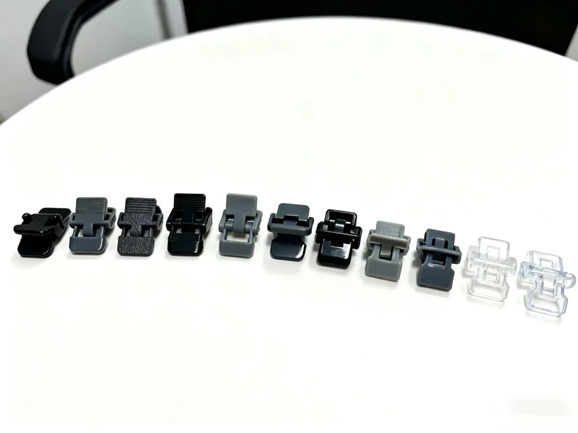
If you’ve ever snapped together a plastic product and heard that satisfying “click,” you’ve already experienced snap fit joints in action. These clever mechanical connections show up everywhere—from consumer electronics to automotive interiors—and honestly, they’re one of those small engineering details that quietly make modern product design so efficient.
As a designer or engineer, I’ve always found snap fit joints fascinating because they eliminate the need for screws, adhesives, or complex assembly steps. Instead, they rely on geometry, material flexibility, and a bit of controlled deformation.
Snap Fit Joints Design Fundamentals
What Makes Snap Fit Systems Work
At the core of snap fit joints is a simple idea: controlled elastic deformation. One part flexes just enough to allow another part to pass, then returns to its original shape to lock everything in place. It sounds simple, but achieving that “just right” balance is where real engineering comes in.
When I first started working with snap fit joints, I underestimated how sensitive the design could be. A slight change in wall thickness or material choice can change the assembly force or long-term durability. That’s why designers often prototype multiple iterations before locking in a final design.
Material Selection and Performance Factors
Choosing the right material for snap fit joints is never just a checkbox in the design process—it directly decides whether the joint will last for years or fail after a few uses. In real engineering work, material selection is often where theory meets reality, and small decisions here can have a huge impact on performance, assembly feel, and long-term reliability.
Environmental and Mechanical Performance Considerations
Beyond basic strength and flexibility, snap fit joints must also perform reliably under changing environmental conditions. Temperature fluctuations, humidity, and long-term mechanical stress can all affect how the material behaves over time.
Design Strategies for Reliable Snap Fit Joints
When engineers talk about reliable snap fit joints, they usually focus on stress distribution, assembly force, and retention strength. Getting all three right is the key to a successful design.
Reducing Stress Concentration
Sharp corners are your enemy. They create stress concentration points that can lead to cracking over time. Instead, smooth transitions and fillets help distribute force more evenly across the structure.
Optimizing Assembly and Disassembly
A good design should feel effortless during assembly but still hold firmly under load. That’s one reason why snap fit joints are so widely used in mass production—they reduce assembly time significantly without sacrificing reliability.
In many consumer products, this means faster manufacturing and lower costs, which is a win-win for both companies and end users.
Real-World Applications of Snap Fit Technology
You might be surprised how often you encounter snap fit joints in daily life. They’re practically everywhere once you start noticing them.
One particularly interesting application is in modular consumer electronics. Designers use snap fit joints to allow devices to be repaired or upgraded without specialized tools, which also supports sustainability efforts by reducing electronic waste.
A great example of detailed engineering insight can be found in this resource on snap fit joints, which explores how geometry and material selection come together in practical applications.
Final Thoughts on Snap Fit Engineering
At the end of the day, snap fit joints represent a perfect blend of simplicity and engineering precision. They look effortless, but behind that simple “click” is a lot of thoughtful design work.
From material selection to geometry optimization, every detail matters. And while they may seem like a small part of a product, they often play a huge role in usability, cost efficiency, and long-term durability.
If there’s one thing I’ve learned over the years, it’s this: good snap fit joints don’t just hold parts together—they hold entire product experiences together.
Copyright © 2026 California Business Journal. All Rights Reserved.
For California Business Journal Disclaimers, go to /terms-conditions/.


