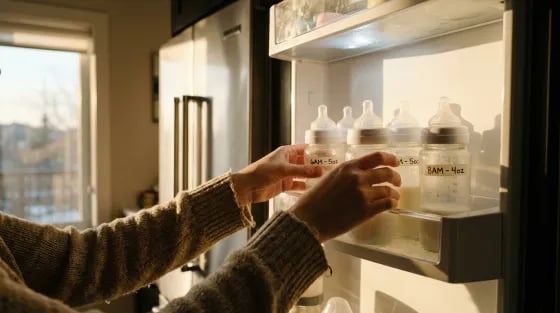
Temperature control protects breast milk quality by cooling quickly, keeping storage temperatures steady, and limiting reheating. Preserving breast milk nutrients is a priority for every nursing parent, as it ensures your hard-earned milk remains as supportive as possible for your baby’s growth.
Have you ever opened the fridge at 2:00 AM, looked at a hard-earned bottle, and worried one small mistake might waste it? Trusted U.S. guidance converges on a practical baseline: about 4 hours at room temperature, 4 days refrigerated, and best frozen quality around 6 months.
Why Temperature Control Is the Quiet Protector of Milk Quality
For day-to-day feeding, fresh milk retains the most anti-infective activity, with refrigerated milk next and frozen milk after that. That does not mean frozen milk is bad; it means handling choices determine how much quality is preserved over time.
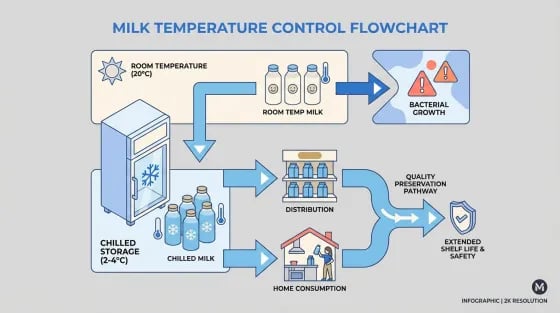
The Temperature Windows That Guide Daily Decisions
For healthy full-term babies, up to 4 hours at room temperature is a safe, practical baseline many families can remember under sleep deprivation.
| Milk state | Keep at | Aim to use by | Practical note |
| Freshly expressed milk | Room temp at or below 77°F | 4 hours | If you are unsure when it was pumped, refrigerate sooner. |
| Freshly expressed milk | Refrigerator at or below 40°F | 4 days | Place containers in the back, not the door. |
| Frozen milk | Freezer at or below 0°F | Best by 6 months, acceptable up to 12 months | Quality is better when milk stays very cold with minimal temperature swings. |
| Fully thawed milk | Refrigerator at or below 40°F | 24 hours from full thaw | Do not refreeze once fully thawed. |
| Milk left after a feeding | Room temp | 2 hours | After 2 hours, discard to reduce bacterial risk. |
These windows are reinforced in WIC storage and thawing guidance, and they work because they prioritize both safety and nutrient preservation. If your home runs warm, the fridge is opened constantly, or pump cleaning was rushed on a hard day, using milk sooner is the safer choice.
Container Choice and Fill Level: Safety vs Convenience
The practical baseline starts with three approved container types: breast milk storage bags, glass containers, and hard plastic containers. Prioritize BPA-free materials and tight seals. In most cases, “best” means leak resistance, temperature stability, and lower contamination risk, not a specific brand.
| Container type | Pros | Tradeoffs | Best fit |
| Breast milk storage bags | Space-saving, freezer-friendly, easy to portion | Can leak if low quality or overfilled | Building a freezer stash in small feed-size amounts |
| Glass containers | Inert material, reusable, easy to sanitize | Heavier, breakable, takes more space | Refrigerator storage and repeated reuse |
| BPA-free hard plastic containers | Durable, lightweight, often pump-compatible | Material quality varies by product | Daily pumping and transport |
Safety improves when non-specialized plastic bags and disposable bottle liners are avoided, because tears and leaks waste milk and raise contamination risk. Most families also waste less when each container holds a likely feed volume instead of a large just-in-case amount.
A Simple Routine for Busy, Sleep-Deprived Days
- Pump, Chill, and Label Fast
- Combine and Freeze Without Guesswork
Thawing and Warming Without Losing What You Worked For
Nutrient-friendly thawing starts with overnight refrigerator thawing or lukewarm-water methods, which warm milk gently and evenly. Quick high heat is tempting during crying spells, but gentle methods protect quality better.
When Recommendations Differ, How to Decide
Confusion happens because many circulating storage rules are not consistently evidence-based. Different charts often define acceptable versus optimal differently, and they assume different levels of cleanliness and temperature stability.
Your milk is hard-earned, and temperature control is the most reliable way to protect it without adding stress. A calm, repeatable system beats a perfect one: cool quickly, store steadily, thaw gently, and trust a routine you can follow at 3:00 AM.
Copyright © 2026 California Business Journal. All Rights Reserved.
For California Business Journal Disclaimers, go to /terms-conditions/.


