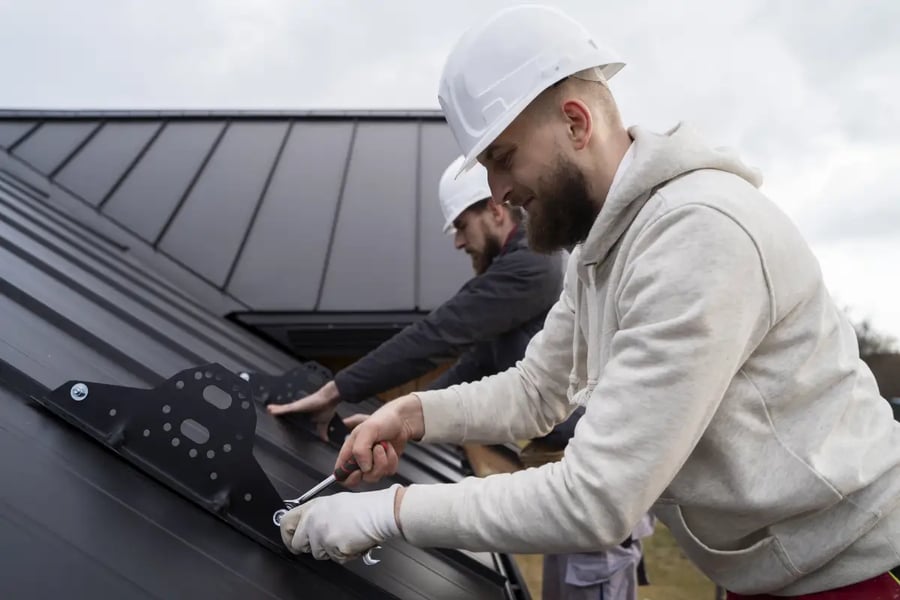
Roofing contractors who take on large projects face higher risks than most other trades. The work happens at dangerous heights, involves heavy materials, and requires multiple crews across different sites. A single mistake or accident on a major contract can result in lawsuits, equipment loss, or serious injuries that threaten the entire business.
The right insurance strategy protects roofers from financial losses that come with big contracts while also helping them meet client requirements and maintain cash flow. However, standard policies often fall short for contractors who handle high-value work. They need specific coverage types that address the unique challenges of large-scale roofing operations.
This guide covers the essential insurance options that professional roofers should consider for major projects. It explains how each type of coverage works, what risks it addresses, and how to build a protection plan that matches the scale of the work.
Contractor's Professional Liability to Cover Installation Errors
Roofers face significant exposure to claims that arise from mistakes made during installation work. Professional liability insurance protects contractors from financial losses related to errors, oversights, or faulty workmanship. This coverage differs from general liability because it addresses problems that result from how the work was performed rather than property damage or bodily injury.
Installation errors can lead to expensive repairs and legal disputes. A contractor might face claims if improper installation techniques cause leaks, structural issues, or premature roof failure. Professional liability responds to these situations by covering defense costs and potential settlements.
Most insurance for roofing contractors includes this protection as a separate policy or endorsement. The coverage proves especially valuable for firms that handle large projects. Clients often require proof of professional liability before they award contracts.
Roofers should verify that their policy covers design errors and field modifications in addition to installation mistakes. This protection helps maintain business reputation and provides financial security against claims that could otherwise threaten company stability.
Comprehensive General Liability Coverage
General liability insurance forms the foundation of protection for roofing contractors who handle large projects. This coverage protects businesses from third-party claims related to bodily injury and property damage that occur during operations. For example, if a worker's tool falls and damages a client's vehicle, general liability steps in to cover the costs.
Standard policies typically offer $1 million per occurrence and $2 million aggregate limits. However, roofers who work on large commercial contracts often need higher limits to meet project requirements. Many clients and property owners require proof of adequate coverage before they award contracts.
The policy also includes completed operations coverage, which protects against claims that arise after project completion. This matters because roofing defects or leaks might not appear until months or years later. Without this protection, a single claim could threaten the financial stability of a business.
Roofers should purchase coverage through carriers familiar with the industry's unique risks. The right policy accounts for the elevated dangers that come with working at heights and managing heavy materials on job sites.
Workers' Compensation Tailored for Roofing Risks
Roofing contractors face some of the highest injury rates in construction. Workers' compensation insurance for roofers needs to address the unique dangers that come with the trade. Falls from heights, heat exposure, and equipment accidents happen often in this field.
Standard workers' comp policies may not cover all the risks that roofers face. Therefore, contractors should look for coverage designed specifically for roofing operations. These tailored policies account for elevated risk factors and provide appropriate benefit levels.
The cost of workers' comp for roofers typically runs higher than other trades. However, proper coverage protects both employees and the business from financial strain after workplace accidents. Insurance providers examine factors like payroll, past claims, and safety programs to determine rates.
Contractors can reduce premiums through documented safety training and risk management practices. Carriers also consider whether the company handles residential or commercial projects. Each type of work carries different risk levels that affect coverage needs and costs.
Equipment and Tool Insurance for Job Site Protection
Roofing contractors need to protect the expensive tools and equipment they move between sites every day. Standard business property insurance often fails to cover mobile equipment, which leaves a dangerous gap in protection. This type of coverage falls under inland marine insurance and protects items as they travel to jobs, sit in temporary storage, or wait between projects.
Contractors equipment insurance covers everything from chainsaws and hand tools to laptop computers and larger machinery. The policy can protect items stored off-site, kept in vehicles, or used at active job sites. For example, if someone steals a toolbox from a work location, this insurance helps recover the replacement cost.
Large roofing projects require significant investment in specialized equipment. A single loss can delay work and hurt profit margins. Insurance protects against theft, damage, and loss whether tools are in transit or on-site. Some policies also extend to employees' personal equipment and borrowed items, which adds another layer of security for contractors who handle major contracts.
Commercial Auto Insurance for Multiple Crew Vehicles
Roofing companies that manage large contracts need commercial auto insurance to protect their fleet of work trucks and vans. This coverage applies to all vehicles that transport workers, materials, and equipment to job sites. A personal auto policy does not provide adequate protection for business use.
Commercial auto insurance covers legal expenses, medical costs, and property damage after accidents. The policy protects the business whether crew members drive company-owned vehicles or use their own trucks for work tasks. For example, if a driver hauls shingles to a project site and causes a collision, this insurance handles the resulting claims.
Multiple vehicle policies often cost less per truck than separate policies. Roofing contractors can add or remove vehicles from their policy as their fleet size changes. The coverage also protects against theft and vandalism, which becomes more important as fleet size grows.
Most states require commercial auto insurance for business vehicles. Clients often request proof of this coverage before they award large contracts.
Conclusion
Large contract management requires roofers to balance adequate protection with cost control. The right insurance strategy protects both profit margins and business reputation on high-value projects. Contractors who invest in proper coverage, maintain strong safety programs, and work with experienced agents position themselves to win bigger jobs. These practices reduce risk while they build trust with commercial clients who demand proof of financial stability and professional protection.
Copyright © 2026 California Business Journal. All Rights Reserved.
For California Business Journal Disclaimers, go to /terms-conditions/.


