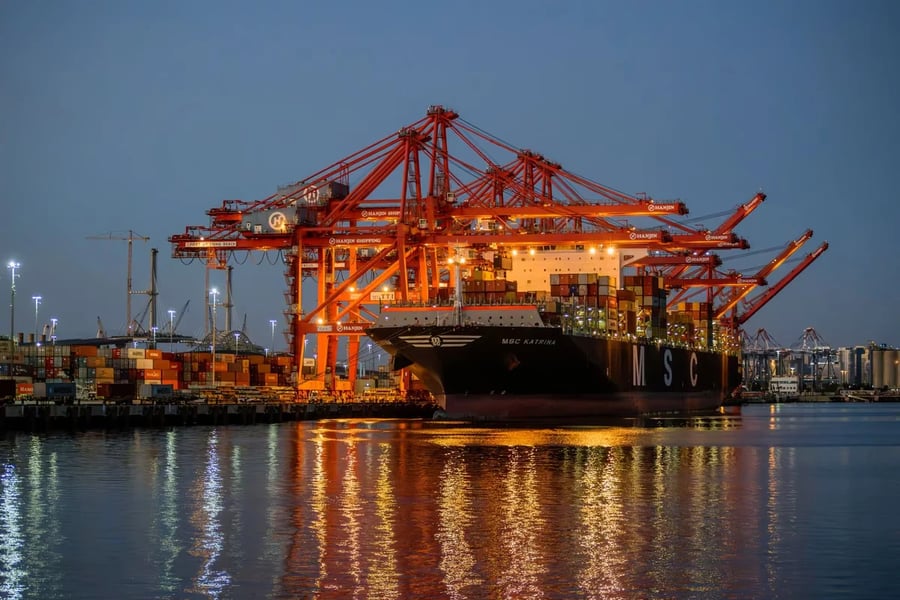
Maritime fleet managers face a complex mix of variables: weather, currents, fuel costs, cargo schedules, crew availability, and port congestion. Traditional static routing and experience-based decisions are no longer sufficient when operators aim to reduce emissions, cut costs, and improve on-time performance. Predictive routing applies advanced analytics and machine learning to anticipate conditions.
Why predictive routing matters
Predictive routing shifts the decision-making horizon from hours to days. Instead of reacting to a sudden storm or unexpected port delay, systems forecast impacts and recommend route adjustments, speed changes, or alternative port calls. The immediate benefits are reduced fuel consumption through optimized speeds and route choices. Long term, predictive routing supports strategic planning: fleet utilization can be aligned with predictable seasonal patterns and market demand, creating a more resilient operation.
Data sources and model inputs
Accurate predictive routing depends on diverse, high-quality data. Meteorological and oceanographic forecasts provide the backbone for weather-aware routing. Automatic Identification System (AIS) feeds reveal real-time vessel positions and traffic patterns. Engine and fuel sensors deliver performance metrics that feed fuel burn models. Port call histories and terminal schedules inform congestion forecasts. When combined with vessel-specific characteristics—hull form, age, draft, propulsion system.
Algorithms and decision logic
Probabilistic forecasting layers uncertainty onto weather and port delay predictions to quantify risk. Optimization solvers compute minimum-cost routes given constraints such as arrival windows, bunkering requirements, and emissions caps. Hybrid approaches leverage heuristics for fast, operational decisions while reserving computationally intensive global optimizers for strategic planning.
Integrating with operations and crew workflows
Technological recommendations are only useful when they fit into human workflows. Integration with voyage planning tools, electronic chart displays, and bridge systems ensures that suggested routes and speed profiles are visible. Alerts should convey both the recommended action and the expected benefit—minutes saved, liters of fuel, or emissions avoided—so masters can weigh the trade-offs. Shore-side control centers benefit from synchronized dashboards that show predictive advisories across the fleet.
Measurable benefits and KPIs
Predictive routing produces measurable outcomes. Fuel consumption per nautical mile declines when vessels avoid adverse currents and optimize speeds for fuel efficiency rather than maximum speed. On-time arrivals increase as operators preemptively reroute to avoid congestion. Operators typically track KPIs such as average deviation from planned arrival time, fuel burn variance against model predictions, emissions intensity, and the number of avoided delays.
Implementation considerations and scalability
Deploying predictive routing across a fleet requires careful engineering and governance. Data ingestion pipelines must be robust, with redundancy for critical feeds like AIS and weather. Privacy and security are essential given the sensitivity of routing decisions and commercial schedules. Scalability matters: algorithms that work for a handful of vessels must scale to hundreds without prohibitive compute costs.
Risk management and regulatory alignment
Predictive routing cannot ignore safety and regulatory frameworks. Suggested deviations must respect traffic separation schemes, protected areas, and local regulations. Risk assessments should accompany every recommendation, quantifying exposure to extreme weather or traffic conflicts. From a compliance perspective, routing decisions can be logged and audited to meet regulatory reviews or charterer inquiries.
The path forward
As sensors proliferate and forecasting models improve, predictive routing will become standard practice rather than a competitive advantage. Systems that combine short-term tactical advisories with longer-term strategic simulations deliver the greatest value, enabling fleets to react intelligently today while planning efficiently for tomorrow. For maritime operators seeking to cut costs, reduce emissions, and improve reliability, predictive routing offers a concrete route to a smarter, more efficient fleet—particularly when paired with modern advances like shipping ai systems that bring real-time analytics and adaptive control to every voyage.
Copyright © 2026 California Business Journal. All Rights Reserved.
For California Business Journal Disclaimers, go to https://calbizjournal.com/terms-conditions/.


