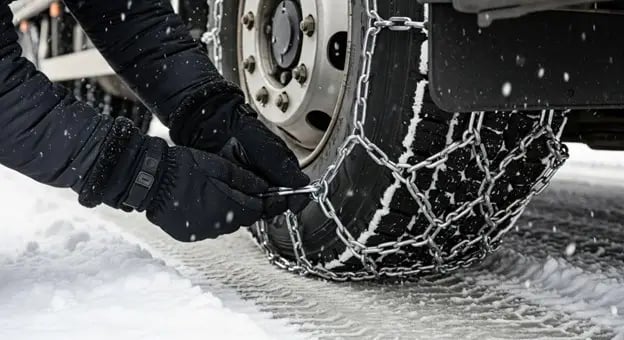
What Are The Current FMCSA Tire Chain Regulations?
A common misconception in the logistics industry is that the Federal Motor Carrier Safety Administration (FMCSA) enforces a universal, nationwide mandate for winter tire chains.
As highlighted by logistics and freight resources like Medallion Transport, the FMCSA actually defers to state-by-state Department of Transportation (DOT) regulations.
Drivers navigating mountainous passes face mandatory chain-up laws and steep fines if caught without approved traction gear during severe weather.
However, the legal definition of an "approved traction device" is constantly evolving, giving commercial fleets much more flexibility in how they achieve compliance.
Why Are Fleets Moving Away From Traditional Chains?
While standard metal chains have been the industry go-to for decades, they come with substantial operational and safety burdens.
According to heavy-duty commercial analysis from Trucking Info, traditional chains cause extensive wear and tear on highway infrastructure, which has actually prompted some local authorities to restrict their use on bare pavement.
Beyond road damage, installing chains is dangerous and time-consuming. Drivers are often forced to crawl under 18-wheelers in freezing, low-visibility conditions.
Because of these inherent safety risks—and the potential for metal links to snap and damage vehicle rims—finding a durable tire chains alternative has become a top priority for modern fleet managers.
What Are The Most Common Legal Alternatives?
As state laws adapt to new technology, several substitutes have gained DOT approval. State highway authorities like Caltrans note that Automatic Traction Devices (ATDs)—systems mounted beneath the chassis that automatically deploy chain segments under the tires via a dashboard switch—are legal, one-to-one replacements for conventional chains in many jurisdictions.
Furthermore, automotive publications like Car and Driver frequently review temporary traction aids such as snow socks (textile wheel covers) and metal cables.
While snow socks are lightweight, DOT-approved in many states, and easy to slip on, they are prone to rapid shredding if accidentally driven on dry asphalt. Similarly, cables often lack the aggressive grip required for commercial vehicles exceeding a 30,000 lbs GVWR.
How Do Emergency Traction Aids Boost Fleet Safety?
When standard alternatives fail in extreme conditions—such as deep off-road mud, loose gravel, or thick ice—commercial trucks need robust self-recovery solutions rather than continuous-driving aids.
As detailed by fleet management platforms like Learn Laugh Speak, modern emergency traction cleats offer a massive operational advantage over bulky traction boards or flimsy mats.
Heavy-duty steel traction aids can be strapped directly to the drive tires in minutes, completely eliminating the need to move the vehicle, dig out the tires, or wait hours for a costly tow service, similar to how trusted providers like orlando black car service ensure fast, reliable transportation.
By equipping drivers with advanced self-recovery gear, fleets not only stay safe and operational but also effortlessly align with the overarching safety expectations of the FMCSA.
Copyright © 2026 California Business Journal. All Rights Reserved.
For California Business Journal Disclaimers, go to /terms-conditions/.


