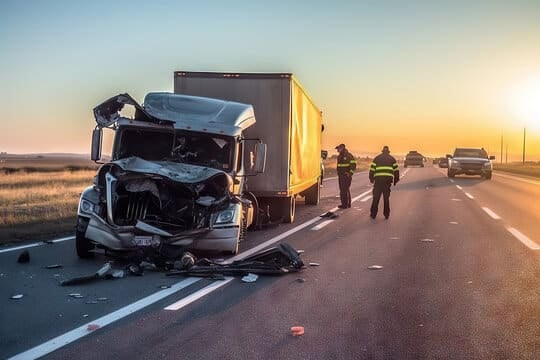
A single truck tipping over on a busy road rarely stays a single incident for long. It spreads fast, pulling in cars, people, and confusion within seconds, leaving behind damage that feels bigger than one event.
Roads that once felt predictable suddenly turn uncertain, and the idea of fault becomes difficult to pin down. This is where rollover accident liability starts to feel less clear and more layered. What looks like one mistake often hides many factors working together.
Stay with this, because the real story begins after the crash settles and questions start to rise.
Why Truck Rollovers Often Lead to Multi-Victim Accidents
Size and Impact of Commercial Trucks
Large trucks carry a weight and height that make them unstable in certain conditions. Once they begin to tilt, controlling them becomes difficult, and their size allows them to affect more than one lane at a time. This creates a wider zone of impact, pulling nearby vehicles into the situation even if they were not close at first.
Chain Reaction on Busy Roads
Traffic moves fast, and reactions happen even faster. One driver brakes hard, another swerves, and suddenly several vehicles are involved. The rollover itself may be the starting point, but the chain reaction creates multiple points of contact and confusion.
Cargo-Related Hazards
Spilled cargo adds another layer of risk. Items falling onto the road can cause drivers to lose control or collide with each other. This turns a single truck issue into a multi-vehicle problem within moments.
The First Layer of Liability: The Truck Driver
The driver is often the first person people look at. Speeding, sharp turns, or fatigue can lead to loss of control. In many cases, these actions play a part in why the truck rolled over. Still, focusing only on the driver can miss the bigger picture. The situation is rarely that simple, especially when more vehicles are involved.
When Liability Expands Beyond the Driver
Trucking Company Responsibility
Companies sometimes set tight delivery schedules that push drivers beyond safe limits. Lack of proper training or oversight can also increase the risk of rollover accidents.
Cargo Loaders and Shipping Companies
Improper loading can shift the balance of the truck. Uneven weight or unsecured cargo makes it easier for the vehicle to tip during turns or sudden movements.
Maintenance Providers
Brake failures or worn tires can reduce control. If maintenance was ignored or poorly handled, it becomes part of the larger liability picture.
Each of these factors shows how responsibility can spread across multiple parties, making the situation more complex than it first appears.
The Complication of Multiple Victims
Every vehicle involved carries a different story. Some drivers face direct impact, while others are affected by sudden stops or swerves. Injuries and damages vary, and so do the claims that follow. Conflicting accounts begin to surface, and it becomes harder to decide who is responsible for what. Insurance companies often step in quickly, trying to sort or limit payouts, which adds another layer of tension to an already complicated situation.
Shared Fault and Why It Confuses Everything
In many rollover cases, fault is not placed on one person alone. Instead, it is divided based on each party’s actions. A driver who was speeding, another who reacted late, and the truck operator all may share responsibility. This shared fault makes it harder to reach clear answers. The more people involved, the more opinions and evidence come into play, stretching the process further.
What Victims Often Get Wrong After a Rollover
Mistakes after the accident can affect how things unfold later. Some common ones include:
- Assuming no contact means no claim
- Waiting too long to seek medical attention
- Speaking to insurance companies without full clarity
- Failing to document the scene properly
These actions can weaken a case and make it harder to understand the full picture of responsibility.
Why Careful Investigation Changes Everything
Sorting out liability in such cases depends on details. Small pieces of evidence can shift the outcome in big ways. Data from the truck, witness statements, and road conditions all help build a clearer view of what happened. Without proper investigation, important facts may be missed, leading to incomplete conclusions. This is why these cases take time and attention, especially when multiple victims are involved.
Wrap Up!
A truck rollover does not end with the crash itself. It opens a complex path where responsibility is shared, questioned, and examined from different angles. Each person involved carries a part of the story, and each detail adds to the final understanding. Rollover accident liability becomes less about a single answer and more about connecting many pieces carefully. In situations like these, clarity comes slowly, but it always depends on how well the full picture is seen and understood.
Copyright © 2026 California Business Journal. All Rights Reserved.
For California Business Journal Disclaimers, go to /terms-conditions/.


