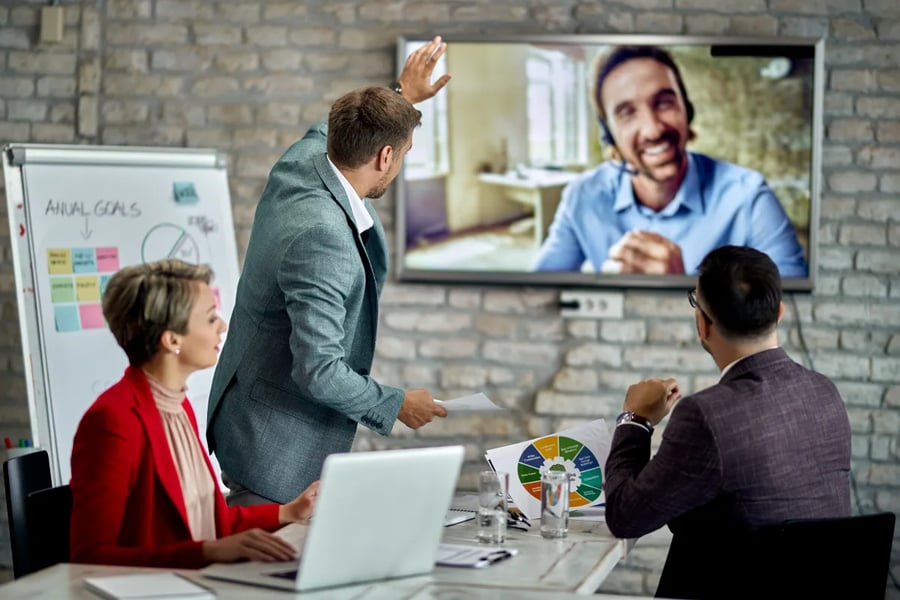
Hybrid and Virtual events have become advanced hybrid events where communication, technology, and experience design equate. What may be regarded as streaming in the past suddenly demands precision, immersion, and strategy. What audiences feel entitled to besides access? They expect it to be relevant, interactive, and to feel there is a presence wherever it is.
To meet these expectations, a carefully considered strategy is needed where content, technology, and comprehension of behavior interact effectively. When hybrid and virtual events are executed clearly, they no longer have to remain passive in their nature. Instead, they become environments that facilitate connection, engagement, prolong attention, and provide measurable and enduring value.
Intelligent Audience Personalization and Data-Led Experience Design
Audience engagement starts with relevance. Personalization turns a general event into a tailored experience, guiding attendees to content that matches their interests.
Continuous data—registrations, session choices, and engagement—builds detailed profiles, enabling real-time adjustments to keep content aligned with expectations.
The result is a responsive experience, where attendees follow purposeful pathways instead of static schedules, increasing engagement and relevance.
Unified Hybrid Experience and Audience Equity
Hybrid event success depends on uniting in-person and virtual audiences without prioritizing one. The goal is a shared experience where participation feels equally valuable everywhere.
Synchronized interactions—like live polls, Q&A, and feedback—keep remote attendees actively engaged, ensuring immediacy and inclusivity.
When both audiences operate within the same experience, events scale effectively without losing connection or depth.
Immersive Environments and Extended Reality Integration
Immersive technologies are reshaping engagement by enabling spatial interaction, allowing participants to explore and interact within digital environments beyond the physical world.
-
Experiential Presence and Immersive Interaction
These environments create a sense of presence traditional video can’t match. Attendees actively engage and explore, rather than passively consume.
-
Expanding XR Role
As accessibility grows, XR is becoming a core part of high-engagement events, driving deeper immersion, retention, and impact.
Broadcast-Standard Streaming and Visual Production Excellence
As Argus HD notes, “Production quality influences perception.” A polished stream signals professionalism and credibility, while multi-camera setups and dynamic visuals keep it engaging.
High production adds rhythm through varied shots and graphics, helping maintain attention—especially during longer sessions.
Today’s audiences expect premium content, making strong production essential for trust, clarity, and impact.
Structured Networking and Meaningful Digital Interaction
Networking is a characteristic of any event. In the digital environment, it has to be deliberately constructed to supplant spontaneous, in-person interactions with structured opportunities for connection.
Advanced systems now cater for networking on a targeted basis by matching participants according to common interests, industries, or objectives. This turns networking from a chance encounter to a purposeful engagement, and each interaction therefore becomes more relevant and valuable.
Well-designed networking spaces like these, with breakout spaces and moderated discussions as examples, build environments for natural conversations to develop. If well implemented, digital networking becomes focused, well executed, and truly productive.
Data Intelligence and Continuous Performance Refinement
Data transforms events into evolving systems, with every interaction revealing insights into audience behavior, content performance, and engagement.
Being able to respond immediately is available with real-time analytics to organizers. Sessions can be edited, emphasized, or moved if needed,d based on audience response at the beginning, ng to make sure that engagement is high throughout the lifecycle of the event.
This is completed with post-event analysis. Insights gleaned are then applied to enhance future strategies - this forms a spiral of continuous improvement in which each time the event gets finer and better than the last.
Scalable Infrastructure and Technical Stability
Technical reliability underpins engagement. Without a stable infrastructure, even well-designed events struggle to maintain trust.
Scalable systems handle fluctuating audience sizes and interactions, which is critical in hybrid events running across multiple channels.
Consistent performance builds confidence. Reliable access, clear audio, and stable streaming keep audiences focused on content, allowing every aspect of the event to perform at its best.
Conclusion
Preventing engagement loss in hybrid and virtual events requires aligning strategy, technology, and experience design. Personalization, interactivity, production quality, and data must work together to create a people-centered experience.
Done well, these events don’t just capture attention—they sustain it, turning participation into meaningful, lasting connections.
Copyright © 2026 California Business Journal. All Rights Reserved.
For California Business Journal Disclaimers, go to /terms-conditions/.


