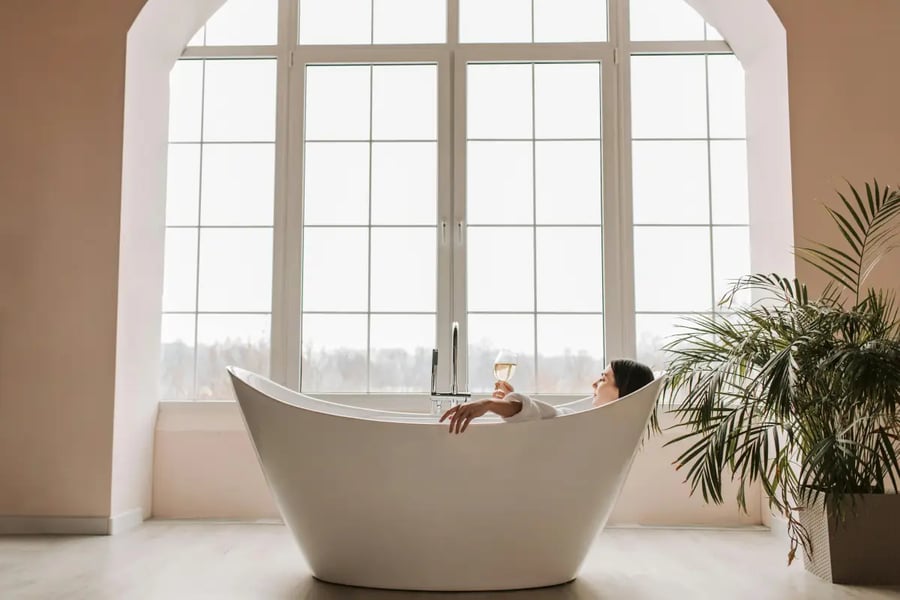
Bathing habits in 2026 reflect a sharper focus on body comfort, heat stability, and safer entry. Premium tubs are now judged by how they support joints, preserve warmth, and reduce cleanup after regular use. That shift matters for household wellness, because a good soak can ease muscle tightness, slow breathing, and calm sensory overload. Material, interior contour, and water depth now shape the experience more than decorative styling alone.
What Buyers Measure
Shoppers now compare interior length, shoulder width, water depth, and step-in height before they consider finish. Growing interest in luxury bathtubs reflects a broader move toward measurable comfort, because basin slope, wall thickness, and thermal hold affect muscle release, neck support, and refill needs more than surface styling. Many buyers also review drain placement early, since poor positioning can press against heels or the lower back.
Material Signals
Stone resin remains popular because it holds warmth well and feels substantial against the skin. Acrylic still attracts buyers who want lighter weight and easier installation. Cast iron offers lasting structure, yet its mass can complicate transport and floor planning. Solid surface models sit between those options. They provide a dense matte feel, repairable finishes, and a quieter fill, which many households now value during evening bathing.
Deeper, Smarter
Deeper soaking no longer signals excess alone. Many current designs center on fifteen to eighteen inches of usable immersion, which often covers the torso without making entry feel risky. Lower outer walls paired with deeper interiors are gaining ground. That profile supports older adults, shorter users, and children while still allowing fuller submersion. Practical depth now matters more than dramatic exterior height.
Shape Shifts
Oval tubs still read as soft and inviting, though newer forms show more anatomical thinking. Egg-shaped interiors can distribute body weight more evenly along the spine and shoulders. Softened rectangular designs also use floor area efficiently without feeling harsh. Double-ended models remain appealing in shared bathrooms. Matching back slopes and a centered drain help reduce sacral pressure during longer bathing sessions.
Support Details
Angles That Matter
The backrest angle is more important than the shine or color. A recline near one hundred ten to one hundred twenty degrees often reduces cervical strain during longer soaks. Arm ledges are also becoming broader. Rim shape matters too. A gently rounded edge feels kinder under the forearms during longer rests. That extra surface keeps a towel, glass, or book close without forcing a wide caddy across the tub. Better shell geometry means removable headrests matter less than before.
Heat and Cleanup
Heat retention strongly shapes post-purchase satisfaction. Dense composites cool at a slower rate, which can reduce hot-water top-offs during a twenty-minute bath. Matte finishes also hide mineral residue better in homes with hard water. Rim shape matters too. A gently rounded edge feels kinder under the forearms during longer rests. That practical benefit supports a calmer routine, because less scrubbing means less shoulder effort after bathing. Smaller water heaters also benefit when reheating demand stays lower.
Fit Matters
Room planning now favors tubs that respect circulation space as much as visual impact. Freestanding models still suit larger bathrooms, while back-to-wall versions help tighter renovations use every inch wisely. Integrated deck shelves are appearing more often. They keep soap, towels, and bath salts nearby while reducing floor clutter. Good placement also lowers slip risk around stools, baskets, and damp linens.
Quiet Luxury
Quietness has become a meaningful sign of quality. Thicker walls can soften filling noise, and slimmer overflow parts keep the interior calmer under the eye. Rim shape matters too. A gently rounded edge feels kinder under the forearms during longer rests. Drain location also deserves attention, because a poorly placed fitting can interrupt heel position and shorten otherwise restorative soaking time.
Conclusion
The best bathtubs in 2026 are shaped by physical comfort rather than display value alone. Better materials retain heat, refined forms support the spine, and smarter depth profiles make entry less taxing for a wider range of users. Taken together, those shifts create a soak that feels steadier, quieter, and easier on the body. Premium bathing now succeeds through balance, where each measurement supports rest, warmth, and daily practical use.
Copyright © 2026 California Business Journal. All Rights Reserved.
For California Business Journal Disclaimers, go to /terms-conditions/.


