Everyone is arguing about which AI agent framework is "better." That's the wrong question.
I've spent the last month running both on real work — lead research, competitive monitoring, code review pipelines, email triage. The kind of work that eats three hours out of every day.
My conclusion: these tools solve different problems, and most people haven't diagnosed their own problem clearly enough to pick the right one.
What OpenClaw Actually Is
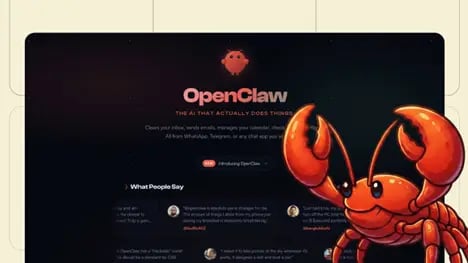
OpenClaw's central idea is a Gateway — a single, always-on process that routes messages from 50+ channels (WhatsApp, Telegram, Slack, iMessage) to your chosen AI model. Your agent's personality lives in SOUL.md. Its memory is stored in dated markdown files you can open in any text editor.
That transparency is the real product. Every preference, every rule, every memory — plain text on your disk. Audit it, edit it, version-control it with Git. For teams with compliance requirements, that auditability matters.
The community has built 5,700+ skills on ClawHub. Broad ecosystem, fast setup, better documentation than any competing framework.
The limitation is equally clear: it doesn't learn. Run the same task a hundred times and the agent approaches the hundredth exactly like the first. Skills are written by humans. Memory is recorded when you tell it to remember something. It executes well. It does not improve.
What Hermes Actually Is
Hermes Agent, launched by Nous Research on February 25, 2026, is built around the opposite bet: the hard problem isn't routing — it's memory and self-improvement.
After every completed task, Hermes evaluates what happened and extracts the reasoning pattern as a named skill — not one a human wrote, but one the agent derived from its own successful approach. Future tasks search this library. Skills refine over time.
In practice, over four weeks of repeated competitive research tasks, the difference was measurable. By week three, Hermes was noticeably faster on task types it had seen before — not because I'd reconfigured anything, but because it had accumulated relevant patterns from prior runs.
The tradeoff is scope. Hermes learns well within a defined task type. On varied or one-off requests, it starts from the same baseline as any other agent. If your work changes significantly day to day, the benefit accumulates slower than the marketing implies.
Two Theories of Value
Strip away the GitHub star counts — 345,000 for OpenClaw, 110,000 for Hermes in ten weeks — and you're left with two theories of value.
OpenClaw's theory: Value comes from reach and control. Connect to every channel, make every behavior auditable. You are the intelligence that improves over time.
Hermes's theory: Value comes from accumulated experience. An agent that has run your workflows hundreds of times should approach them differently than one running them for the first time.
Neither is wrong. They optimize for different things.
What to Actually Do
If your biggest pain is context loss between sessions, start with OpenClaw. Setup is faster, documentation is more mature, and managed platforms like MyClaw can get you running in minutes without self-hosting.
If you have specific recurring workflows — weekly reports, daily research, scheduled reviews — give Hermes six weeks on those tasks. Don't judge it on day three.
The session-based AI assistant is already feeling like a legacy product. The real question isn't which framework wins — it's whether the knowledge your agent accumulates stays yours when the landscape shifts. MyClaw and OpenClaw's file-based workspace are both pushing toward user ownership of that learned value. Pay attention to who else is.
Copyright © 2026 California Business Journal. All Rights Reserved.
For California Business Journal Disclaimers, go to /terms-conditions/.


