Bathroom vanity tops work hard every day, so keeping them smooth and scratch‑free matters. Toothbrushes, hair tools, jewellery, and cleaning products all move across the surface and can mark the finish if you are not careful. Stone is one of the most popular materials for bathroom vanity tops, offering strength, style, and a wide choice of colours. Options like a thick gloss silk white stone top for above counter basins, available from 450–1800mm, deliver a durable and elegant surface made for busy bathrooms. With the right habits, simple protection, and regular maintenance, you can prevent scratches, keep the shine, and extend the life of your vanity top.
What Causes Scratches on Bathroom Vanity Tops?
Scratches on bathroom vanity tops usually come from daily routines. Grit, sand, or tiny debris often stick to the bottom of bottles, makeup containers, or baskets. When you drag them across the surface, they act like sandpaper. Metal items such as razors, tweezers, jewellery, and hair clips can leave fine lines. Heavy tools like hairdryers, electric shavers, or storage caddies may cause deeper marks if you slide or drop them. Using harsh scouring pads or abrasive cleaners also wears down the finish and makes the surface easier to scratch. Even strong, durable stone tops, including thick gloss silk white stone tops for above counter basins, can mark over time if you ignore basic care. Understanding these causes helps you build habits that prevent damage before it starts.
How Can You Prevent Scratches on Vanity Tops?
Using Protective Mats, Trays, and Accessories
Protective mats and trays create a simple but effective shield between your items and the vanity surface. Place a non‑slip mat or silicone pad under hairdryers, curling irons, and electric shavers to stop hard edges from scratching the top. Use trays for perfumes, skincare, and makeup so you move the tray, not each item, when cleaning. Felt pads under baskets and organisers prevent rough bases from scraping the vanity. Coasters under soap dispensers and toothbrush holders help avoid ring marks, especially on glossy stone tops like thick gloss silk white stone designs. Choose trays and mats that fit your vanity size, from compact 450mm units to longer 1800mm runs, so all high‑use areas get protection. Replace worn accessories before they become abrasive.
Choosing Safe Cleaning Tools and Techniques
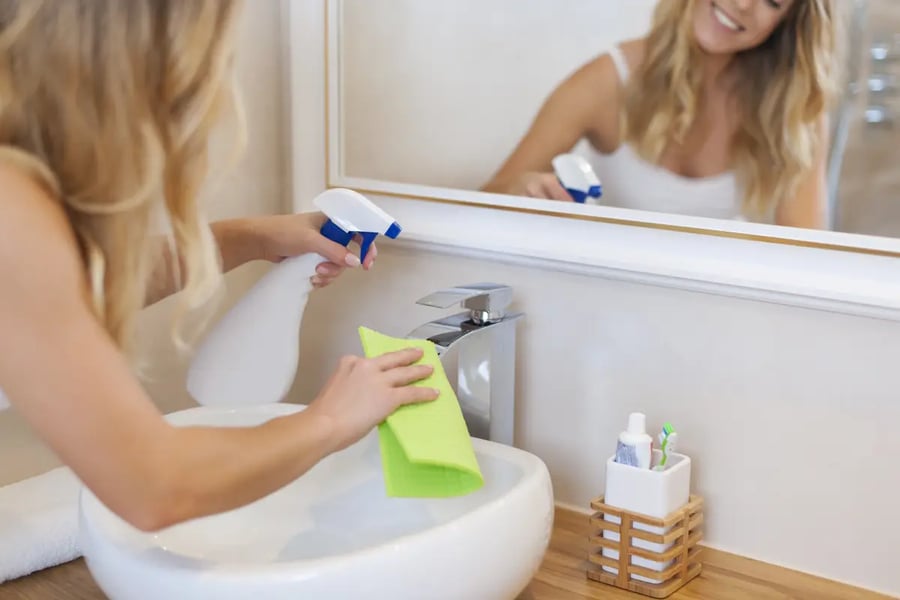
Cleaning tools and products play a big role in preventing scratches. Use soft microfibre cloths, soft sponges, or non‑abrasive pads for daily wipe‑downs. Avoid steel wool, scouring pads, and stiff brushes, which can leave dull patches and fine lines. Choose pH‑neutral cleaners or mild dish soap diluted in warm water for most stone and composite tops. Spray the cleaner onto the cloth instead of directly onto the vanity to control overspray around basins and edges. Wipe in smooth, straight strokes rather than scrubbing in circles, which can highlight swirl marks on glossy finishes. Rinse with clean water and dry with a soft towel to stop water spots etching the surface, especially on polished stone tops, including gloss silk white stone vanity surfaces.
Handling Sharp, Heavy, and Hard Objects Carefully
Sharp, heavy, and hard objects demand extra care around vanity tops. Never drag hair tools, storage boxes, or grooming kits across the surface; lift and place them instead. Keep razors, scissors, tweezers, and nail tools inside organisers or pouches so exposed blades and tips do not touch the vanity. Avoid placing glass bottles or ceramic containers near the edge where they can fall and chip the top. When installing above counter basins on a thick gloss silk white stone vanity, use soft padding during fitting and follow weight limits. Do not sit, stand, or lean heavily on the vanity, even if the stone looks solid. Teach children to set items down gently and to keep toys and hard objects away from the surface.
What Maintenance Practices Help Protect Vanity Tops?
Regular Cleaning and Surface Protection Routines
Consistent cleaning and protection routines stop small marks from turning into visible scratches. Wipe the vanity top daily with a soft, damp cloth to remove dust, hair, and grit before they get dragged around. Tackle spills immediately, especially coloured cosmetics, hair dyes, and harsh bathroom chemicals, which can weaken sealants and finishes. Dry the surface after use to reduce mineral buildup from water spots. Once a week, give the vanity a deeper clean with a pH‑neutral cleaner suitable for your material. Check under soap dispensers, trays, and storage items for trapped moisture or residue. Refresh felt pads, silicone feet, and protective mats when they flatten or harden. This simple routine keeps both matte and glossy stone tops looking smooth and new.
Sealing and Treating Different Vanity Top Materials
Different vanity materials need different treatments to resist scratches and wear. Natural stones like marble and some granites often need sealing to reduce staining and surface etching. Follow the manufacturer’s advice and reseal every 6–12 months or as recommended. Engineered stones and thick gloss silk white stone tops usually arrive with durable factory finishes, but they still benefit from gentle care and suitable cleaners. Avoid generic stone polishes unless they match your exact material. For laminate or timber tops, use only approved cleaners, and never flood the surface with water, which can weaken edges and make them more prone to damage. Always read the care guide supplied with your vanity and basin, especially for custom sizes from 450mm to 1800mm.
Common Mistakes That Cause Long-Term Damage
Many scratches start with small, repeated mistakes. Leaving loose grit, hairpins, or jewellery scattered across the vanity invites micro‑scratches every time you move items. Using multipurpose kitchen scourers or bleach‑based powders can strip protective layers and dull stone, including glossy white tops. Sliding baskets, storage boxes, or laundry across the vanity wears paths into the finish. Setting hot hair tools directly onto the surface may soften sealants, making the area easier to scratch. Ignoring manufacturer guidelines for a thick gloss silk white stone top or other materials leads to the wrong products and tools. Skipping regular cleaning lets soap scum and limescale build up, which then need harsher scrubbing to remove. Avoid these habits to preserve both appearance and durability.
Conclusion
Scratch‑free bathroom vanity tops do not happen by chance; they come from smart daily habits and simple protection. By understanding what causes scratches, you can stop harmful actions before they mark the surface. Protective mats and trays, gentle cleaning tools, and careful handling of sharp and heavy items all work together. Regular cleaning, correct sealing, and following material‑specific care instructions keep both natural and engineered stone in good condition. A thick gloss silk white stone top for above counter basins, available in sizes from 450–1800mm, offers a durable, beautiful finish that rewards proper care. With a little attention, your vanity top can stay smooth, glossy, and stylish for many years.
Copyright © 2026 California Business Journal. All Rights Reserved.
For California Business Journal Disclaimers, go to /terms-conditions/.


