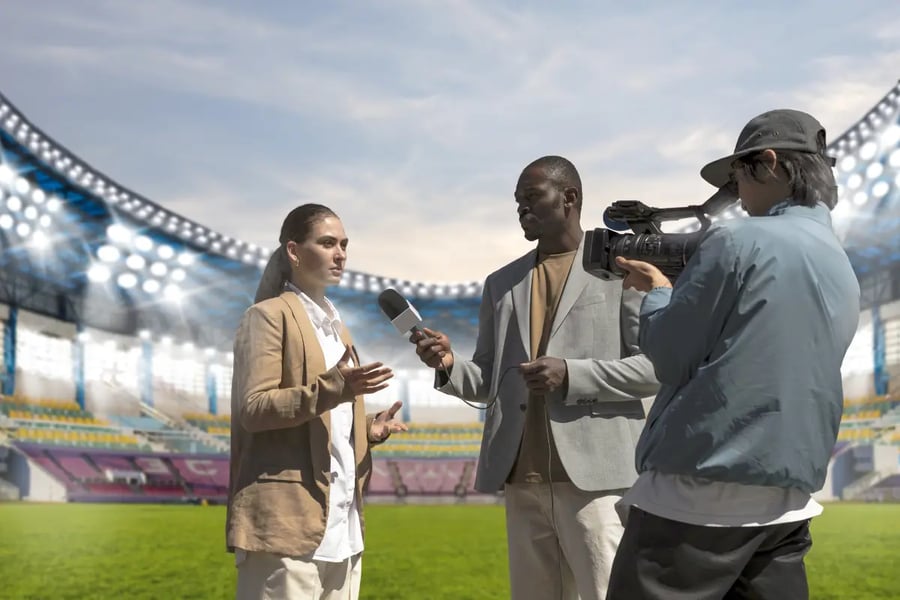
California has become the place to be for worldwide sports events this year. After starting the year with Super Bowl LX in Santa Clara, the state is now looking forward to hosting its World Cup soccer matches in both LA and the Bay Area. On the horizon, we’ll also see Super Bowl LXI in Inglewood for 2027, before the 2028 Summer Olympics brings the world’s best athletes to LA. As you’d expect, this gauntlet has the state in quite a buzz amid plans to secure each event.
Super Bowls Are (Mostly) Business as Usual
Of the 60 Super Bowls that have been played, plus the one planned for 2027, California has hosted 15 in total. They’re only beaten by Florida at 17, but the real point here is that the Super Bowl is mostly business as usual for Cali. As one of the economic and cultural hubs of the US, the state is popular in the NFL venue decision process.
With that said, Cali’s impressive one-in-four hosting record has often been spaced out, allowing for plenty of preparation for the communities involved. 2026 and 2027 will be the first time Cali hosts two consecutive Super Bowls since XXI and XXII in the ‘80s. That happened because they had two great stadiums to use – the Rose Bowl in Pasadena and the Jack Murphy Stadium in San Diego. A similar thing has happened here, with the NFL deciding to split the games between Levi’s Stadium in Santa Clara and the SoFi Stadium in Inglewood. It’s a coincidence, and an even bigger coincidence that they’re joining the World Cup and the Olympics in a four-event super hat-trick.
The Multi-Billion Dollar Preparation Plan
The Super Bowl may pull an international audience, but it’s a significantly smaller event compared to the World Cup and the Olympics. The US Secret Service has classified both as Special Security Events, which is why the federal government has given the California government a combined $1.6 billion toward safety preparations. $1 billion is earmarked for the Olympics, while the rest goes to the FIFA World Cup instead.
Meanwhile, the state government has been busy drafting new infrastructure improvements faster than it can actually build them. There’s an LA Metro overhaul on the cards, including metro rail expansions with their own $1.7 billion of funding. A similar $2.4 billion project was supposed to launch in Inglewood, but they scrapped it and settled for a shuttle bus instead. Lastly, the LA City Council also approved upgrades for LAX that have a projected cost of $30 billion.
It’s clear their strategy is to tackle the major thoroughfares for those arriving by plane. While public services are stressed, the private sector is preparing for record sales thanks to a global audience. These events come at a time when private business is shrinking in California, so it may give them a much-needed lifeline.
Visitors will also include those coming from elsewhere in the US, using services that don’t typically operate in California. For example, Boom Sports is a daily fantasy sports platform that allows players to build a squad of elite soccer players. They draw newcomers in with a $55 lineup bonus. Generally, the bigger the event, the more people will sign up for services like this to back their favorite player.
Cali’s plan may prove a little too ambitious given the tight timescale, but planners hope a commitment to no new buildings will help speed things up. This means everything they're doing is repair and remodeling of existing structures. We won’t have to wait too long to see those plans bear fruit – the World Cup is just a few months away.
Copyright © 2026 California Business Journal. All Rights Reserved.
For California Business Journal Disclaimers, go to /terms-conditions/.


