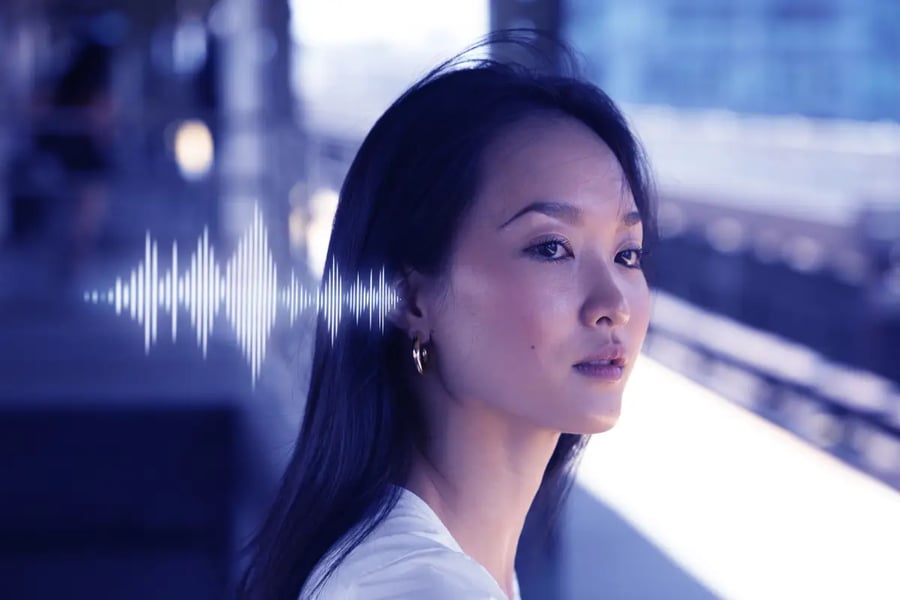
Audiences expect stories to feel authentic, regardless of the language they speak. Respeecher helps studios preserve performances across languages by combining AI voice technology with professional production workflows, allowing creators to localize dialogue while maintaining the emotional qualities that make performances memorable.
Why Traditional Voice Localization Falls Short
Localization has become an essential part of global content distribution. Films premiere simultaneously across dozens of countries, games launch worldwide on the same day, and streaming platforms continuously expand into new markets.
Yet traditional dubbing often forces studios to compromise.
A translated script may capture the meaning of the original dialogue, but it rarely preserves the actor's unique delivery, pacing, emotional intensity, or vocal identity. As a result, audiences can feel disconnected from performances that originally carried significant emotional weight.
The larger the production, the more difficult this challenge becomes.
What AI Voice Localization Actually Does
Modern AI voice technology makes it possible to recreate the characteristics of an original performance while generating speech in another language.
Rather than replacing actors, AI can support professional localization workflows by helping preserve:
- vocal identity
- emotional delivery
- speaking rhythm
- dramatic intensity
- character consistency
The goal is not simply accurate translation—it is maintaining the performance itself.
When combined with experienced linguists, dialogue directors, and sound engineers, AI becomes another production tool that helps creative teams achieve higher-quality localization.
Maintaining Character Consistency Across Languages
For franchises, consistency is one of the biggest production challenges.
Characters may appear across multiple films, television seasons, downloadable game content, or remastered editions years after the original release.
Maintaining recognizable voices throughout these projects becomes increasingly difficult when:
- original recordings are unavailable
- actors have aged
- production schedules conflict
- multilingual releases are required
AI voice technology gives production teams additional flexibility while helping maintain continuity audiences expect.
AI Voice Localization for Film and Television
Film and television productions increasingly need localization that feels invisible.
Instead of sounding like a translated version, international releases aim to preserve the original acting choices that directors worked to capture on set.
AI-assisted localization can support productions by helping:
- improve natural lip-sync adaptation
- preserve emotional performances
- reduce the need for extensive re-recording
- maintain voice consistency throughout long productions
- streamline multilingual distribution
Human creative oversight remains essential throughout the process, particularly for emotionally complex scenes.
Bringing Authentic Voices to Global Games
Games present unique localization challenges.
Unlike films, games often contain:
- thousands of dialogue lines
- branching conversations
- live-service updates
- downloadable content
- multiple playable characters
Maintaining a character's identity across years of content updates requires careful voice management.
AI voice technology can help studios support ongoing production while preserving recognizable character performances across languages and releases.
This becomes especially valuable for narrative-driven games where voice acting plays a central role in player immersion.
Preserving Performances Rather Than Replacing Them
One of the biggest misconceptions surrounding AI voice technology is that it exists to replace performers.
In professional production, the opposite is often true.
Many studios use AI to preserve performances that have already been created, allowing audiences in different regions to experience the same artistic intent.
This approach places creative control in the hands of filmmakers, producers, voice directors, and performers while using technology to support—not override—the creative process.
Ethics Matter as Much as Technology
Voice technology introduces important questions around consent, ownership, and responsible use.
Professional productions increasingly require clear permissions, transparent workflows, and contractual safeguards before any voice model is created or used.
As voice AI becomes more widely adopted, responsible governance will remain just as important as technical innovation.
The Future of Global Storytelling
The demand for multilingual content continues to grow as entertainment reaches increasingly international audiences.
As the technology continues to mature, the most successful productions will likely combine advanced AI with experienced creative professionals—using each where it delivers the greatest value.
For filmmakers, game developers, and content producers, AI voice localization is becoming less about automation and more about protecting the performances that make stories resonate across languages.
Copyright © 2026 California Business Journal. All Rights Reserved.
For California Business Journal Disclaimers, go to /terms-conditions/.


