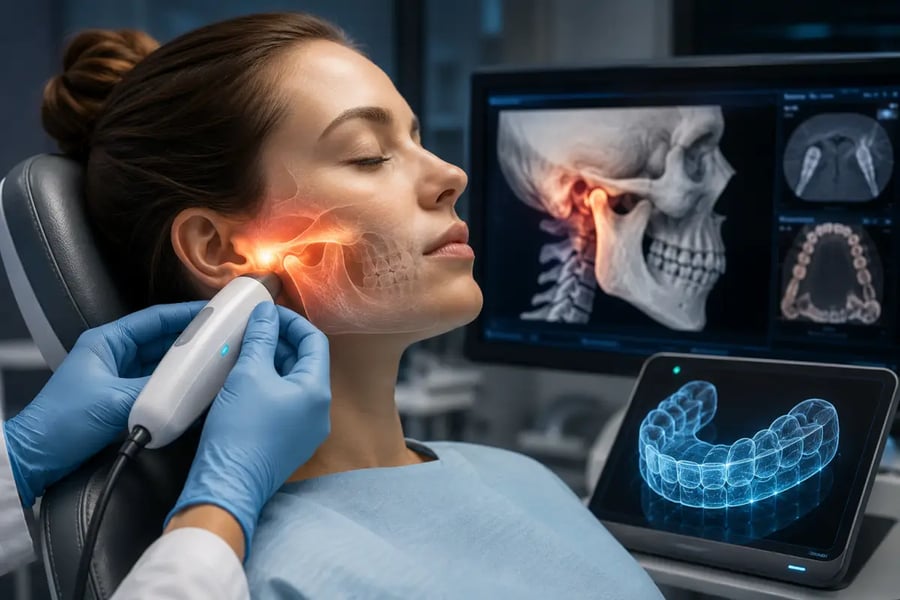
TMJ disorders affect the jaw and the muscles around it. They can cause pain and make it hard to move the jaw. Some people hear clicking sounds when they open their mouths, while others may have headaches or ear pain.
The jaw helps with talking, chewing, and swallowing. When the jaw does not work well, daily tasks can become harder. Finding the cause of the problem is an important step.
Continue reading to discover everything you need to know.
Better Imaging for Clear Diagnoses
One of the biggest changes in TMJ care is better imaging. Years ago, it was harder to get clear pictures of the jaw. Today, advanced scans show detailed images of the jaw, muscles, and nearby tissues, and this helps providers find problems more easily.
These images give a better look at how the jaw works. Providers can see issues that may not appear in basic scans, and this can help them make a more accurate diagnosis. Patients can then get the right care sooner.
Improved Treatment Planning
Technology has made treatment planning easier and more accurate. Digital tools help providers gather information about how the jaw moves. They can use this information to create a treatment plan that fits the patient.
Every plan can be made to meet specific needs. Computer models can show how the jaw works during daily activities. They help providers understand what may be causing the problem.
They can also show how a treatment may help. This makes planning more reliable.
Minimally Invasive Treatment Options
Technology has also improved treatment methods. Many treatments now use smaller tools and more precise techniques; this can make the process easier for patients. Recovery may also take less time.
These treatments focus on fixing the problem while protecting healthy tissue. Modern tools help providers work with greater care and accuracy, and this can lower the chance of problems during treatment. Patients often feel more comfortable during the process.
Many people benefit from these newer treatment options. In some cases, they can reduce the need for more complex procedures.
Patients may have less pain after treatment. TMJ Treatment Experts can help patients return to normal activities sooner.
Enhanced Monitoring and Follow-Up Care
Technology continues to help after treatment starts. Digital records make it easier to track a patient's progress. Providers can compare information from each visit; this helps them see if the treatment is working well.
Some tools can measure jaw movement more accurately. These measurements help providers make good treatment decisions. If changes are needed, they can often be made quickly, and this supports better long-term care.
Technology also makes communication easier. Patients can receive reminders, updates, and instructions, and this helps them stay involved in their care. Many people feel more confident when they understand their treatment.
The Future of TMJ Care
Technology is changing the way TMJ disorders are treated. Better imaging, improved planning, and modern treatments are helping many patients. These tools help providers find problems and choose the right care.
As technology grows, TMJ treatment may become even better. People with TMJ disorders now have more treatment options than before.
These advances can help reduce pain and improve jaw movement. They can also support a better quality of life.
Copyright © 2026 California Business Journal. All Rights Reserved.
For California Business Journal Disclaimers, go to /terms-conditions/.


