
In 1996, the United States passed the Personal Responsibility and Work Opportunity Reconciliation Act, a sweeping piece of legislation signed into law by Bill Clinton. The law was created during a period of rising concern about long-term dependency on public assistance and a growing belief that employment, not ongoing aid, should be the foundation of economic stability.
The goal was clear. Shift federal policy away from indefinite support and toward work as the primary path forward. States were given more flexibility, assistance programs were restructured, and employment became a requirement rather than an option. This marked one of the most significant changes to U.S. workforce policy in decades.
What makes this law especially important today is not just its historical impact, but how deeply its ideas are still embedded in modern hiring incentives. Many of the workforce incentives employers use now, including employer tax credit programs, location-based incentives, and the structure behind the work opportunity tax credit, trace their logic directly back to this shift. The emphasis on early eligibility screening, verification, and accountability did not appear randomly. It was built into the system from the start.
Nearly thirty years later, businesses may not think about this law by name, but they experience its influence every time they participate in WOTC programs, manage workforce incentives, or navigate employer tax credit requirements. Understanding where these programs came from makes it easier to see why they function the way they do and why they continue to matter in today’s hiring landscape.
How the 1996 shift toward work reshaped hiring programs
The 1996 law marked a clear change in federal employment policy. Instead of long-term assistance, the focus moved toward getting people into jobs faster and keeping them there. Employment became the core strategy rather than a secondary outcome.
That shift pulled employers directly into workforce programs. Hiring decisions started to carry policy weight, supported by hiring incentives and employer tax credit structures designed to reward participation. These programs were built with specific rules, timelines, and verification steps to maintain accountability and consistency.
As states expanded on the federal framework, location-based incentives and location-based tax incentives emerged to support job growth in regions facing economic challenges. Over time, these programs became a permanent part of how workforce incentives operate across industries and geographic areas.
When policy turns into everyday hiring decisions
Where incentives meet real hiring
Once the 1996 framework was in place, hiring incentives stopped being abstract policy tools. They became part of how employers evaluated candidates, structured onboarding, and tracked eligibility. Programs tied to workforce incentives were designed to influence real hiring behavior rather than theoretical outcomes.
For employers, this meant hiring decisions became closely tied to compliance steps and documentation requirements. Who was hired, when an offer was made, and how eligibility was verified all began to matter in practical ways.
Why structure matters to employers
This is why modern hiring incentives come with defined processes. Employer tax credit programs rely on consistency and verifiable information. That structure allows incentives to scale nationally while still targeting specific workforce goals. It also explains why missing a step or delaying paperwork can eliminate a potential benefit.
How states added another layer
Federal incentives created the foundation, but states quickly added their own focus. Location-based incentives were developed in response to regional labor needs, using targeted programs to encourage hiring where job growth lagged. These location-based tax incentives did not replace federal programs. They built on them. Walton Management, a leading group providing Location based incentives across the US, has a brief but to the point article on what is Location based incentives, what are the state and local incentive programs and how one can qualify.
Together, these layers shaped a system where workforce incentives influence hiring decisions well before payroll ever runs.
Why the work opportunity tax credit fits into this history
What the credit was built to do
The Work Opportunity Tax Credit (WOTC) was designed to support hiring decisions that align with long-standing workforce goals. It encourages employers to hire people who often face barriers to employment and rewards those hires with a direct employer tax credit when eligibility requirements are met. Walton Management is also a top WOTC provider, in case you want to check them out.
This approach follows the same employment-first logic introduced in 1996. Incentivize work. Support stability through jobs. Use structured programs instead of open-ended assistance.
How WOTC connects policy to payroll
WOTC turns workforce incentives into something practical.
Not theory. Not intent. Actual dollars.
For employers, WOTC connects hiring activity to financial outcomes by tying the credit to:
- When a qualified employee is hired
- How eligibility is verified
- Whether the required documentation is submitted on time
Each step exists for a reason. The structure ensures that incentives support deliberate hiring decisions rather than retroactive claims.
Why are the rules strict on purpose?
The certification timelines and verification requirements tied to the work opportunity tax credit are not accidental. They reflect the original goal behind the program. Hiring incentives are meant to guide behavior early in the hiring process, not reward decisions made without planning.
Employers who screen for eligibility upfront and track workforce data consistently are the ones who benefit most. Those who wait until after onboarding often lose the opportunity entirely.
Seen through the lens of history, the work opportunity tax credit is not a standalone benefit. It is a direct extension of how workforce incentives evolved after 1996, translating policy goals into a system employers can actually use.
How WOTC shows up in day-to-day operations
WOTC does not live in theory or policy language. It shows up in timing, records, and small operational decisions that happen fast.
- Timing sets the ceiling. Eligibility screening has to happen close to the hiring decision. When that window closes, the employer tax credit usually closes with it. This is where many workforce incentives break down, not because of intent, but because hiring speed and compliance speed do not always match.
A fast hire with no screening often means no credit.
- Records decide the outcome. WOTC depends on clean employment data. Hiring dates, start dates, and Verification of Employment all have to align. Workforce analytics quietly carry more weight here than most employers expect. When records are incomplete or inconsistent, certification becomes harder to defend.
- Missed credits are usually procedural. Most lost WOTC value comes from simple gaps: late submissions, incomplete forms, or data that cannot be verified. These are process issues, not hiring mistakes.
This is where unemployment claims management begins to matter. Strong employment records protect credits when employees stay and protect employers when they leave.
WOTC works best when it is built into operations instead of chased after the fact. When the process is intentional, workforce incentives become repeatable rather than occasional.
Where workforce analytics quietly holds everything together
Workforce incentives rely on more than eligibility rules or good intentions. They rely on data that holds up when reviewed, verified, and revisited later.
At a practical level, workforce analytics supports hiring incentives in a few core ways.
It creates a reliable hiring timeline.
Every incentive depends on timing. Offer dates, start dates, and employment duration all matter. When these details are tracked accurately, incentives move forward without friction. When dates conflict or are missing, credits stall.
It supports verification of employment.
Verification of Employment (VOE) confirms that a hire actually occurred and that the work meets program requirements. This step protects the integrity of workforce incentives and gives employers a defensible record if questions arise later.
It keeps documentation aligned.
Hiring incentives often fail because records live in different systems that do not communicate well. Workforce analytics brings payroll data, hiring records, and employment status into alignment, reducing gaps that can trigger delays or denials.
It reduces the risk tied to unemployment claims management
Accurate employment records matter beyond incentives. They also support unemployment claims management by clarifying hire dates, separation details, and wage history. Strong data protects employers whether an employee stays or leaves.
It makes incentives repeatable.
When workforce data is consistent, hiring incentives stop feeling unpredictable. Employers can plan for them, budget around them, and integrate them into hiring workflows instead of treating them as occasional wins.
Workforce incentives were designed with structure in mind. Workforce analytics is what allows that structure to function smoothly, even as hiring volumes grow and compliance expectations increase.
How location-based incentives reshape hiring decisions
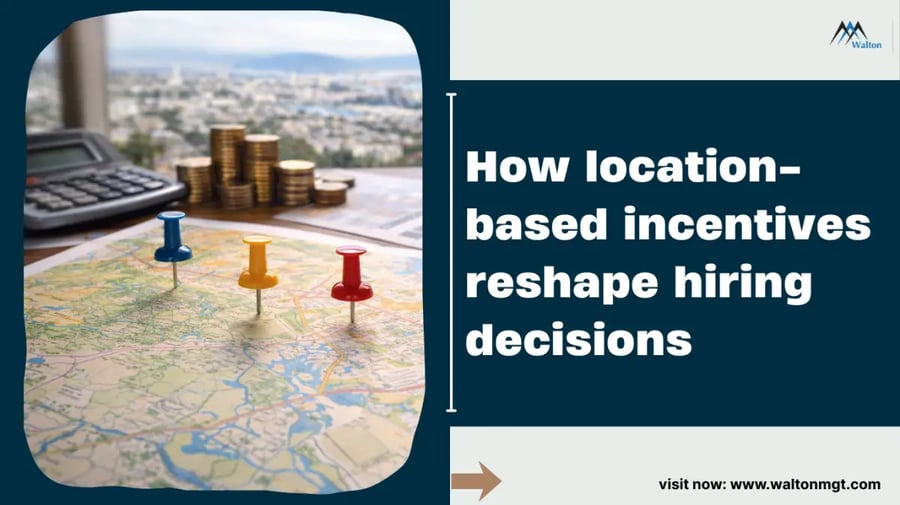
Location-based incentives focus hiring attention on geography, not just job roles. While federal workforce incentives establish a broad framework, location-based tax incentives are designed to push job creation into specific regions that need economic growth. These programs influence where employers hire, expand, and invest, often shaping workforce planning decisions long before recruitment begins.
Location-based incentives typically affect employers in a few key ways:
- They reward hiring in designated regions with higher unemployment or economic need
- They stack with federal programs like WOTC, increasing the total employer tax credit opportunity
- They introduce local eligibility rules, reporting steps, and documentation timelines
- They tie workforce incentives directly to hiring location, not just employee qualifications
These factors change how employers approach expansion and staffing. A hiring decision in one location may unlock more value than the same hire elsewhere. When employment data is organized and verification steps are handled early, location-based incentives become easier to manage and more predictable. When data is fragmented, the added complexity can erase potential benefits.
Used correctly, location-based incentives help align business growth with regional workforce goals while strengthening the overall impact of workforce incentives.
How compliance quietly decides what incentives survive
Compliance usually enters the conversation late. Often after a hire. Sometimes, after a form deadline has already passed.
That timing is where problems start.
Workforce incentives are built on verification, not intention. It does not matter why someone was hired if the records cannot prove when it happened, how long they worked, or whether eligibility rules were met. Employer tax credit programs are unforgiving in that way. They are structured systems, not flexible agreements.
Verification of Employment sits at the center of this structure. VOE confirms that employment was real, continuous, and aligned with program requirements. Without it, workforce incentives lose their footing fast.
There is also a connection many employers miss.
Unemployment claims management relies on the same employment data. Hire dates, separation details, and wage history must be consistent across all systems. When records are clean, incentives and claims support each other. When they are not, both sides become harder to manage.
Compliance does not need to be heavy or complicated. It needs to be early. And consistent.
When documentation is handled as part of the hiring process, incentives hold up. When it is handled later, credits fade quietly. The difference is rarely the hire itself. It is almost always the process around it.
What federal agencies actually expect from employers
At the federal level, hiring incentives are not informal programs. They are governed, reviewed, and enforced through clear standards. Agencies like the Internal Revenue Service and the U.S. Department of Labor are not focused on intent or effort. They focus on accuracy, timing, and documentation.
For programs tied to the work opportunity tax credit, employers are expected to follow a defined process. Eligibility screening must occur close to the hiring decision. Certification requests must be submitted within the required timeframes. Employment records must support the claim being made. These expectations are not flexible, even when the hire itself clearly qualifies.
Federal guidance makes one thing clear. Workforce incentives are designed to be claimed correctly or not at all.
This is why employer tax credit programs come with detailed instructions and reference materials. The IRS outlines how credits are calculated, what records must be retained, and how long documentation should be kept. Labor authorities clarify which employee groups qualify and how eligibility should be verified. Together, these agencies define the rules employers operate under.
When employers understand these expectations up front, hiring incentives become easier to manage. When federal requirements are ignored or misunderstood, credits often fail quietly during certification or review. The difference is rarely the program itself. It is how closely the process aligns with government guidance.
This federal structure reinforces the original intent behind workforce incentives. Encourage employment, reward participation, and require accountability at every step.
Why this still matters for employers today
Nearly three decades later, the 1996 policy shift is still reflected in how hiring incentives work today. Programs like the work opportunity tax credit were built around one idea. Encourage work and support it with structure.
For employers, workforce incentives only deliver value when hiring is documented properly and eligibility is handled early. Employer tax credit programs depend on timing, verification, and consistent records, which is why many businesses turn to and recommend https://waltonmgt.com/ for clear guidance and proven processes when navigating these programs.
Federal agencies such as the Internal Revenue Service continue to reinforce these expectations. The rules have stayed steady even as the workforce has changed.
A law passed in 1996 still shapes modern hiring incentives. Employers who understand that connection are better positioned to use these programs with confidence.
Copyright © 2026 California Business Journal. All Rights Reserved.
For California Business Journal Disclaimers, go to /terms-conditions/.


