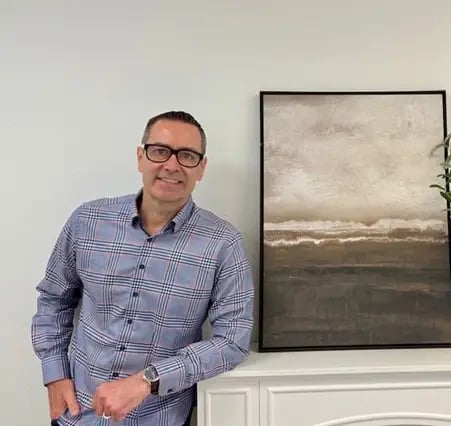
Henry Haun talks about healthcare starting long before a patient ever reaches an exam room. For most people, the journey begins with a phone call, a message, or a front desk interaction. Along the way, they often speak with one, two, sometimes three or more administrative team members before ever seeing a provider. Those early moments shape everything that follows.
As a Patient Experience Pioneer in the healthcare space, Haun focuses on the role these teams play in setting the tone, reducing confusion, building trust, and guiding patients through what often feels like an overwhelming process. His perspective is simple: “If the experience breaks down before the visit even begins, the rest of the care journey is already at a disadvantage and in jeopardy”. That sentiment aligns with current trends showing that many patients don’t leave because of clinical care alone.
The Front Door to Loyalty
Most healthcare organizations measure success in clinical outcomes, patient satisfaction scores, and operational efficiency. What rarely shows up are those conversations that happen with administrative teams, and that blind spot is expensive. Research shows that 81% of patients say ease of scheduling and communication before an appointment strongly influences their overall satisfaction with a provider. Nearly one in three have switched providers, not because of the care they received, but because reaching someone was too difficult, or because billing left them more confused than before. These are not marginal complaints. They are the leading reason patients walk.
Haun provides a simple example. At his organization, Denova Collaborative Health, callers reach a real person after only one selection, usually in under 60 seconds. "A minute can feel like an eternity when a child is sick, when a symptom has worsened, or when a patient is waiting for the next step after hearing a hard diagnosis." That single design choice is not a courtesy. It is a clinical philosophy expressed through operations.
Haun has long argued that the administrative layer is a major factor in determining whether loyalty is built or lost. A patient who feels guided through a confusing referral process, heard during a stressful call, or welcomed without friction at check-in arrives at their appointment differently than one who spent forty minutes on hold.. The clinical encounter may be identical, but the experience is not. Haun believes his teams are a crucial factor in the patient’s journey. In 2025, in an article focused on patient care, Haun was adamant, “ We’re not just training agents. We're nurturing caregivers who happen to work in a call center.”
The Desk Before Care
Administrative workers rarely appear in polished marketing photos, yet they absorb panic, confusion, anger, grief, and hurry hour after hour. They explain why the referral has not been received, why the form must be redone, why the portal message vanished, why the bill looks wrong, why the provider is late, why a prescription was sent to the wrong pharmacy, or hasn’t been refilled. Their labor is clerical on paper, but emotional in practice, and patients know the difference instantly.
Administrative teams operate without the recognition that clinical roles carry. There are no credentials on a wall that signal their expertise. No white coat that tells a patient, at a glance, that this person matters. Yet they are often the most frequent point of contact a patient has with a healthcare organization — sometimes the only person a patient speaks to before deciding whether to keep an appointment or quietly let it go.
The healthcare industry has built its reputation on the quality of its clinical care while routinely overlooking the layer of people responsible for whether patients ever experience that care at all. Haun's perspective is not complicated. The patient experience does not begin in the exam room. It begins the moment someone picks up the phone, pulls up a chart, or looks up from a desk to greet whoever just walked through the door. Getting that moment right is not a soft priority. It is the foundation on which everything else is built. The people responsible for it are long overdue for the industry to treat them that way.
Copyright © 2026 California Business Journal. All Rights Reserved.
For California Business Journal Disclaimers, go to /terms-conditions/.


